BP7
supporting
review
Benign
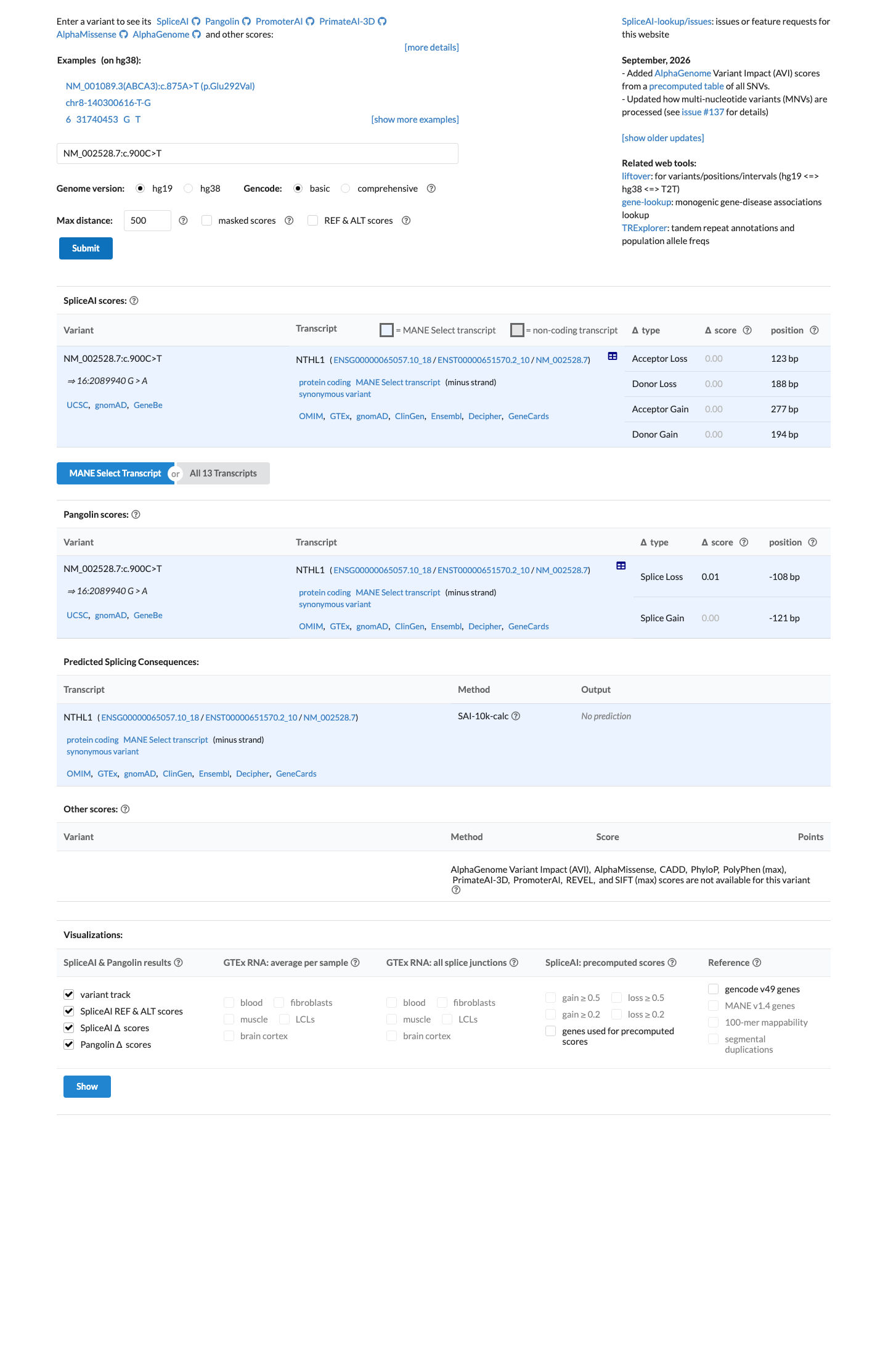
Met at supporting: synonymous p.(Ala300=) with SpliceAI max delta 0.004, far below the 0.2 significant-splice-impact cutoff.
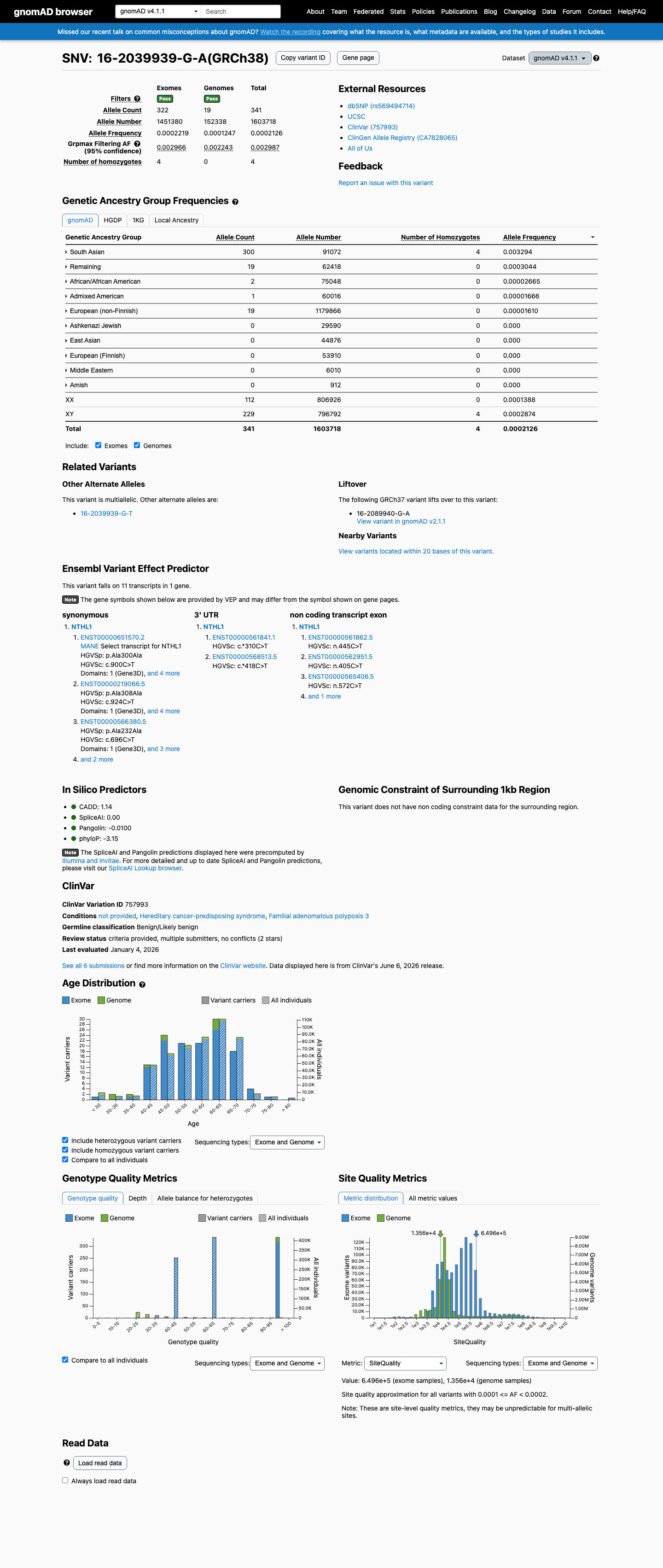
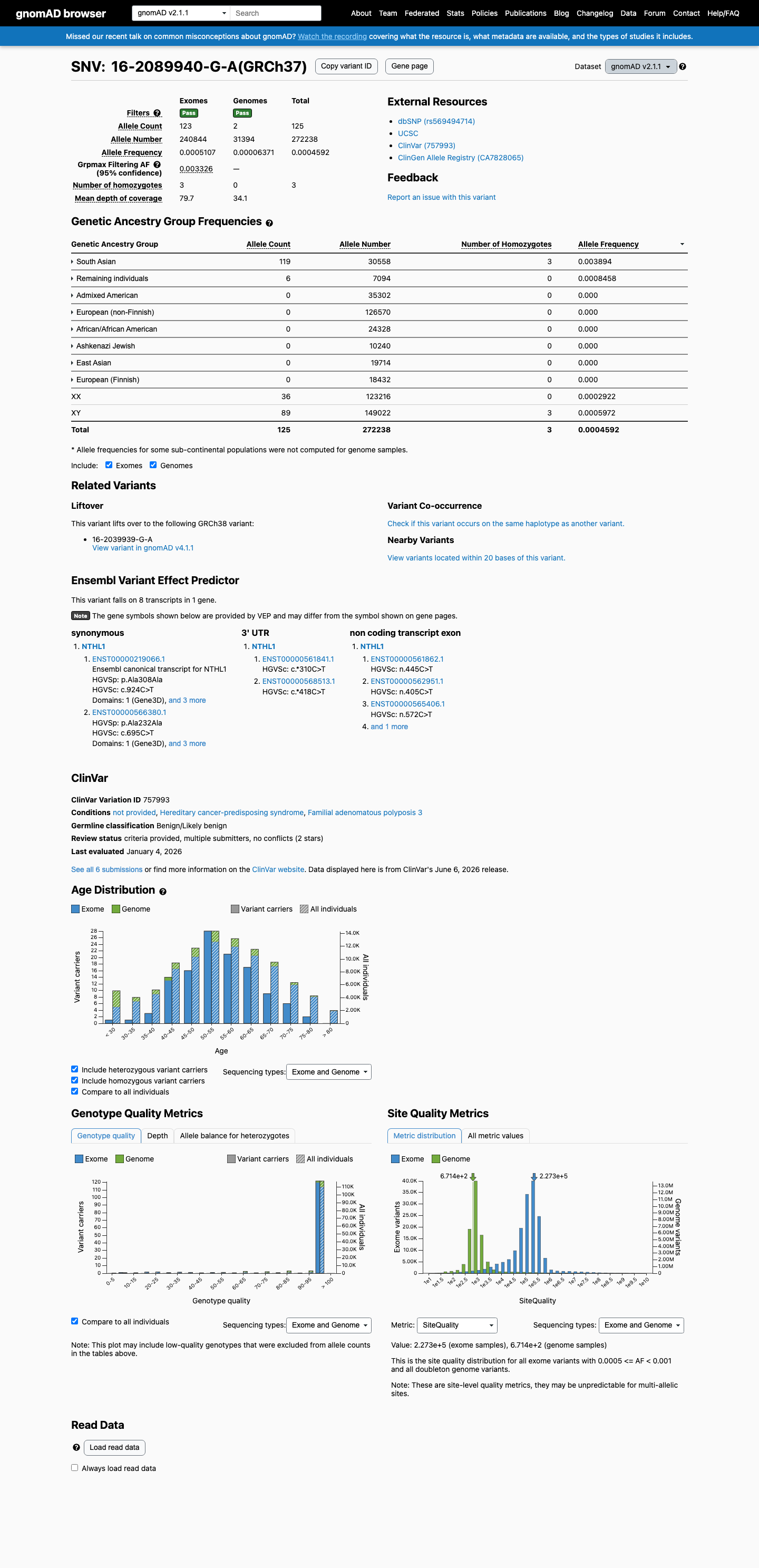
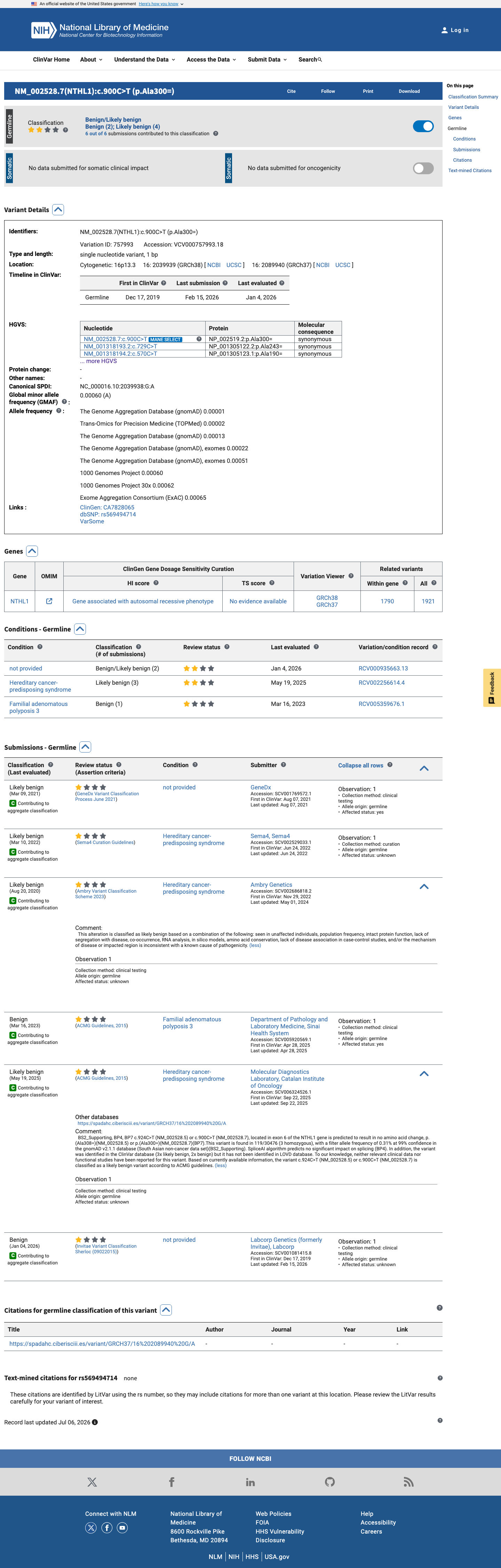
The variant is synonymous: NM_002528.7:c.900C>T, NP_002519.2:p.(Ala300=), exon 6 of NTHL1; BP7, not PP3/BP4, is the computational criterion in scope for it.SpliceAI scores for NM_002528.7:c.900C>T are DS_AG 0.003, DS_AL 0.004, DS_DG 0.002 and DS_DL 0.00, giving a maximum delta score of 0.004, with no predicted acceptor or donor gain or loss; the predicted event positions are DP_AL 123, DP_DL 188, DP_DG 194 and DP_AG 277 nucleotides from the variant.The SpliceAI recommended cutoff for significant splice impact is 0.2, with 0.1 as the no-impact level (Jaganathan et al. 2019, Cell, PMID:30661751); the observed maximum delta of 0.004 is far below both, satisfying BP7's no-predicted-splice-impact requirement.