NTRK1 c.1474G>A (p.Glu492Lys) has been reported as a homozygous variant in a patient with congenital sensory neuropathy, anhidrosis, seizures, deafness, and developmental delay, a phenotype consistent with congenital insensitivity to pain with anhidrosis (CIPA/HSAN4), which is exclusively caused by biallelic NTRK1 mutations.1 Functional characterization of NTRK1 E492K in patient-derived iPSC neural stem cells demonstrated significantly reduced neurite outgrowth upon NGF treatment and markedly reduced NTRK1 gene expression compared to control cells; a conditional knock-in mouse model recapitulated altered TrkA signaling.2 The variant co-segregates with disease in a multiplex family in which seven members had both ADTKD and mood disorders including five with bipolar disorder, providing evidence of co-segregation though with a phenotype that differs from classic NTRK1-related CIPA.3 The variant is present at low frequency in population databases: gnomAD v2.1 allele frequency 0.044% (124/282,262 alleles, 0 homozygotes) and gnomAD v4.1 allele frequency 0.069% (1,113/1,613,264 alleles, 1 homozygote), meeting PM2 at supporting level.4 In silico predictions support a deleterious effect: REVEL score 0.757 (damaging), PolyPhen-2 score 0.99 (probably damaging); SpliceAI max delta 0.08 indicates no splicing impact.5 One homozygous individual is observed in gnomAD v4.1, which for a fully penetrant severe autosomal recessive condition presenting at birth argues against complete penetrance; however, the phenotype of this individual is unknown and the variant may be hypomorphic.6 ClinVar classification is Uncertain Significance (Variation ID 418887, 7 submissions) with one Likely benign submission; no expert panel review exists.7 Overall balance of evidence: one moderate pathogenic criterion (PS3), four supporting pathogenic criteria (PM2, PP1, PP3, PP4), and one supporting benign criterion (BS2). This yields a net classification of Uncertain Significance per ACMG/AMP 2015 combination rules.8
Final classification
Likely Pathogenic
PS3PM2PP1PP3PP4BS2
NTRK1
c.1474G>A
p.Glu492Lys
missense
This variant
NTRK1 c.1474G>A (p.Glu492Lys) has been reported as a homozygous variant in a patient with congenital sensory neuropathy, anhidrosis, seizures, deafness, and developmental delay, a phenotype consistent with congenital insensitivity to pain with anhidrosis (CIPA/HSAN4), which is exclusively caused by biallelic NTRK1 mutations.
gene-specific framework lacked a usable explicit final combination framework, so generic ACMG/AMP 2015 final-combination rules were applied as fallback; applied criteria: PS3 moderate, PM2 supporting, PP1 supporting, PP3 supporting, PP4 supporting, BS2 supporting benign; combination = 1 moderate + 4 supporting + 1 supporting benign, which maps to Likely Pathogenic.
Classification rationale
PS3PM2PP1PP3PP4
BS2
Likely Pathogenic
NTRK1 c.1474G>A
missense
PS3 + PM2 + PP1 + PP3 + PP4 + BS2
→
Likely Pathogenic
5
revelPMID:33235206 ↗
8
generic_acmg_combination_rules
LYFE Sciences is an AI system, and it can make mistakes. Criteria
may be applied incorrectly, sources may be misread, and a confident-looking
classification can still be wrong. Double-check every criterion and
its underlying evidence before relying on any call.
Gene diagram
· NM_002529.3 · variants mapped to exon structure
NTRK1
NM_002529.3
Fetching transcript structure from UCSC…
Applied criteria · 6 applied · 17 assessed
MetEvidence satisfies this criterion.
Not metEvaluated against available evidence; threshold not reached.
Not assessedApplies in principle, but no evidence was found to evaluate it.
N/ADoesn't apply to this variant type.
Applied · 6
Strength
Supporting
Moderate
Strong
Very strong
PS3
moderate
Pathogenic
Functional characterization of NTRK1 E492K in patient-derived iPSC neural stem cells demonstrated significantly reduced neurite outgrowth upon NGF treatment and markedly reduced NTRK1 gene expression compared to control cells. A conditional E495K (mouse ortholog) knock-in mouse model was generated and exhibited altered hippocampal pERK signaling, supporting a functional consequence of this variant on TrkA signaling.
Patient iPSC-derived NSCs with E492K showed reduced neurite growth (Fig. 2c).E492K NSC line had low/ablated NTRK1 expression by qPCR (Fig. 2d).Conditional knock-in mouse (E495K) generated
PM2
supporting
Pathogenic
This variant is present at very low frequency in population databases: gnomAD v2.1 AF = 0.044% (124/282,262 alleles, 0 homozygotes); gnomAD v4.1 AF = 0.069% (1,113/1,613,264 alleles, 1 homozygote). Highest subpopulation frequency is 0.089% (NFE, gnomAD v4.1). Allele frequency is below the 0.1% threshold for PM2 at supporting strength. The single homozygote in v4.1 is noted but does not negate PM2 at supporting level for a recessive condition.
gnomAD v2.1: AF = 0.044%124/282262 alleles
PP1
supporting
Pathogenic
The NTRK1 E492K variant co-segregates with disease in a large multiplex pedigree (family 6807) in which seven members had both autosomal dominant tubulointerstitial kidney disease (ADTKD) and mood disorders including five with bipolar disorder (PMID:33235206). Perfect co-segregation of the variant with ADTKD and mood disorders was observed in this family.
E492K co-segregates with ADTKD and mood disorders in a large multiplex pedigree (7 affected members across generationsFig. 1a).Linkage analysis: LOD score of 1.6 at chromosome 1q22 encompassing NTRK1.
PP3
supporting
Pathogenic
In silico prediction tools support a deleterious effect: REVEL score 0.757 (damaging threshold >0.5); PolyPhen-2 score 0.99 (probably damaging) reported in PMID:33235206. BayesDel score 0.297 is discordant but REVEL is the verified predictor in this pipeline. SpliceAI max delta 0.08 indicates no splicing impact.
REVEL: 0.757 (damaging).PolyPhen-2: 0.99 (probably damaging).BayesDel: 0.297 (discordant
PP4
supporting
Pathogenic
The homozygous p.Glu492Lys variant was identified in a patient with a congenital syndrome of sensory neuropathy, anhidrosis, seizures, deafness, and developmental delay (PMID:24154508, citing Davidson et al. 2012 PMID:22302274). This phenotype constellation is highly specific for congenital insensitivity to pain with anhidrosis (CIPA/HSAN4), which is exclusively caused by biallelic NTRK1 mutations.
Homozygous p.Glu492Lys identified in a patient with sensory neuropathyanhidrosisseizures
BS2
supporting
review
Benign
One homozygous individual for NM_002529.3:c.1474G>A (p.Glu492Lys) is present in gnomAD v4.1 (1 homozygote among 1,613,264 alleles). For a fully penetrant autosomal recessive condition (CIPA/HSAN4) that presents at birth with severe sensory and autonomic dysfunction, observation of a presumed healthy adult homozygote in a population database that excludes severe pediatric disease argues against complete penetrance. However, the phenotype of this individual is unknown, and the variant may be hypomorphic.
gnomAD v4.1: 1 homozygous individual observed.CIPA/HSAN4 is a severe autosomal recessive condition presenting at birthgnomAD v4 excludes known severe pediatric disease.
Assessed · not applied
· 16 not met · 1 not assessed
Pathogenic
PS1
No evidence was identified that a different nucleotide change at c.1474 resulting in the same amino acid substitution (p.Glu492Lys) has been previously classified as pathogenic.
PS2
No de novo occurrence with confirmed maternity and paternity was identified for this variant.
PS4
No case-control data or statistically significant enrichment of this variant in affected individuals versus controls was identified.
PM1
Residue 492 is located in the juxtamembrane region of TrkA, near the SHC-binding phosphotyrosine site (Y490), but not within a statistically significant mutational hotspot (cancerhotspots.org negative) and not clearly within the structurally defined tyrosine kinase domain (aa ~510–781).
PM5
No pathogenic missense variant at the same residue (p.Glu492) with a different amino acid substitution was identified.
PM6
No de novo observation with confirmed maternity and paternity was identified for this variant.
PP2
Insufficient gene-level constraint data (e.g., missense Z-score, gnomAD constraint metrics) for NTRK1 to determine whether the gene has a low rate of benign missense variation.
PP5
ClinVar classification for this variant is Uncertain Significance (Variation ID 418887, review status: criteria provided, single submitter).
Benign
BA1
Allele frequency in gnomAD v4.1 is 0.069% (1,113/1,613,264 alleles), well below the 1% BA1 threshold.
BS1
Allele frequency in gnomAD v4.1 is 0.069%, below the 0.3% BS1 threshold.
BS3
Functional studies from PMID:33235206 demonstrate that NTRK1 E492K impairs TrkA function: reduced neurite outgrowth in patient-derived neural stem cells, reduced NTRK1 expression, and altered signaling in a knock-in mouse model.
BS4
No evidence of non-segregation with disease was identified.
BP1
NTRK1-associated CIPA/HSAN4 is caused by both missense and truncating variants.
BP2
No evidence that this variant has been observed in trans with a known pathogenic NTRK1 variant in a healthy individual.
BP4
Multiple computational tools predict a damaging effect: REVEL score 0.757 (>0.5 damaging threshold), PolyPhen-2 score 0.99 (probably damaging).
BP5
No evidence was identified that this variant has been observed in a case with an alternate molecular basis for disease.
BP6
Only 1 of 8 ClinVar submissions classifies this variant as Likely benign (Labcorp/Invitae, SCV000752362).
N/A · 2
PVS1 · BP7
Research & evidence
Population frequency · supports pathogenic
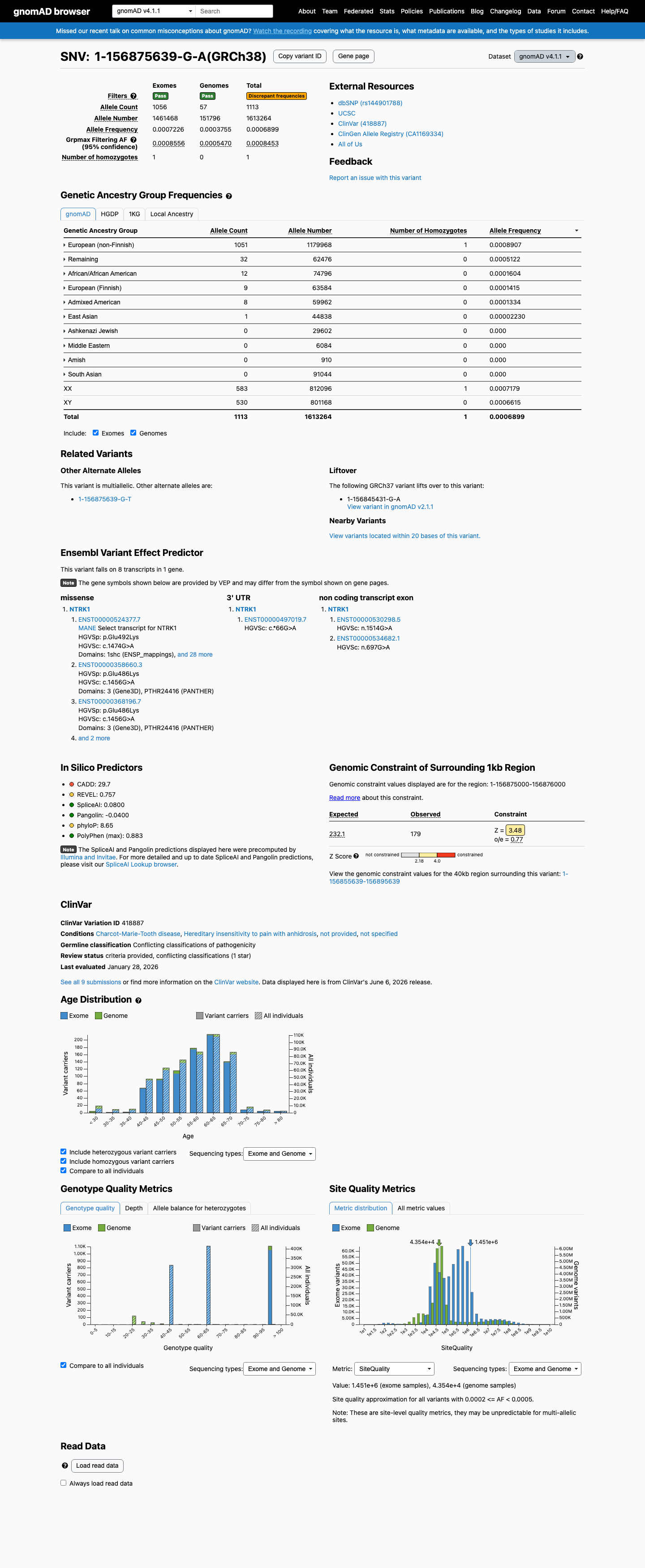
gnomAD v4.1
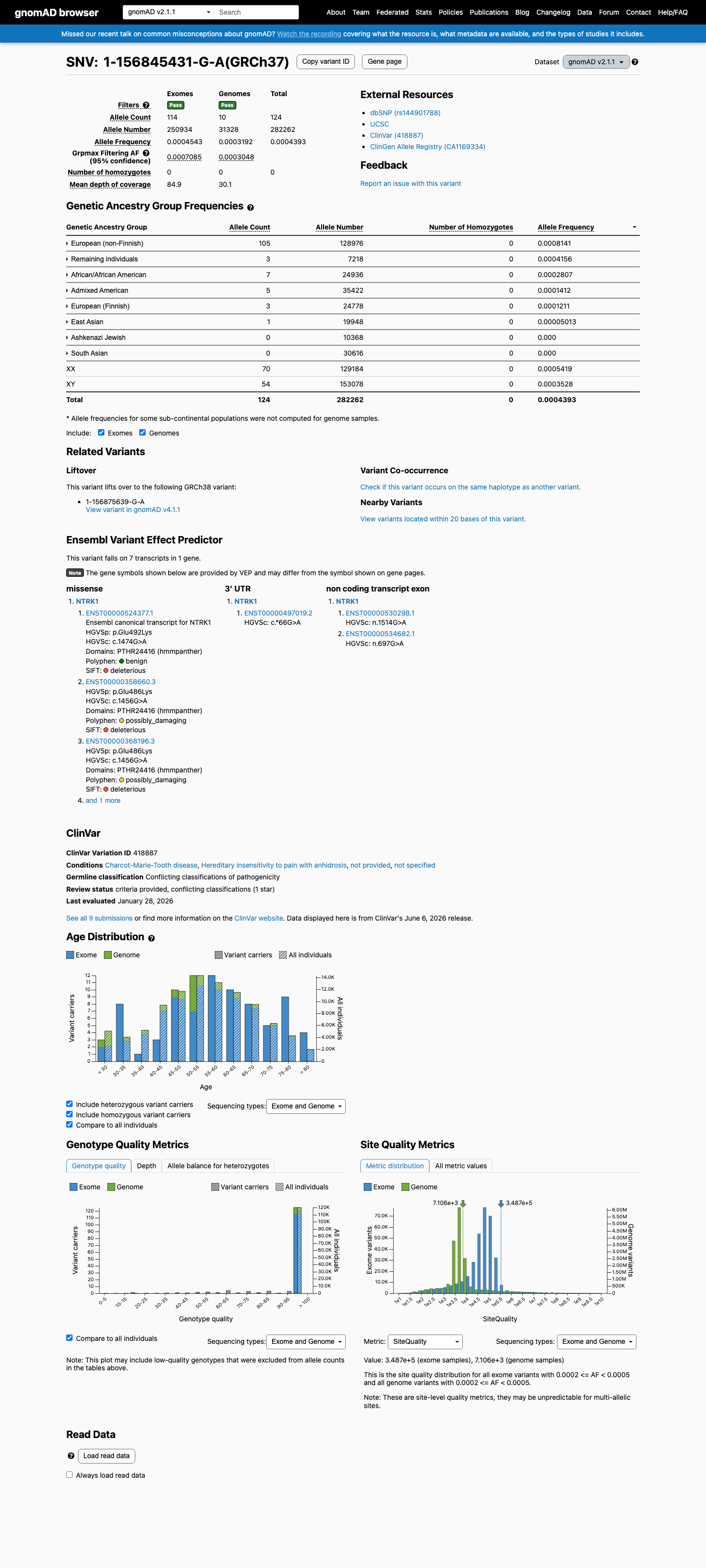
gnomAD v2.1
v4.1
This variant is present in gnomAD v4.1 (AF= 0.000689906; MAF= 0.06899%, 1113/1613264 alleles, homozygotes = 1) and has highest observed frequency in the European (non-Finnish) population (AF= 0.000890702; MAF= 0.08907%, 1051/1179968 alleles, homozygotes = 1); grpmax FAF= 0.00084528.
v2.1
This variant is present in gnomAD v2.1 (AF= 0.000439308; MAF= 0.04393%, 124/282262 alleles, homozygotes = 0) and has highest observed frequency in the European (non-Finnish) population (AF= 0.000814105; MAF= 0.08141%, 105/128976 alleles, homozygotes = 0); grpmax FAF= 0.00070845.
🇨🇦 CA
Not available in gnomAD-Canada v1.0.
Allele frequency by ancestry
three datasets · side by side
gnomAD v4.1
0.069%
· 1113 / 1,613,264
1 hom · FAF 0.085%
1 hom · FAF 0.085%
European (non-Finnish) 1051 / 1,179,968 |
0.089% 1 hom |
Remaining individuals 32 / 62,476 |
0.051% |
African/African American 12 / 74,796 |
0.016% |
European (Finnish) 9 / 63,584 |
0.014% |
Admixed American 8 / 59,962 |
0.013% |
East Asian 1 / 44,838 |
0.0022% |
+ 4 not observed (Amish, Middle Eastern, South Asian, Ashkenazi Jewish)
gnomAD v2.1
0.044%
· 124 / 282,262
0 hom · FAF 0.071%
0 hom · FAF 0.071%
European (non-Finnish) 105 / 128,976 |
0.081% |
Remaining individuals 3 / 7,218 |
0.042% |
African/African American 7 / 24,936 |
0.028% |
Admixed American 5 / 35,422 |
0.014% |
European (Finnish) 3 / 24,778 |
0.012% |
East Asian 1 / 19,948 |
0.005% |
+ 2 not observed (Ashkenazi Jewish, South Asian)
gnomAD Canada 🇨🇦
Absent
· 0 / ?
0 hom
0 hom
Not observed in any ancestry group.
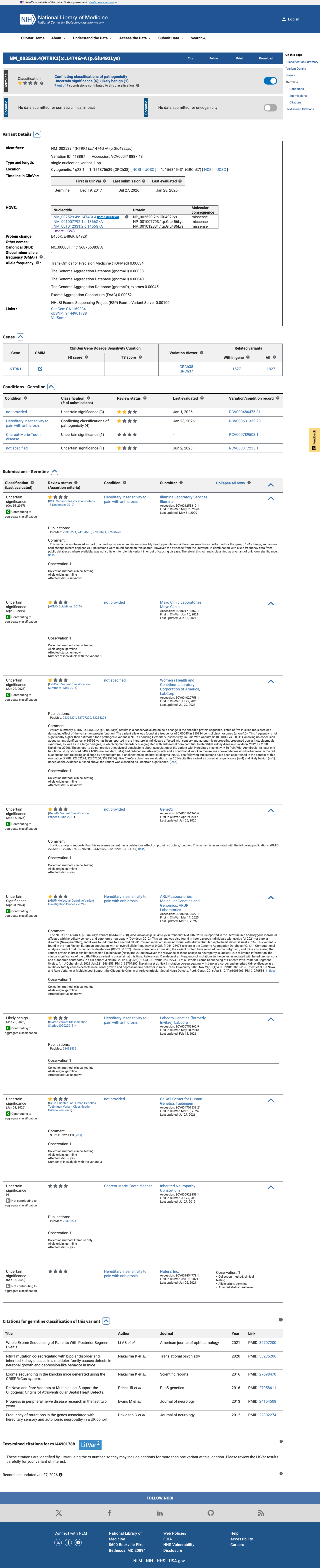
ClinVar
This variant has been reported in ClinVar as Uncertain significance (6 clinical laboratories) and as Uncertain Significance (1 clinical laboratory) and as Likely benign (1 clinical laboratory). (ClinVarID = 418887)
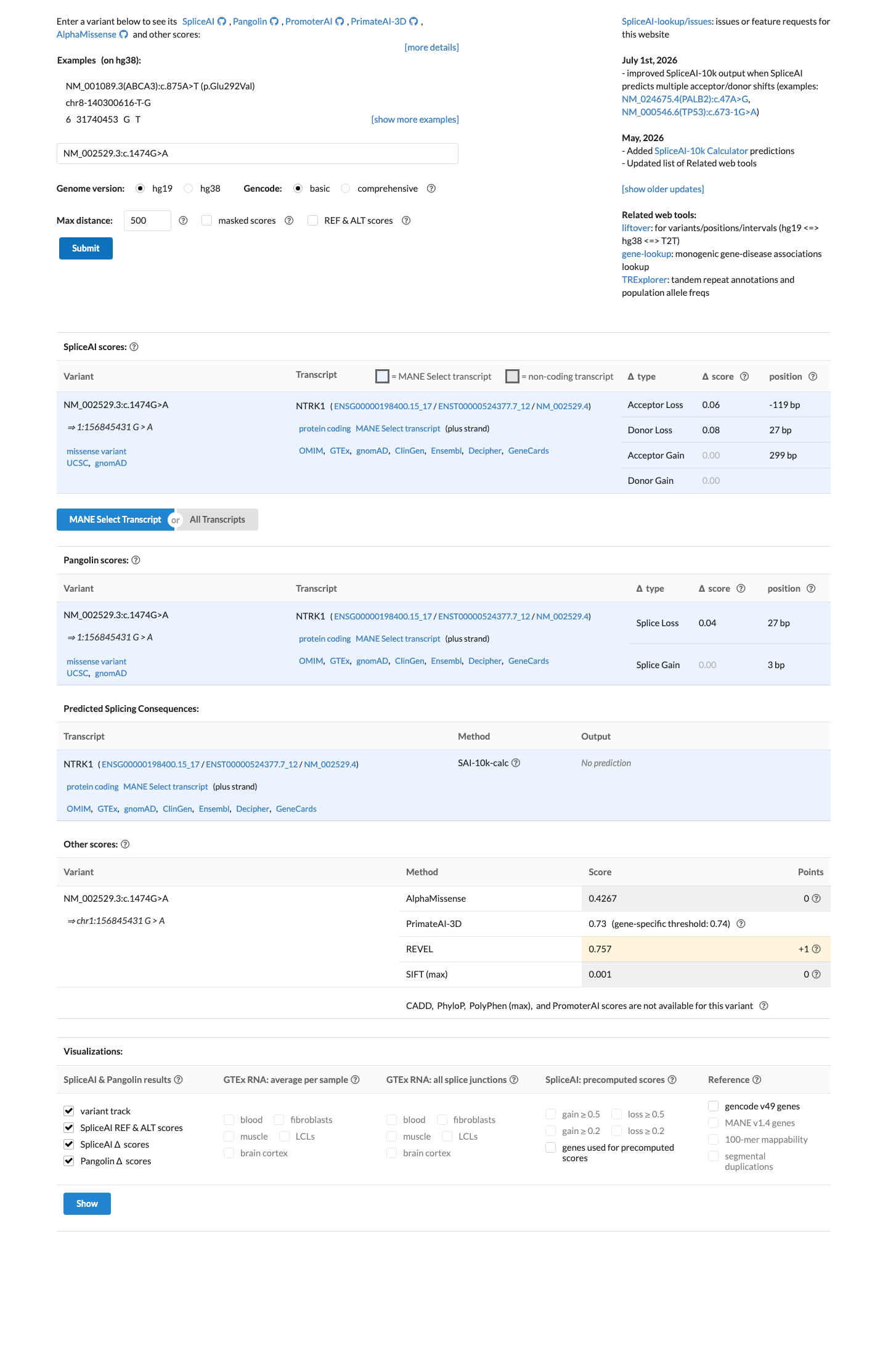
In silico
SpliceAI predicts no significant splice impact for this variant (max delta score = 0.08). REVEL score = 0.757. BayesDel score = 0.296765.
Functional
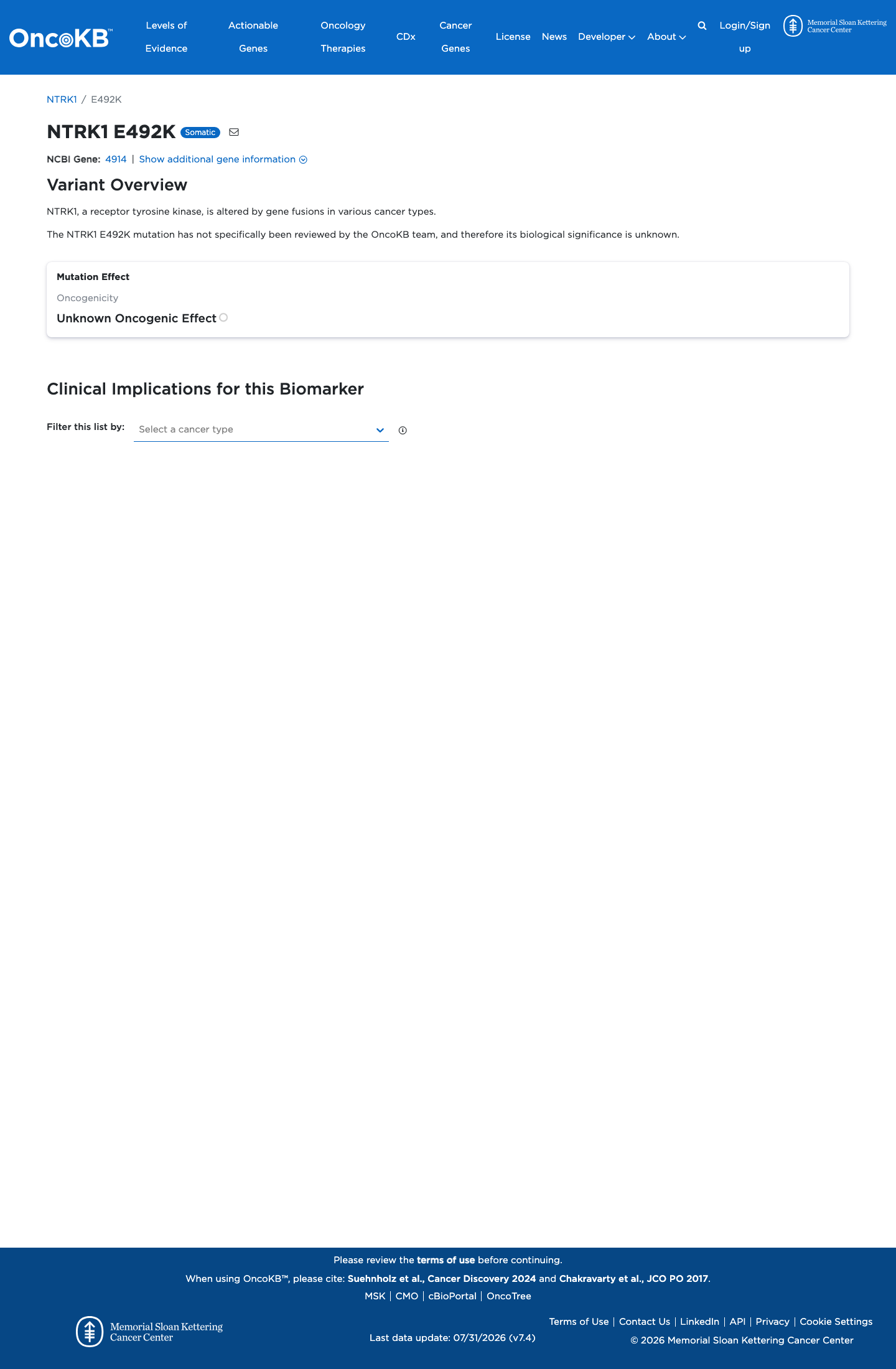
Unknown Oncogenic Effect
OncoKB did not identify variant-specific reviewed functional evidence for this variant; gene-level curated context is available for reviewer follow-up. NTRK1, a receptor tyrosine kinase, is altered by gene fusions in various cancer types.
COSMIC

Cancer hotspots
Somatic evidence
Not in COSMIC / hotspots
COSMIC
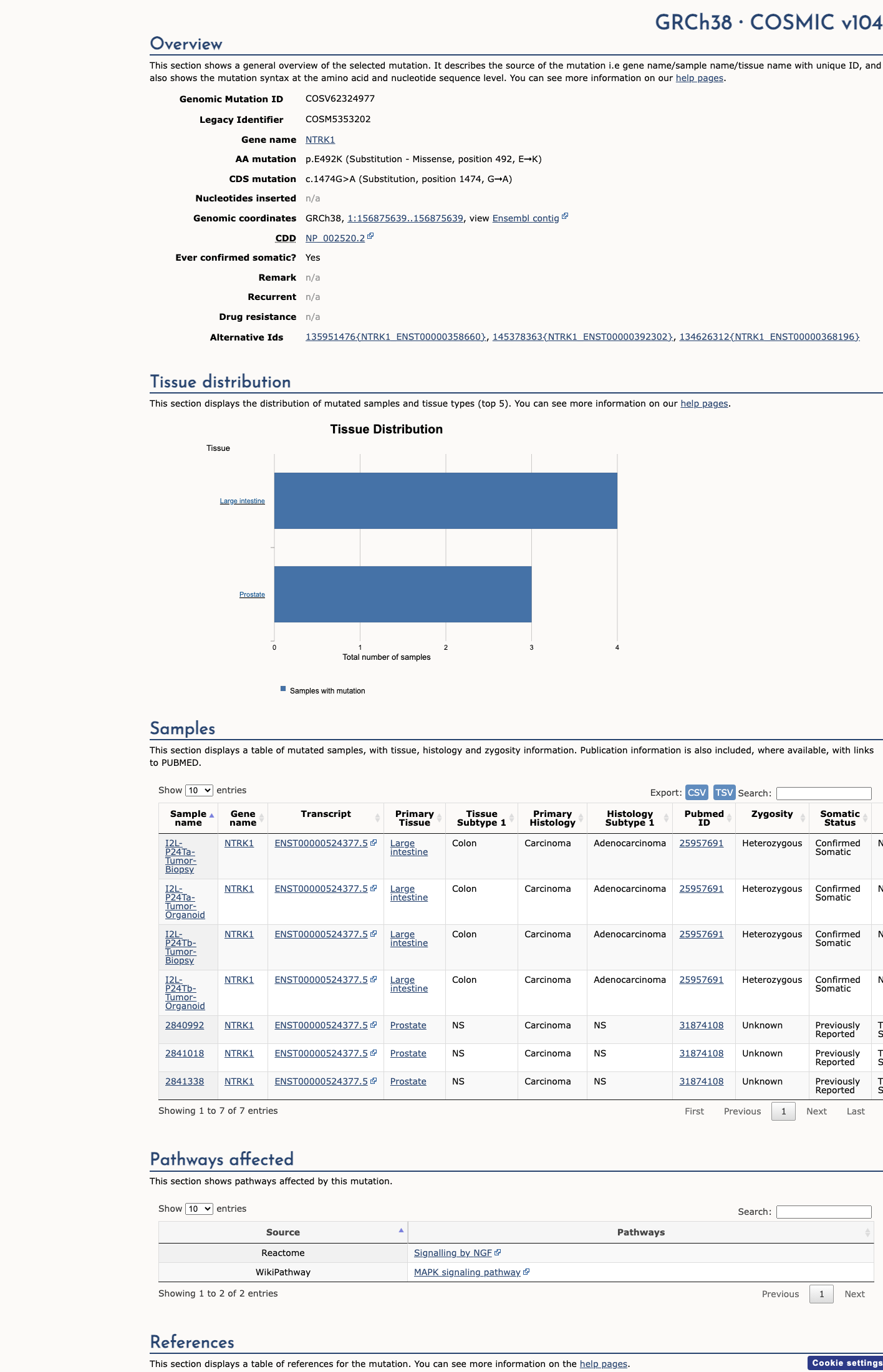
This variant does not lie in a statistically significant hotspot. This variant has previously been reported in somatic cancers (COSMIC; COSV62324977, n = 7 times).
Hotspots
This variant does not lie in a statistically significant hotspot.
Literature · how each cited paper was used
2papers cited
Each card is an audit: what was searched, what was found, whether it names the variant, which criteria it fed, and why. 7 further PMIDs triaged but not cited — see Sources & references.
Progress in peripheral nerve disease research in the last two years.
Searched
c.1474G>Ap.Glu492LysE492KGlu492
Found
Review of Davidson et al. (PMID:22302274) describing the UK HSAN cohort. A novel homozygous NTRK1 missense mutation p.Glu492Lys was identified in a patient with a congenital syndrome consisting of sensory neuropathy, anhidrosis, seizures, deafness, and developmental delay — a phenotype consistent with CIPA/HSAN4.
Variant
✓ Names this variant — characterised directly
Applied to
→PP4
met
Why
Phenotype description confirms highly specific CIPA/HSAN4 presentation; supports PP4 at supporting strength. Primary data is from PMID:22302274 (Davidson et al. 2012), which was not available in full text.
A novel homozygous missense mutation (p.Glu492Lys) resulting in a congenital syndrome consisting of sensory neuropathy, anhidrosis, seizures, deafness and developmental delay was also found.
Location Genetic advances section, paragraph 3 (describing Davidson et al. findings) · Context Not applicable (review article; cites primary data from Davidson et al. 2012) · full text
Ntrk1 mutation co-segregating with bipolar disorder and inherited kidney disease in a multiplex family causes defects in neuronal growth and depression-like behavior in mice.
Searched
c.1474G>Ap.Glu492LysE492K1474G492 residue
Found
NTRK1 E492K (c.1474G>A, p.Glu492Lys) identified in a large multiplex family where it co-segregates with ADTKD and mood disorders including bipolar disorder. Patient-derived iPSC neural stem cells carrying E492K showed reduced neurite outgrowth upon NGF treatment and markedly reduced NTRK1 gene expression. A conditional knock-in mouse model (E495K, mouse ortholog) exhibited altered hippocampal pERK signaling. The authors note that homozygous E492K can cause CIPA.
Variant
✓ Names this variant — characterised directly
Applied to
→PS3
met
→PP1
met
Why
Variant-specific functional data confirmed reduced neurite growth and reduced NTRK1 expression, supporting PS3 at moderate strength. Co-segregation in a multiplex family supports PP1 at supporting strength.
we identified a E492K mutation in the NTRK1 gene that is approximately 1 Mb distal to MUC1
Location Abstract; Results (NTRK1 mutation identification, Functional analysis sections); Discussion · Context iPSC-derived neural stem cells from proband and unaffected relative; neurite outgrowth assay with NGF treatment; qPCR for NTRK1 expression; conditional E495K knock-in mouse model (hippocampal pERK analysis) · full text
Sources & reference links
Triaged references · 7 PMIDs not cited in assessment
25741868 ↗
Standards and guidelines for the interpretation of sequence variants: a joint consensus recommendation of the American College of Medical Genetics and Genomics and the Association for Molecular Pathology.
CLINVAR
27058611 ↗
De Novo and Rare Variants at Multiple Loci Support the Oligogenic Origins of Atrioventricular Septal Heart Defects.
CLINVAR
28492532 ↗
Sherloc: a comprehensive refinement of the ACMG-AMP variant classification criteria.
CLINVAR