FLT3 encodes a receptor tyrosine kinase that helps regulate hematopoiesis, the formation and development of blood cells, through signaling pathways that control blood cell growth, survival, and differentiation. Mutations that keep the receptor permanently activated contribute to acute myeloid leukemia (AML) and acute lymphoblastic leukemia (ALL). In AML, FLT3 is one of the most frequently altered genes, with internal tandem duplications seen in about a quarter of cases and kinase-domain point mutations in about 7%, and drugs targeting FLT3 are currently in clinical development.
This variant
FLT3 is a receptor tyrosine kinase recurrently altered in acute myeloid leukemia, where activating mutations drive uncontrolled blood-cell growth. This missense change (p.Asp839Asn) is classified as a VUS: it is exceptionally rare in the general population, but no functional, clinical, or expert-panel evidence currently establishes whether it affects FLT3 activity. Its contribution to any FLT3-associated malignancy therefore remains uncertain.
Transcript
NM_004119.2
HGVS · transcript:coding
NM_004119.2:c.2515G>A
GRCh38
chr13:28018493 C>T
GRCh37
chr13:28592630 C>T
BasisVUS: only PM2 (Supporting) is met, and a single supporting criterion is insufficient to reach any Pathogenic, Likely pathogenic, Benign, or Likely benign category.▾
VUS: only PM2 (Supporting) is met, and a single supporting criterion is insufficient to reach any Pathogenic, Likely pathogenic, Benign, or Likely benign category.
Classification rationale
PM2VUS
FLT3 c.2515G>Amissense · exon 20
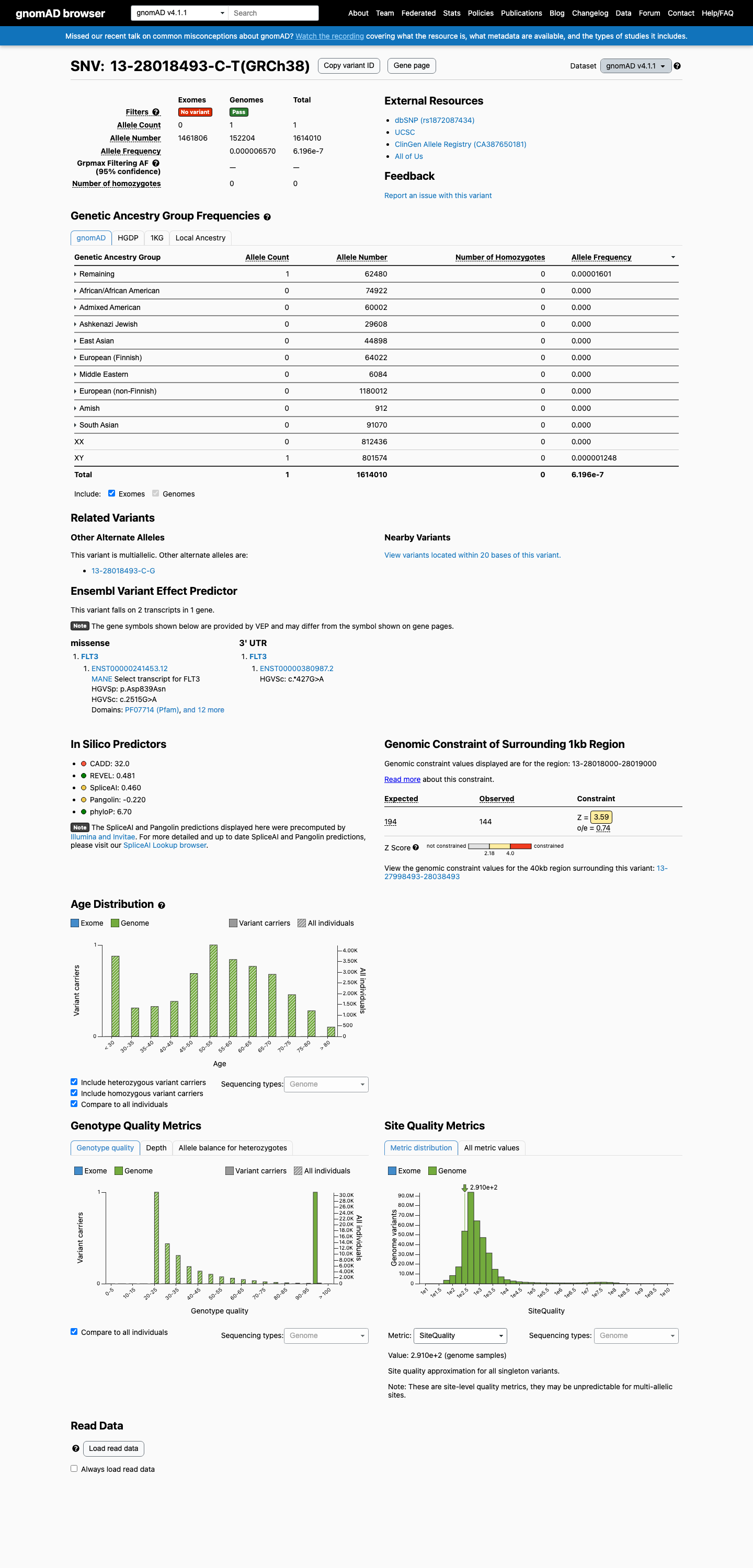
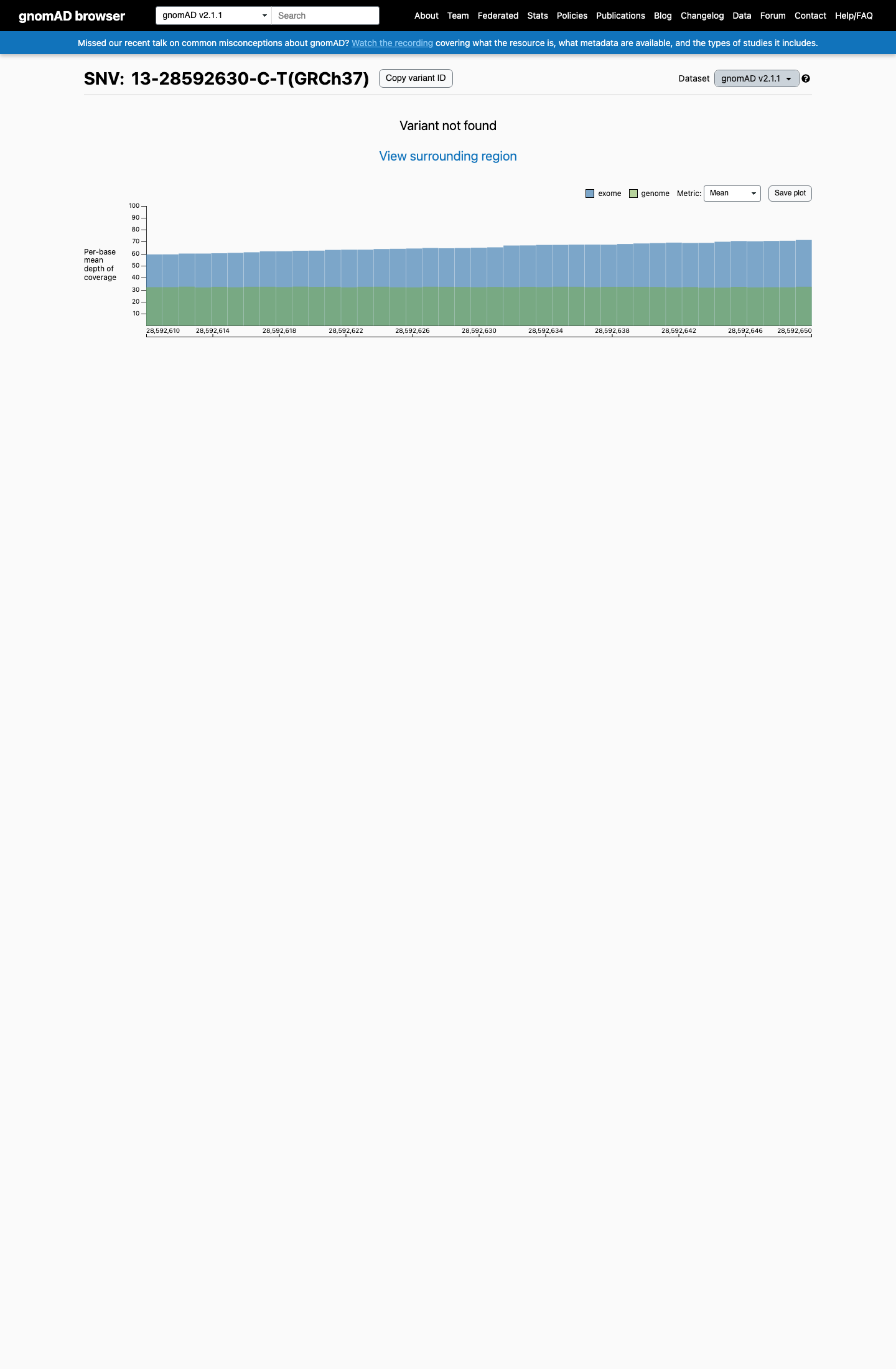
PM2 (Supporting): the variant is absent from gnomAD v2.1 and gnomAD-Canada v1.0, with only 1/1,614,010 alleles (AF 6.2e-07) in gnomAD v4.1, below the <0.1% rare-frequency threshold. Overall classification: VUS — the single Supporting criterion (PM2) does not satisfy any ACMG/AMP 2015 pathogenic or benign combination rule.
PM2→VUS
Gene diagram
· NM_004119.2 · variants mapped to exon structure
FLT3NM_004119.2
Fetching transcript structure from UCSC…
Exons
—
Transcript span
—
Strand
—
Variants mapped
—
Source
UCSC ncbiRefSeqCurated
All variants in FLT3—click a row to locate it on the plot · use the link column to open its page
Variant ↕
Protein
Location
Classification
Link
Applied criteria · 1 applied · 23 assessed
MetEvidence satisfies this criterion.
Not metEvaluated against available evidence; threshold not reached.
Not assessedApplies in principle, but no evidence was found to evaluate it.
N/ADoesn't apply to this variant type.
Applied · 1
Strength Supporting Moderate Strong Very strong
✓
PM2supportingPathogenic
Met (Supporting): absent from gnomAD v2.1 and gnomAD-Canada v1.0, with only 1/1,614,010 alleles in gnomAD v4.1, below the <0.1% rare-frequency threshold.
gnomAD v2.1: variant absent.gnomAD-Canada v1.0: variant absent.gnomAD v4.1: 1 alternate allele among 1,614,010 total alleles, AF 6.195748477394811e-07, zero homozygotes; highest observed population AF 1.6005121638924455e-05 in Remaining individuals, also with zero homozygotes.
Assessed · not applied
· 9 not met · 14 not assessed
Pathogenic
PS1Not assessed: insufficient evidence was available to establish a known pathogenic change at the same residue.
PS2Not assessed: no parental testing or de novo evidence was documented.
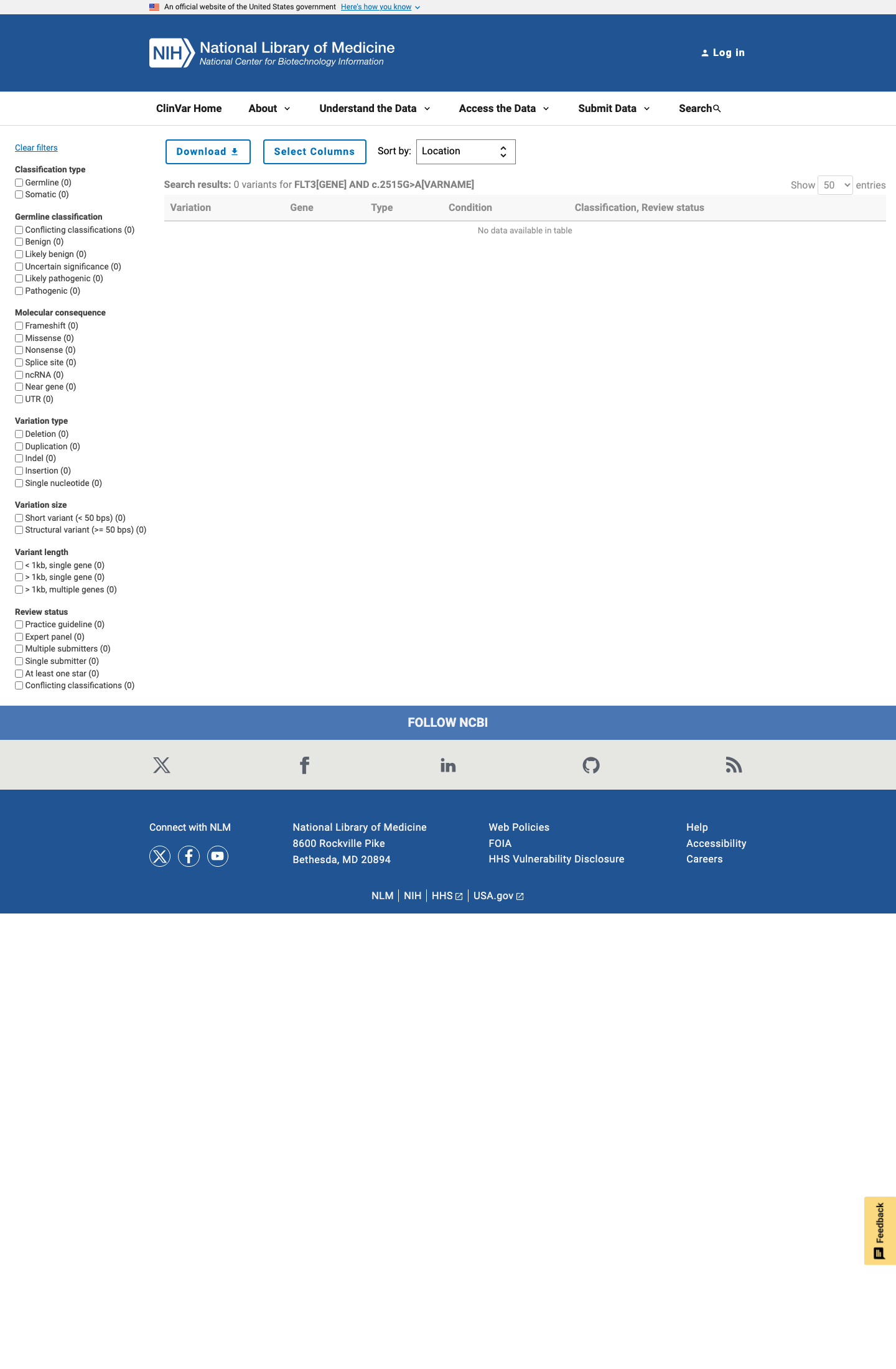
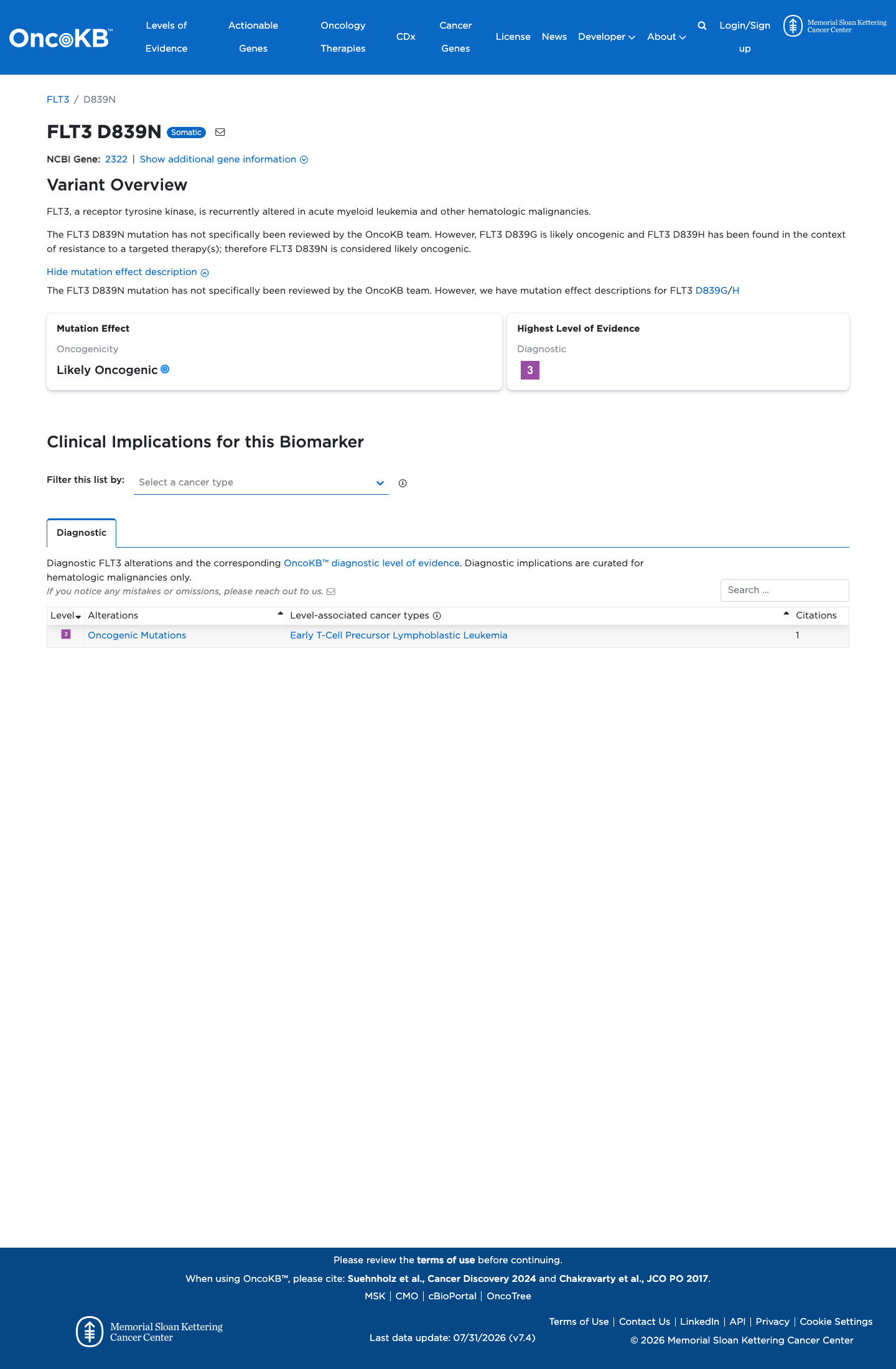
PS3Not met: no variant-specific functional assay evidence exists for p.Asp839Asn, and OncoKB returned no reviewed functional data for this exact change.
PS4Not assessed: no case-control or cohort enrichment data for this variant were available.
PM1Not assessed: insufficient evidence was available to evaluate a protein domain or mutational hotspot.
PM3Not assessed: no evidence of a second pathogenic variant in trans or a recessive-disease context was available.
PM5Not assessed: insufficient evidence was available to evaluate a pathogenic change at the same residue.
PM6Not assessed: no de novo observation with unconfirmed parentage was documented.
PP1Not assessed: no family segregation or cosegregation data were available.
PP2Not assessed: insufficient evidence was available to evaluate the gene's burden of missense variation.
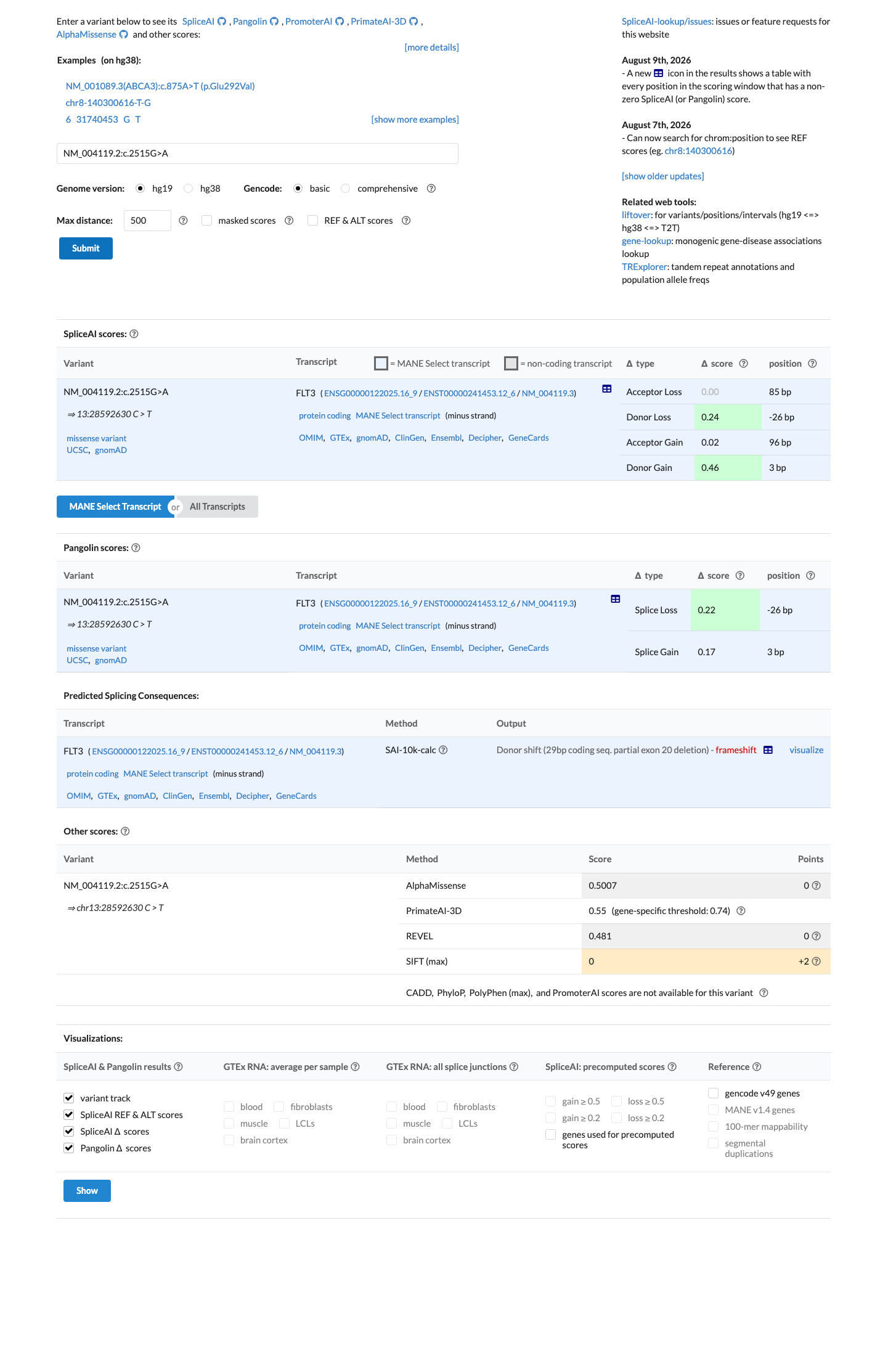
PP3Not met: REVEL 0.481 falls in the indeterminate zone below the 0.644 supporting-pathogenic threshold.
PP4Not assessed: no proband phenotype, family history, or tumor phenotype was available to support a single-gene etiology.
PP5Not met: no ClinVar expert-panel Pathogenic or Likely pathogenic classification exists for this exact variant.
Benign
BA1Not met: gnomAD v4.1 AF 6.19575e-07 (1/1,614,010 alleles) is far below the >1% BA1 threshold.
BS1Not met: the highest observed population AF is 1.60051e-05, far below the >0.3% BS1 threshold.
BS2Not met: gnomAD v4.1 reports zero homozygotes for this variant.
BS3Not met: no functional study of this variant was identified to demonstrate a benign effect.
BS4Not assessed: no unaffected relatives tested for the variant were documented.
BP1Not assessed: insufficient evidence was available to evaluate the variant's effect on a non-canonical transcript.
BP2Not assessed: no genotype or cis/trans phase data were available.
BP4Not met: REVEL 0.481 is above the 0.290 benign-supporting threshold, so it does not support benignity.
BP5Not assessed: no evidence of an alternate molecular cause explaining a phenotype was available.
BP6Not met: no ClinVar expert-panel Benign or Likely benign classification exists for this exact variant.
N/A · 4PVS1 · PM4 · BP3 · BP7
Research & evidence
Population frequency
gnomAD v4.1
gnomAD v2.1
v4.1
This variant is present in gnomAD v4.1 (AF= 6.19575e-07; MAF= 0.00006%, 1/1614010 alleles, homozygotes = 0) and has highest observed frequency in the Remaining individuals population (AF= 1.60051e-05; MAF= 0.00160%, 1/62480 alleles, homozygotes = 0).
v2.1
Absent from gnomAD v2.1.
🇨🇦 CA
Absent from gnomAD-Canada v1.0.
Allele frequency by ancestry
three datasets · side by side
gnomAD v4.1
6.2e-05%
· 1 / 1,614,010
0 hom
Remaining individuals
1 / 62,480
0.0016%
+ 9 not observed (Admixed American, European (Finnish), Amish, East Asian, Middle Eastern, South Asian, Ashkenazi Jewish, African/African American, European (non-Finnish))
OncoKB did not identify variant-specific reviewed functional evidence for this variant; gene-level curated context is available for reviewer follow-up. FLT3, a receptor tyrosine kinase, is recurrently altered in acute myeloid leukemia and other hematologic malignancies.
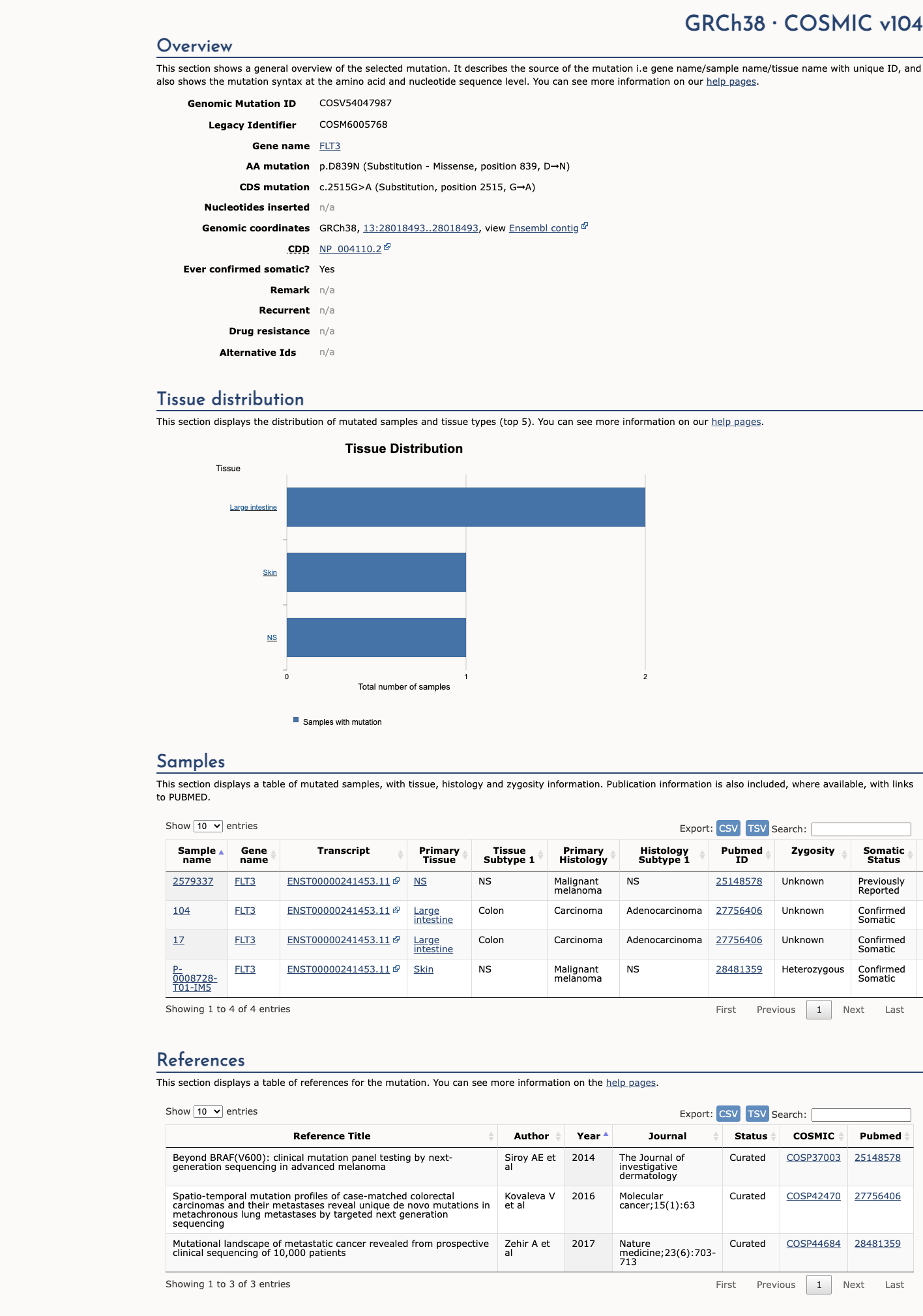
This variant does not lie in a statistically significant hotspot. This variant has previously been reported in somatic cancers (COSMIC; COSV54047987, n = 4 times).
Hotspots
This variant does not lie in a statistically significant hotspot.