Analysis in progress
Initialising…
0%
complete
This report is still being assembled — sections appear as each stage finishes. It isn't final yet.
ERBB2
Final classification
Likely Pathogenic
ERBB2 c.2584A>G · p.Thr862Ala
ERBB2

PS3 (Strong): well-established assays showed enhanced JNK/ERK signaling, anchorage-independent growth, and relative lapatinib resistance (~125 nM vs ~30 nM WT IC50).

Gene
ERBB2
Transcript
NM_004448.3
HGVS · transcript:coding
NM_004448.3:c.2584A>G
Consequence
N/A
GRCh38
chr17:39725139 A>G
GRCh37
chr17:37881392 A>G
Basis Likely Pathogenic: PS3 (strong) plus PM1 (moderate) plus PM2 and PP3 (supporting) satisfies the generic ACMG/AMP 2015 '1 strong + 1 moderate' Likely Pathogenic rule, with no conflicting benign evidence.
Likely Pathogenic: PS3 (strong) plus PM1 (moderate) plus PM2 and PP3 (supporting) satisfies the generic ACMG/AMP 2015 '1 strong + 1 moderate' Likely Pathogenic rule, with no conflicting benign evidence.
Classification rationale
PS3PM1PM2PP3 Likely Pathogenic
ERBB2 c.2584A>G

PS3 (Strong): well-established assays showed enhanced JNK/ERK signaling, anchorage-independent growth, and relative lapatinib resistance (~125 nM vs ~30 nM WT IC50). PM1 (Moderate): residue 862 sits in the ERBB2 tyrosine kinase activation-loop domain, a statistically significant cancer hotspot. PM2 (Supporting): variant is absent (AF = 0) from gnomAD v2.1, v4.1, and gnomAD-Canada. PP3 (Supporting): REVEL score 0.674 falls within the calibrated supporting band (0.644-0.773). Overall: Likely Pathogenic under generic ACMG/AMP 2015, combining 1 strong + 1 moderate + 2 supporting criteria ('1 PS + 1 PM' rule).

PS3 + PM1 + PM2 + PP3 Likely Pathogenic
Gene diagram · NM_004448.3 · variants mapped to exon structure
ERBB2 NM_004448.3
Fetching transcript structure from UCSC…
Applied criteria · 4 applied · 20 assessed
Applied · 4
Strength Supporting Moderate Strong Very strong
PS3 strong Pathogenic
Met (strong): well-established functional assays showed enhanced JNK/ERK signaling, increased colony formation, and relative lapatinib resistance (~125 nM vs ~30 nM WT IC50).
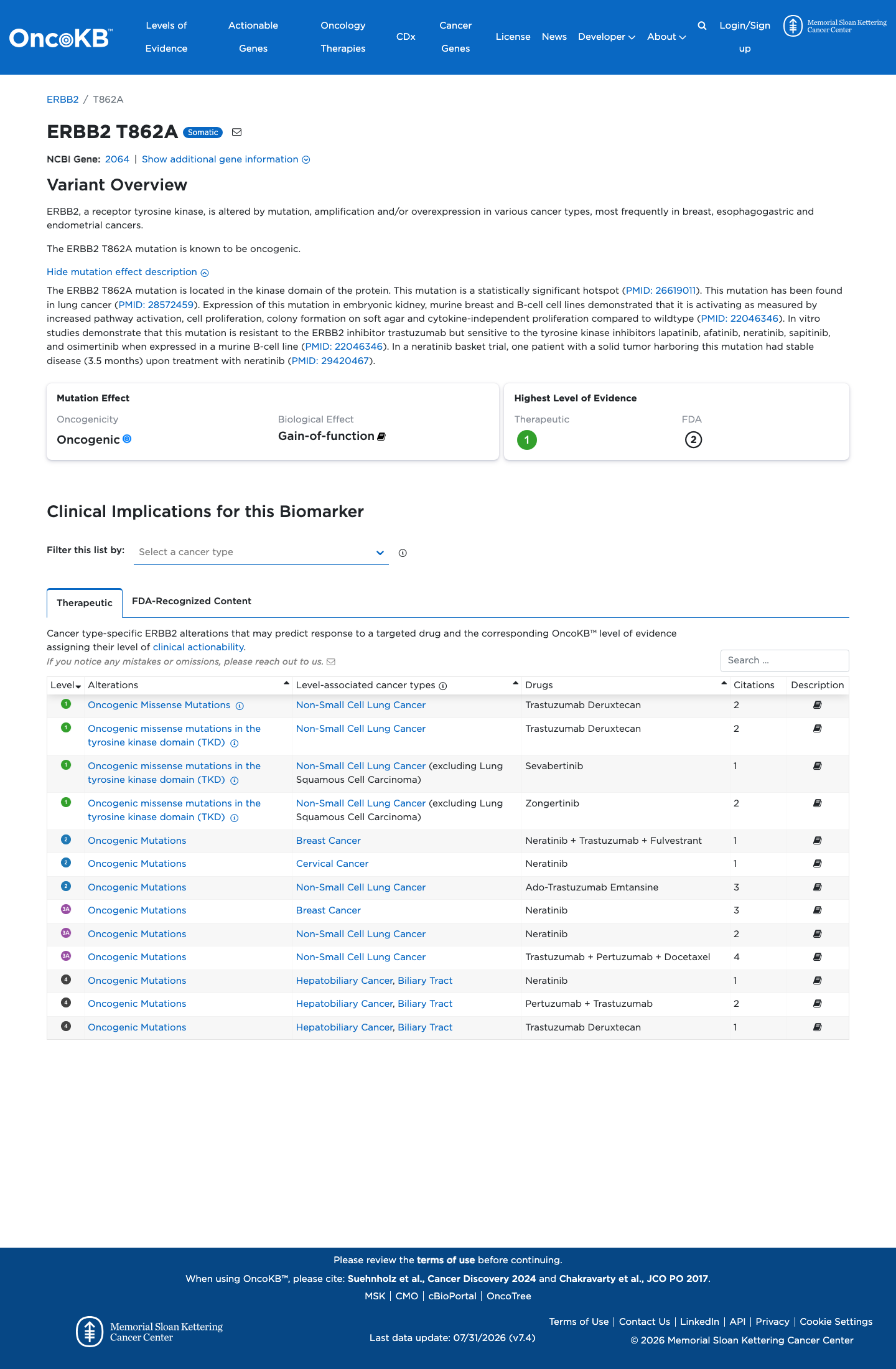
PMID:22046346 - Kavuri et al. 2011: ERBB2-T862A tested in HEK293 (autophosphorylation; JNK/SAPK and ERK1/2 activation vs WT; EGFR/ERBB3 heterodimerization controls), NMuMg soft-agar colony formation (enhanced vs WT), and Ba/F3 MTS drug-sensitivity assays (lapatinib IC50 ~125 nM vs WT ~30 nM; AEE788 IC50 ~191 nM vs WT ~257 nM).PMID:22046346 - T862A recovered as a secondary lapatinib-resistance mutation in an ENU mutagenesis + 2 uM lapatinib selection screen of WT-ERBB2 Ba/F3 cells (Figure S4).oncokb - Variant-specific curated annotation for ERBB2 T862A: biological effect gain-of-function; oncogenicity Oncogenic; cites PMID 22046346 among supporting literature.
PM1 moderate Pathogenic
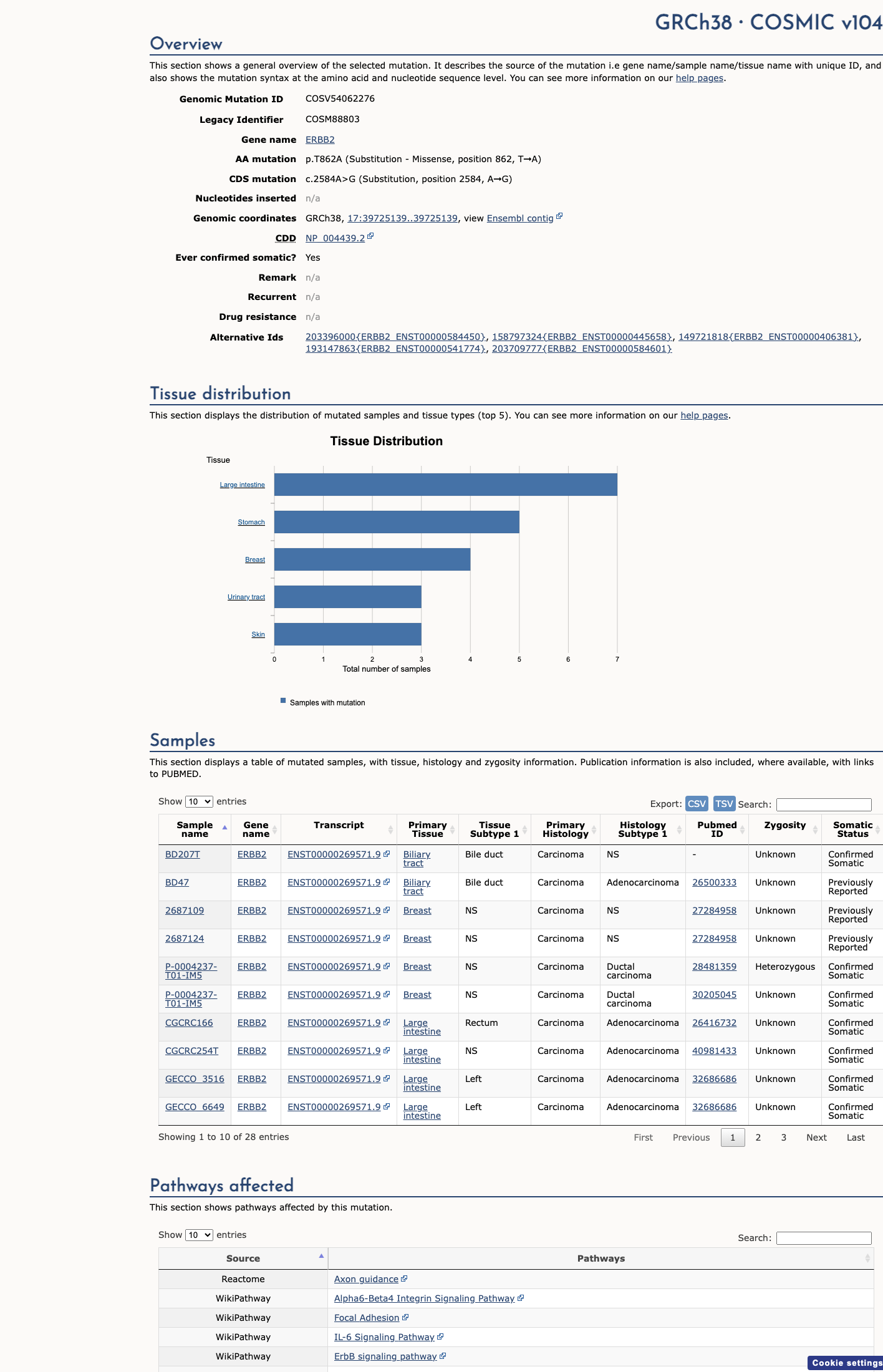
Met (moderate): residue 862 lies in the ERBB2 tyrosine kinase activation-loop domain and is a statistically significant cancer hotspot (27 somatic COSMIC occurrences).
ERBB2 residue 862 lies in the protein tyrosine kinase domain, activation-loop/ATP-site-base region, exon 21 (PMID:22046346, Table 1).cancerhotspots.org records ERBB2 T862 as a statistically significant mutational hotspot (case evidence bundle, evidence.json 'hotspots' result; record_id 'ERBB2 T862'; hotspot-detection methodology per PMID:26619011).COSMIC: 27 somatic occurrences of ERBB2 c.2584A>G (COSV54062276) (case evidence bundle, evidence.json 'cosmic' result).
PM2 supporting review Pathogenic
Met (supporting): absent (AF = 0) from gnomAD v2.1, v4.1, and gnomAD-Canada. Flagged for human review: as a recurrent somatic oncogenic hotspot, this absence may be non-informative for germline pathogenicity.
gnomad_v2: variant absent from gnomAD v2.1 exomes (AF = 0)gnomad_v4: variant absent from gnomAD v4.1 exomes (AF = 0)gnomad_canada: variant absent from gnomAD-Canada v1.0 (HostSeq genomes; AF = 0)
PP3 supporting Pathogenic
Met (supporting): REVEL score 0.674 falls within the ClinGen-calibrated PP3 supporting band (0.644-0.773).
REVEL v1.3 score 0.674 for NM_004448.3:c.2584A>G (p.Thr862Ala) falls in the PP3 supporting band (0.644-0.773) per ClinGen SVI REVEL calibration (Pejaver et al., Am J Hum Genet. 2022;109(12):2163-2177; PMID 36413997).SpliceAI Lookup returned no score (evidence.json results.spliceai, summary: 'No SpliceAI score returned'); no splice-impact prediction available to add to PP3.BayesDel noAF score 0.102536 (prefetch.json steps.bayesdel) excluded from PP3: treated as insufficiently calibrated for PP3/BP4 because no verified published threshold is available to this pipeline.
Assessed · not applied
Pathogenic
PS1 Not met: no other nucleotide change producing p.Thr862Ala is documented; c.2584A>G is the only single-nucleotide change that yields this amino acid.
PS2 Not assessed: no de novo occurrence with confirmed parentage is reported for this variant.
PS4 Not assessed: no case-control study comparing affected individuals with controls is available; only somatic recurrence data exist.
PM3 Not assessed: no allele-phase data or recessive ERBB2 disease context is available to evaluate trans configuration.
PM5 Not met: no alternate missense at residue 862 with established pathogenicity is documented.
PM6 Not assessed: no de novo occurrence (with or without parental confirmation) is reported.
PP1 Not assessed: no family segregation data exist for this variant.
PP2 Not met: ERBB2 has no established germline disease in which missense variants are a common mechanism.
PP4 Not assessed: no proband phenotype or family history is available to evaluate.
PP5 Not met: the variant is absent from ClinVar, so no expert-panel pathogenic classification exists.
Benign
BA1 Not met: allele frequency is 0 in every queried population dataset, far below the >5% benign stand-alone threshold.
BS1 Not met: absent from all queried population databases (AF = 0), so it cannot exceed any disorder-expected frequency.
BS2 Not met: no heterozygous or homozygous observations exist in any population dataset or ClinVar.
BS3 Not met: functional studies demonstrate enhanced activation and transforming activity, the opposite of a benign effect.
BS4 Not assessed: no data on absence of the variant in affected family members are available.
BP1 Not met: ERBB2 disease relevance is somatic gain-of-function oncogenesis, not primarily truncating variants.
BP2 Not assessed: no allele-phase observations relative to a pathogenic variant are available.
BP4 Not met: REVEL score 0.674 is far above the BP4 supporting upper threshold of 0.183.
BP5 Not assessed: no case-level data show an alternate molecular diagnosis for a carrier.
BP6 Not met: the variant is absent from ClinVar, so no expert-panel benign classification exists.
N/A · 4 PVS1 · PM4 · BP3 · BP7
Research & evidence
Population frequency · supports pathogenic
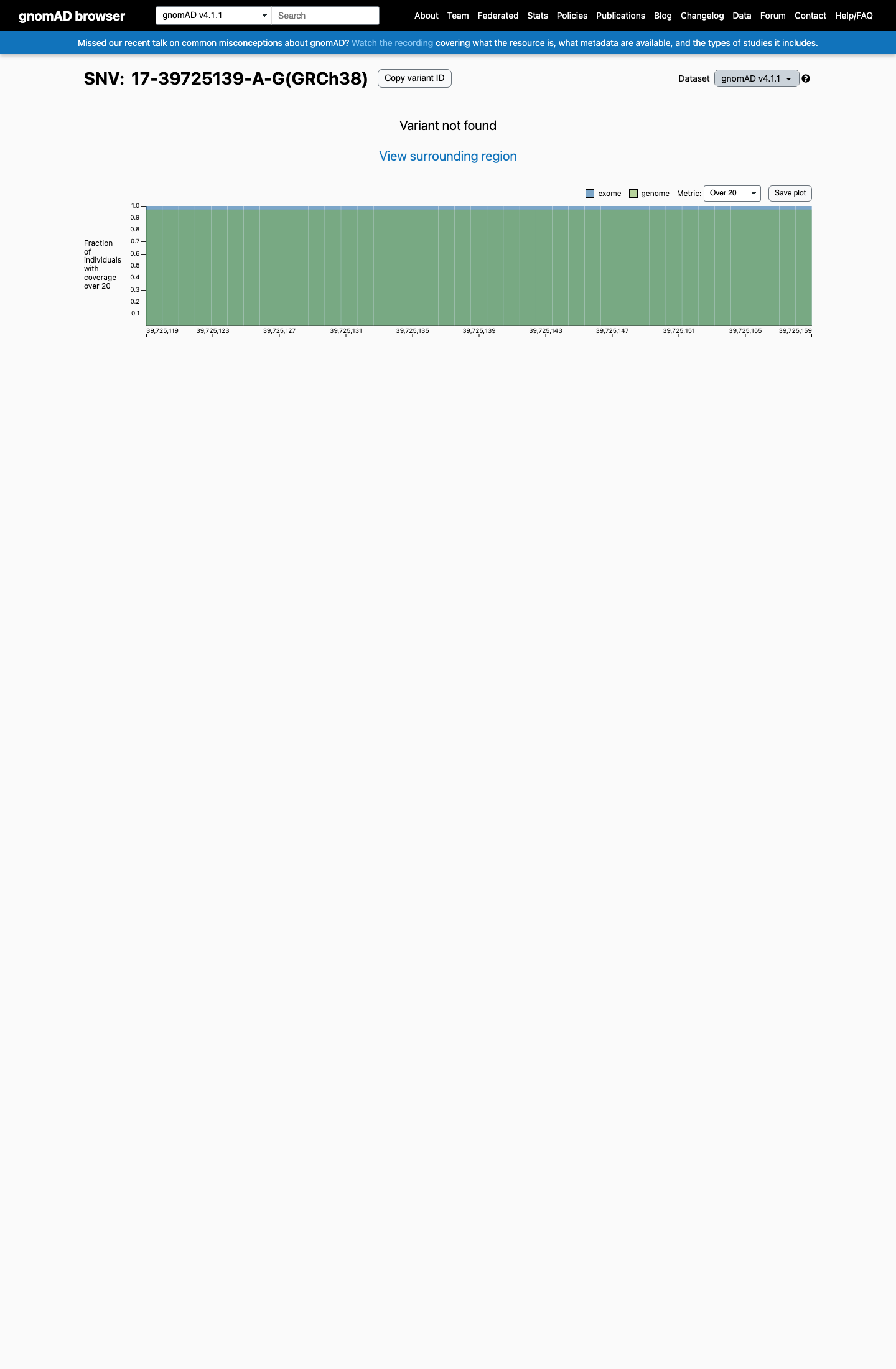
gnomAD v4.1 screenshot
gnomAD v4.1
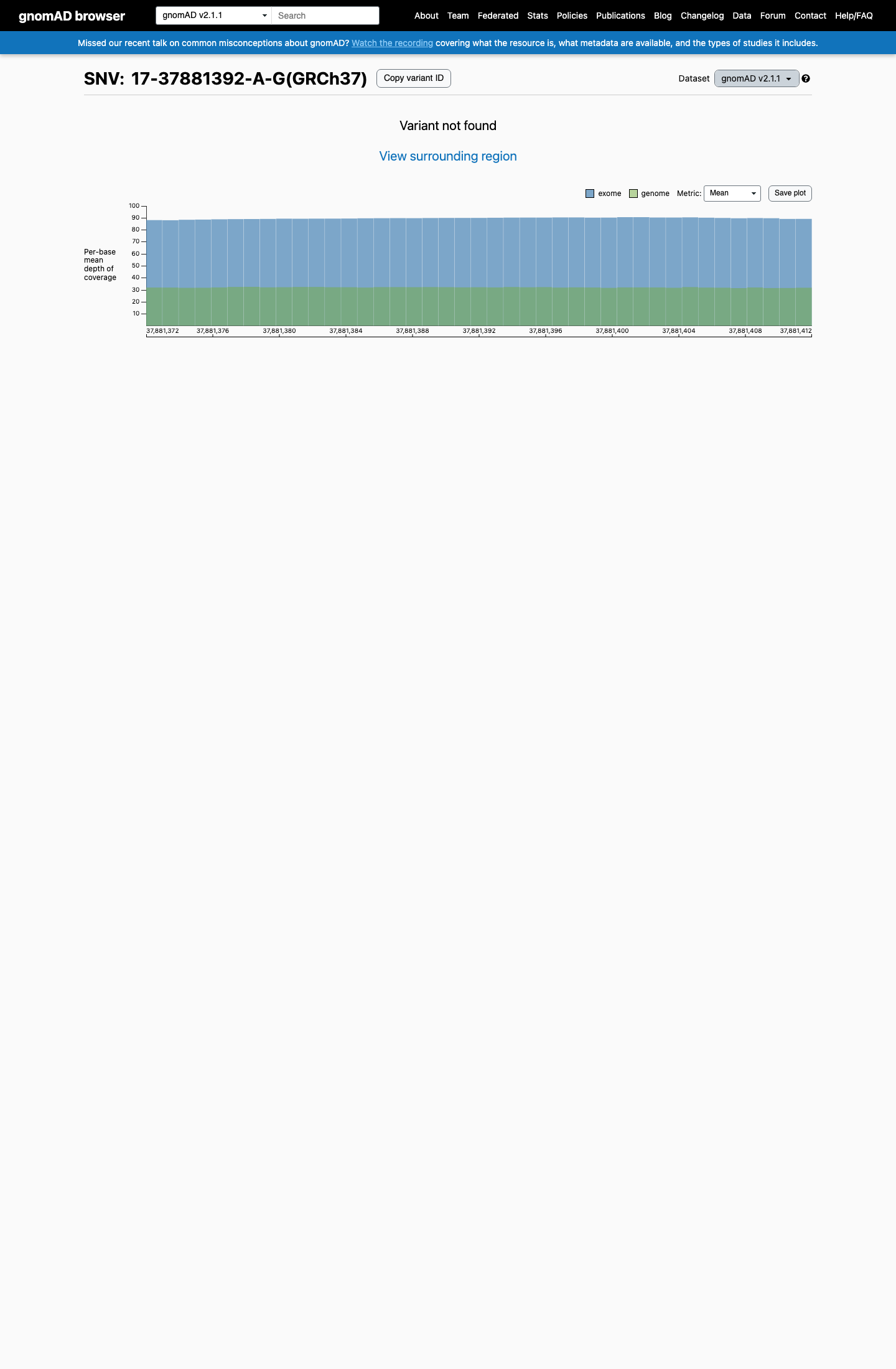
gnomAD v2.1 screenshot
gnomAD v2.1
v4.1
Absent from gnomAD v4.1.
v2.1
Absent from gnomAD v2.1.
🇨🇦 CA
Absent from gnomAD-Canada v1.0.
Allele frequency by ancestry
three datasets · side by side
gnomAD v4.1
Absent · 0 / ?
0 hom
Not observed in any ancestry group.
gnomAD v2.1
Absent · 0 / ?
0 hom
Not observed in any ancestry group.
gnomAD Canada 🇨🇦
Absent · 0 / ?
0 hom
Not observed in any ancestry group.
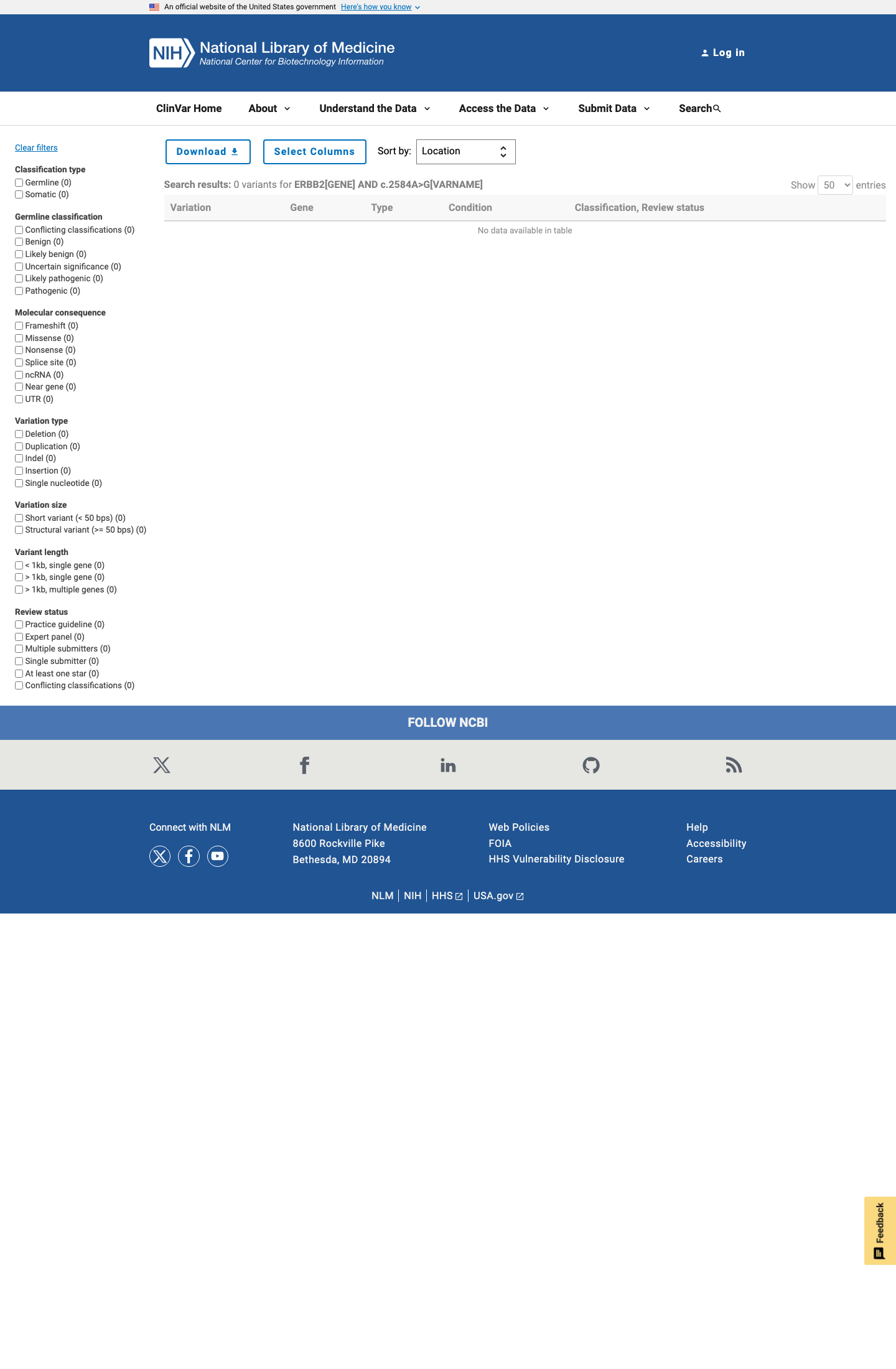
ClinVar screenshot
ClinVar
This variant is absent from ClinVar.
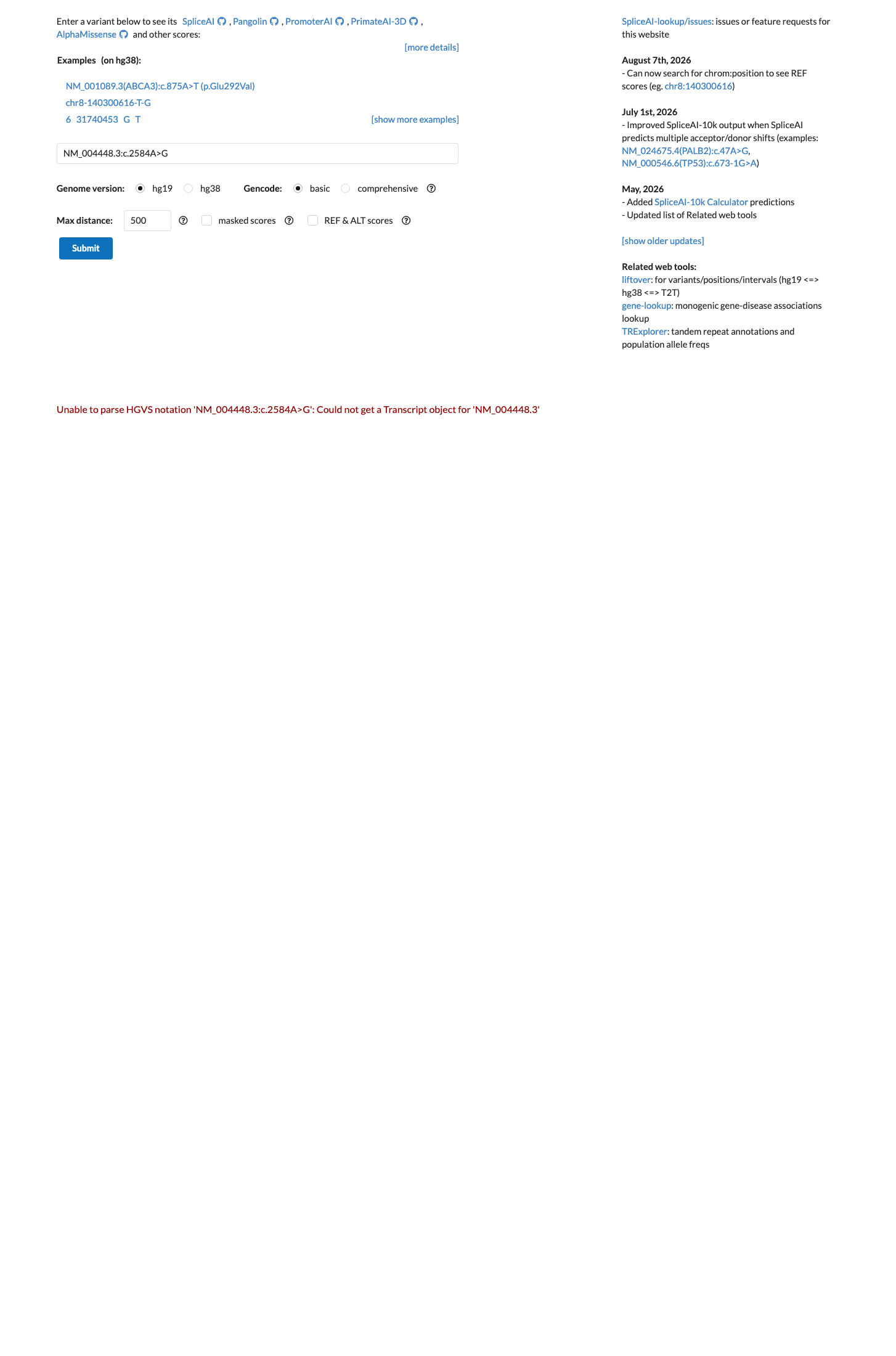
SpliceAI screenshot
In silico
REVEL score = 0.674. BayesDel score = 0.102536.
Functional / OncoKB screenshot
Functional Oncogenic
OncoKB identified variant-specific curated literature and context relevant to functional review; biological-effect context: Gain-of-function; curated oncogenicity label: Oncogenic.
OncoKB ↗
COSMIC screenshot
COSMIC
Cancer hotspots screenshot
Cancer hotspots
Somatic evidence Hotspot
COSMIC
This variant lies in a statistically significant hotspot. This variant has previously been reported in somatic cancers (COSMIC; COSV54062276, n = 27 times).
Hotspots
This variant lies in a statistically significant hotspot.
Literature · how each cited paper was used
4papers cited
Each card is an audit: what was searched, what was found, whether it names the variant, which criteria it fed, and why.
Differential sensitivity of ERBB2 kinase domain mutations towards lapatinib.
Searched
T862AThr862862c.2584A>G
Found
Kancha et al. explicitly studied ERBB2-T862A (reported in primary gastric cancer) among a panel of ERBB2 kinase-domain mutants. T862A retained autokinase activity, displayed enhanced activation of JNK/SAPK (and to a lesser extent ERK1/2) relative to wild-type ERBB2, and showed enhanced transforming potential in NMuMg colony-formation and soft-agar assays. It was lapatinib-sensitive (cellular IC50 125 nM; 'lapatinib-sensitive' group) and was recovered as a secondary lapatinib-resistance mutation in an in vitro ENU mutagenesis screen. Table 1 places T862A in exon 21, functional region 'activation loop' (text also describes T862 as forming the base of the ATP binding site), establishing residue 862 as functionally critical within the ERBB2 tyrosine kinase domain.
Variant
✓ Names this variant — characterised directly
Applied to
PS3 strong
Direct functional characterization of the exact variant ERBB2-T862A showing damaging/activating effect: enhanced JNK/SAPK and ERK1/2 signaling, enhanced anchorage-independent growth vs WT, altered lapatinib sensitivity, and recovery as a secondary lapatinib-resistance mutation.
PM1 moderate
Places ERBB2 residue T862 within the kinase-domain activation-loop/ATP-site-base region (exon 21) and documents T862A as an activating, transforming ERBB2 mutant, supporting PM1's critical well-established functional domain prong.
T862A 21 Activation loop Primary gastric cancer 125 191 ... mutations L755S, L755P, V777L, T798M and T862A displayed enhanced activation of JNK/SAPK and to a lesser extent of ERK1/2 compared to wt-ERBB2 ... ERBB2-L755S, ERBB2-L755P, ERBB2-V777L and ERBB2-T862A formed more colonies compared to wt-ERBB2 (Figure 3B) indicating an enhanced transforming potential ... Indeed we were able to recover secondary resistance mutations in this screen (ERBB2-L755S and ERBB2-T862A)
Location Table 1 (ERBB2 mutant panel with IC50 values); Results and Discussion, Figures 2-4 (Figure 3B colony formation); Materials and Methods (lapatinib resistance screen)  ·  Context HEK293 transfection with western blotting (autophosphorylation, JNK/SAPK, ERK1/2); NMuMg colony formation and soft-agar transformation assays; Ba/F3 proliferation assays with lapatinib and AEE788 (IC50); ENU mutagenesis-based lapatinib-resistance screen with sequencing of the ERBB2 kinase domain.  ·  full text
Rule & framework references · cited for criterion definitions, not variant evidence
26619011 ↗ Identifying recurrent mutations in cancer reveals widespread lineage diversity and mutational specificity.
28572459 ↗ AACR Project GENIE: Powering Precision Medicine through an International Consortium.
29420467 ↗ HER kinase inhibition in patients with HER2- and HER3-mutant cancers.
Sources & reference links
8Sources
ClinVar
gnomAD v2.1
gnomAD v4.1
gnomAD-Canada
SpliceAI
OncoKB
COSMIC
Cancer hotspots