NM_005631.4:c.1604G>T (p.Trp535Leu) is absent from all population databases including gnomAD v2.1, v4.1, and gnomAD-Canada, with an allele frequency of 0.0%.1 W535L is a well-established constitutively active gain-of-function variant in SMO, demonstrated in Smo−/− MEFs to activate Hedgehog signaling (GLI1 reporter) in the absence of ligand and to confer strong resistance to the SMO inhibitor vismodegib (IC50 >320 nM vs wildtype ~8 nM).2 W535 is located at position 7.55 in transmembrane helix VII, a conserved tryptophan residue critical for maintaining SMO autoinhibition. Structural studies confirm that mutation of this residue disrupts the inactive receptor conformation, producing constitutive activation.3 W535L lies within a statistically significant mutational hotspot and no benign variation is observed at this residue in population databases.4 REVEL in silico prediction score of 0.922 strongly supports a deleterious effect.5 Applying generic ACMG/AMP 2015 final classification combination rules (PMID:25741868): Two moderate criteria (PS3, PM1) plus two supporting criteria (PM2, PP3) meet the threshold for Likely Pathogenic.6
Final classification
Likely Pathogenic
PS3PM1PM2PP3
SMO
c.1604G>T
p.Trp535Leu
This variant
NM_005631.4:c.1604G>T (p.Trp535Leu) is absent from all population databases including gnomAD v2.1, v4.1, and gnomAD-Canada, with an allele frequency of 0.0%.
gene-specific framework lacked a usable explicit final combination framework, so generic ACMG/AMP 2015 final-combination rules were applied as fallback; applied criteria: PS3 moderate, PM1 moderate, PM2 supporting, PP3 supporting; combination = 2 moderate + 2 supporting, which maps to Likely Pathogenic.
Classification rationale
PS3PM1PM2PP3
Likely Pathogenic
SMO c.1604G>T
PS3 + PM1 + PM2 + PP3
→
Likely Pathogenic
5
revel
6
generic_acmg_combination_rules
LYFE Sciences is an AI system, and it can make mistakes. Criteria
may be applied incorrectly, sources may be misread, and a confident-looking
classification can still be wrong. Double-check every criterion and
its underlying evidence before relying on any call.
Gene diagram
· NM_005631.4 · variants mapped to exon structure
SMO
NM_005631.4
Fetching transcript structure from UCSC…
Applied criteria · 4 applied · 16 assessed
MetEvidence satisfies this criterion.
Not metEvaluated against available evidence; threshold not reached.
Not assessedApplies in principle, but no evidence was found to evaluate it.
N/ADoesn't apply to this variant type.
Applied · 4
Strength
Supporting
Moderate
Strong
Very strong
PS3
moderate
review
Pathogenic
Well-established functional studies demonstrate that W535L is a constitutively active gain-of-function variant in SMO. In Smo−/− MEFs, W535L drives Hedgehog pathway activation (GLI1 reporter) in the absence of ligand, confers strong resistance to the SMO inhibitor vismodegib (IC50 >320 nM vs wildtype IC50 ~8 nM), and provides a selective growth advantage to tumor cells under vismodegib treatment. W535L was originally identified as an activating mutation in sporadic BCCs (Xie et al. 1998) and confirmed in multiple independent studies. At the structural level, W535 is a conserved tryptophan (7.55) in helix VII critical for maintaining SMO autoinhibition; its mutation disrupts this regulatory mechanism. Functional evidence is robust and replicated across independent laboratories, but all studies are in somatic/cancer models; germline functional data are not available.
W535L is constitutively active in Smo−/− MEFsactivating GLI1 reporter in absence of SHH ligand (Atwood et al. 2015)W535L confers vismodegib resistance with IC50 >320 nM (Atwood et al. 2015)
PM1
moderate
Pathogenic
W535 is located in a statistically significant mutational hotspot (Cancer Hotspots) within a critical functional domain. It resides in transmembrane helix VII at position 7.55, a conserved tryptophan essential for SMO autoinhibition. Mutation of this residue is shown to produce constitutive receptor activation (Wang et al. 2013). No benign variation is observed at this residue in population databases.
W535 is a statistically significant hotspot residue (Cancer Hotspots)W535 (7.55) is a structurally critical residue for SMO autoinhibitionmutation leads to constitutive activation (Wang et al. 2013)
PM2
supporting
Pathogenic
NM_005631.4:c.1604G>T is absent from all population databases: gnomAD v2.1 (exomes), gnomAD v4.1 (exomes + genomes), and gnomAD-Canada v1.0 (genomes). Allele frequency in all populations is 0.0%, well below the 0.1% PM2 threshold for non-VCEP assessment.
Absent from gnomAD v2.1 (AF = nullAC = null)Absent from gnomAD v4.1 (AF = null
PP3
supporting
Pathogenic
REVEL predicts a strongly deleterious effect (score 0.922). BayesDel score (0.463) is borderline. SpliceAI predicts no splice impact (max delta 0.00), consistent with a purely missense effect. The high REVEL score provides in silico support for pathogenicity.
REVEL score 0.922 (strongly pathogenic prediction)BayesDel score 0.463 (borderline)SpliceAI max delta 0.00 (no splice impact)
Assessed · not applied
· 16 not met · 0 not assessed
Pathogenic
PS1
No prior pathogenic variant at codon 535 with a different nucleotide change producing the same amino acid (Trp535Leu) has been identified.
PS4
No germline case-control data demonstrating statistically significant enrichment of W535L in affected individuals versus population controls.
PP1
No cosegregation data are available for this variant.
PP2
Insufficient evidence to establish that SMO has a low rate of benign missense variation.
PP4
No patient phenotype or family history information is available for this variant assessment.
PP5
The single ClinVar submission (OMIM, SCV000028794) classifies the variant as Pathogenic but with review status 'no assertion criteria provided' in a somatic context.
Benign
BA1
The variant is absent from all population databases (gnomAD v2.1, v4.1, gnomAD-Canada).
BS1
The variant is absent from gnomAD.
BS2
The variant is absent from population databases, providing no evidence of observation in healthy adults.
BS3
Well-established functional studies demonstrate the OPPOSITE of a benign effect: W535L is a constitutively active gain-of-function variant that drives Hedgehog pathway activation in the absence of ligand and confers strong resistance to SMO inhibitors.
BS4
No cosegregation data are available to assess lack of segregation in affected family members.
BP1
Missense gain-of-function variants are a recognized disease mechanism for SMO.
BP2
No phasing data are available to assess whether this variant has been observed in trans with a pathogenic variant or in cis with a pathogenic variant.
BP4
REVEL score of 0.922 strongly predicts a deleterious effect, contradicting BP4 requirements for multiple lines of computational evidence suggesting no impact.
BP5
No data available to demonstrate that this variant is found in a case with an alternate molecular basis for disease.
BP6
No reputable source has reported this variant as benign.
N/A · 6
PVS1 · PS2 · PM5 · PM6 · BP3 · BP7
Research & evidence
Population frequency · supports pathogenic
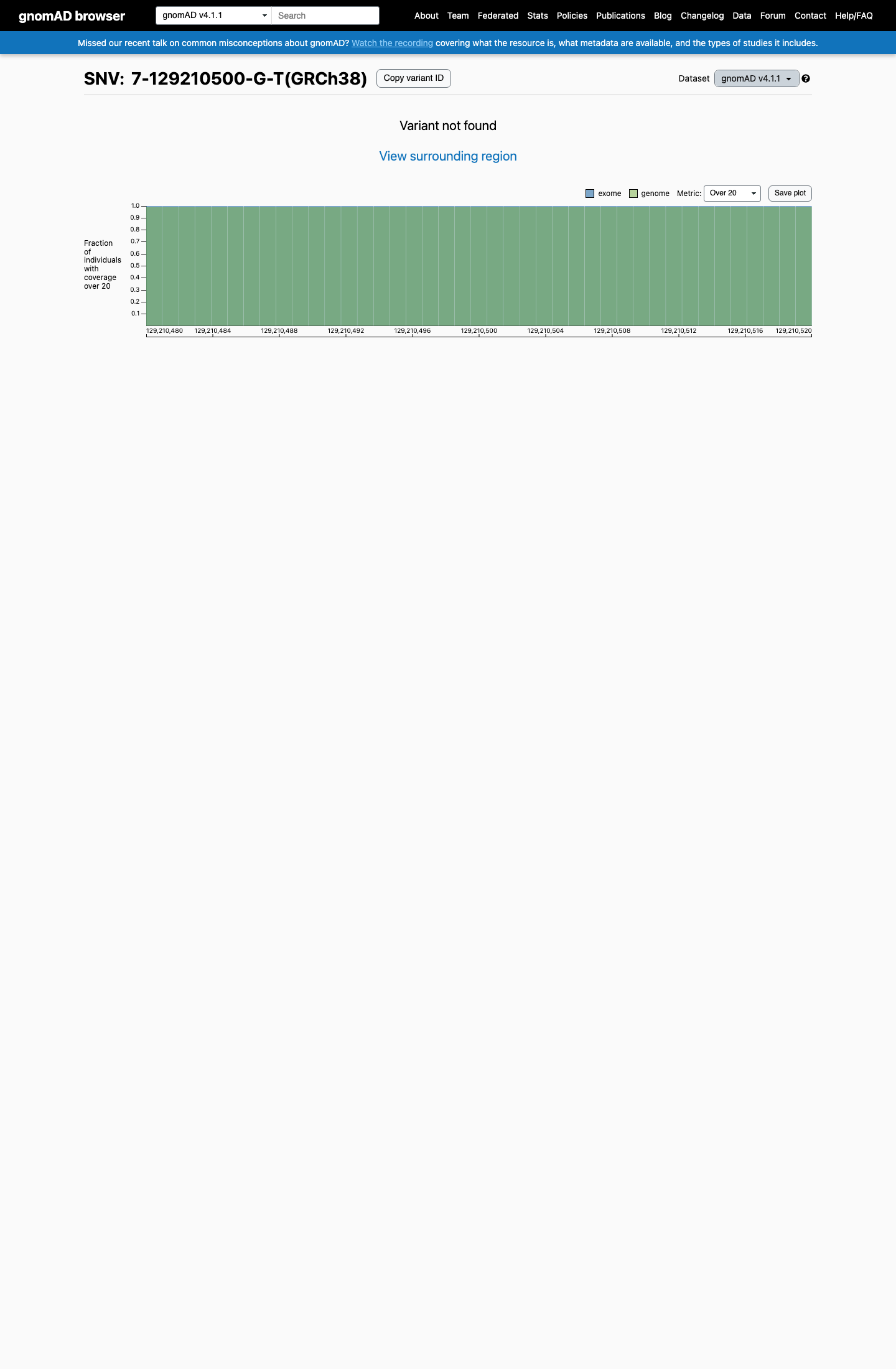
gnomAD v4.1
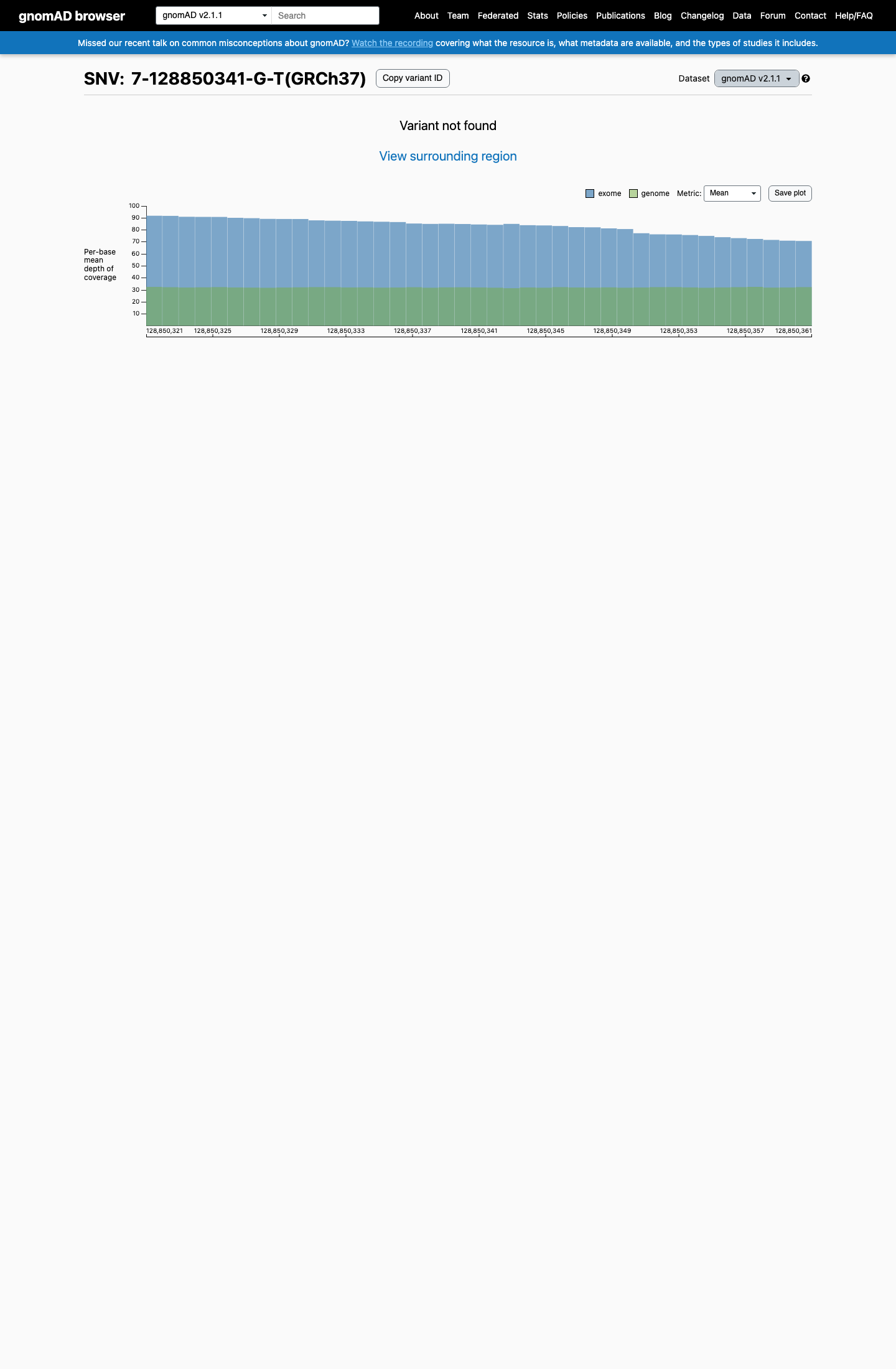
gnomAD v2.1
v4.1
Absent from gnomAD v4.1.
v2.1
Absent from gnomAD v2.1.
🇨🇦 CA
Absent from gnomAD-Canada v1.0.
Allele frequency by ancestry
three datasets · side by side
gnomAD v4.1
Absent
· 0 / ?
0 hom
0 hom
Not observed in any ancestry group.
gnomAD v2.1
Absent
· 0 / ?
0 hom
0 hom
Not observed in any ancestry group.
gnomAD Canada 🇨🇦
Absent
· 0 / ?
0 hom
0 hom
Not observed in any ancestry group.
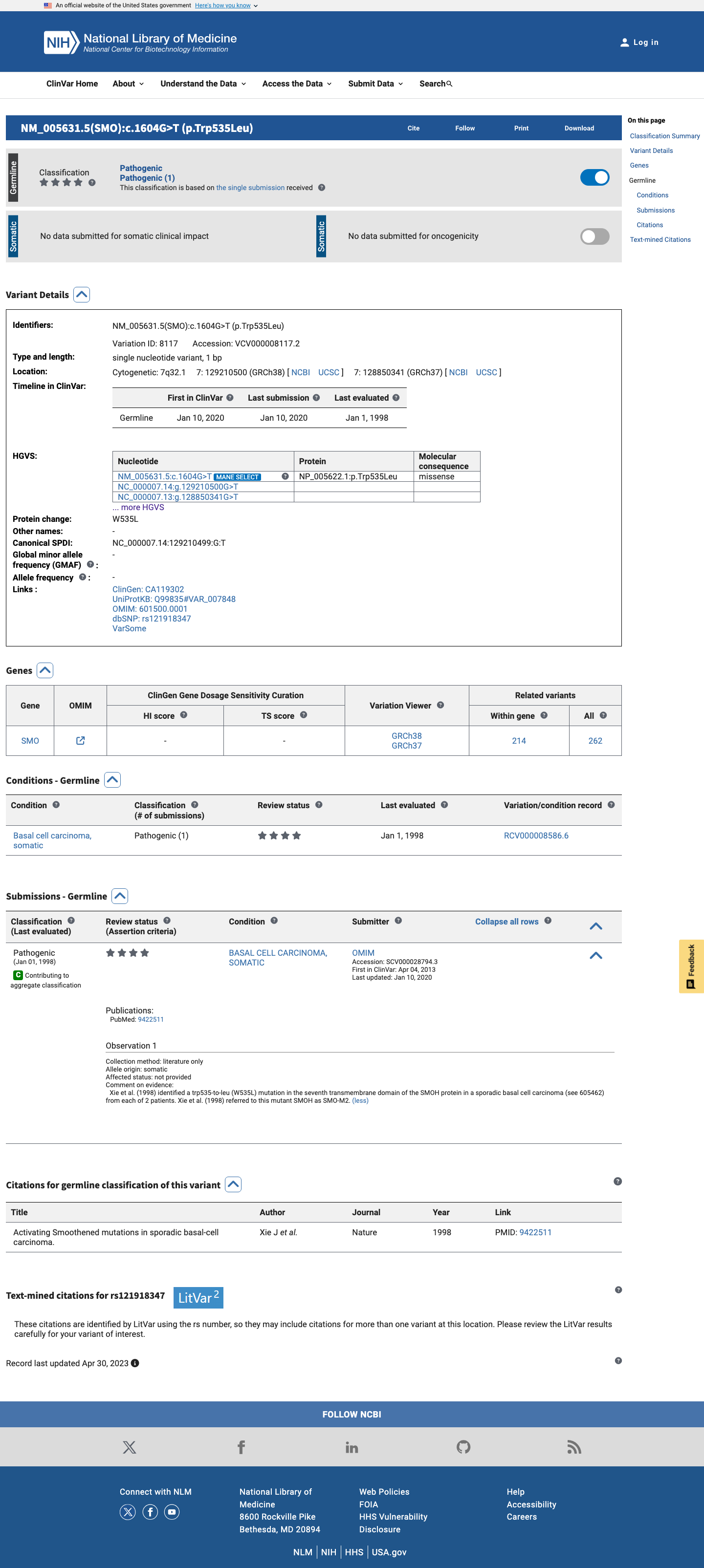
ClinVar
This variant is present in ClinVar (Variation ID: 8117); submission details unavailable.
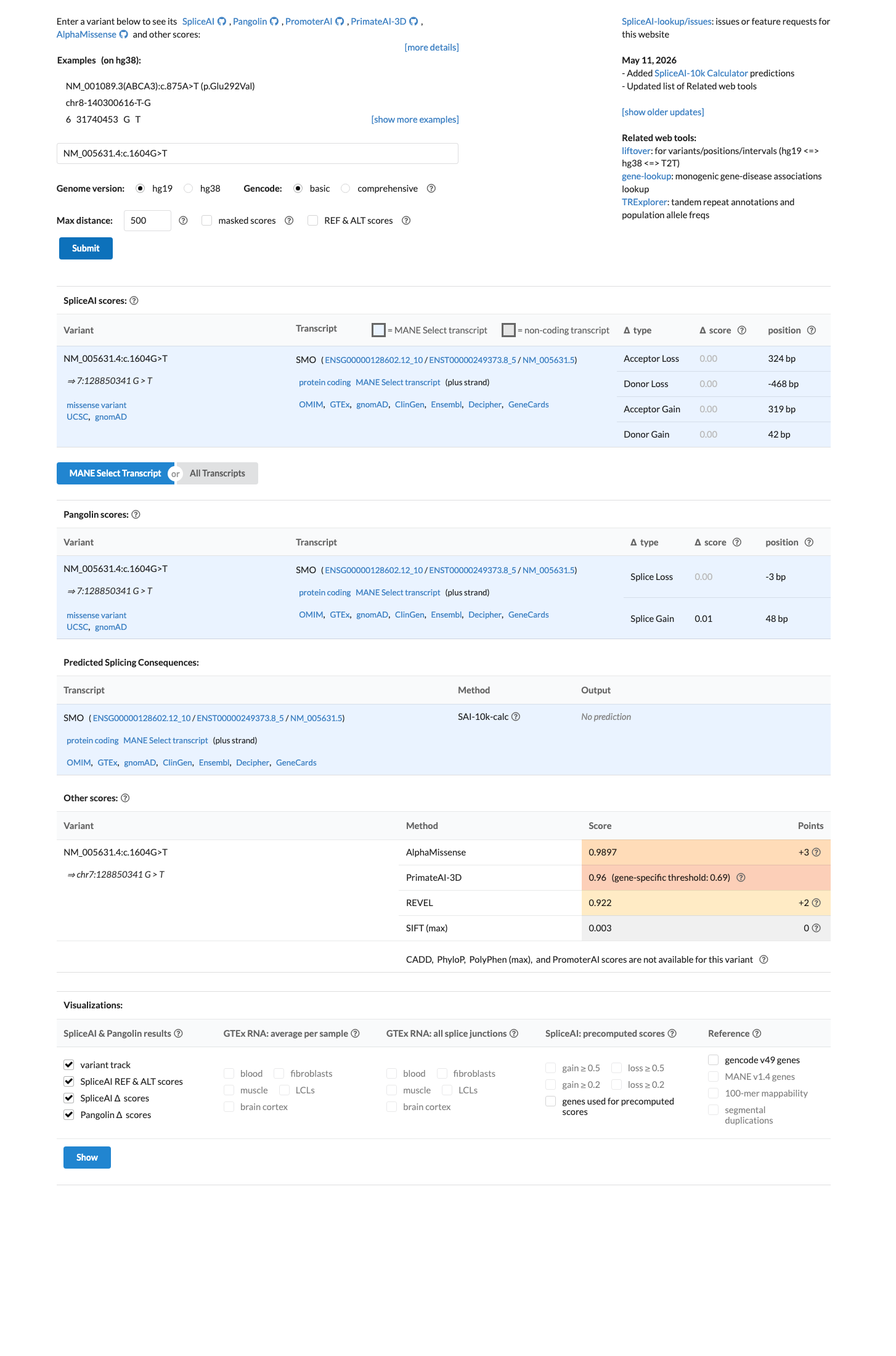
In silico
SpliceAI predicts no significant splice impact for this variant (max delta score = 0.00). REVEL score = 0.922. BayesDel score = 0.462622.
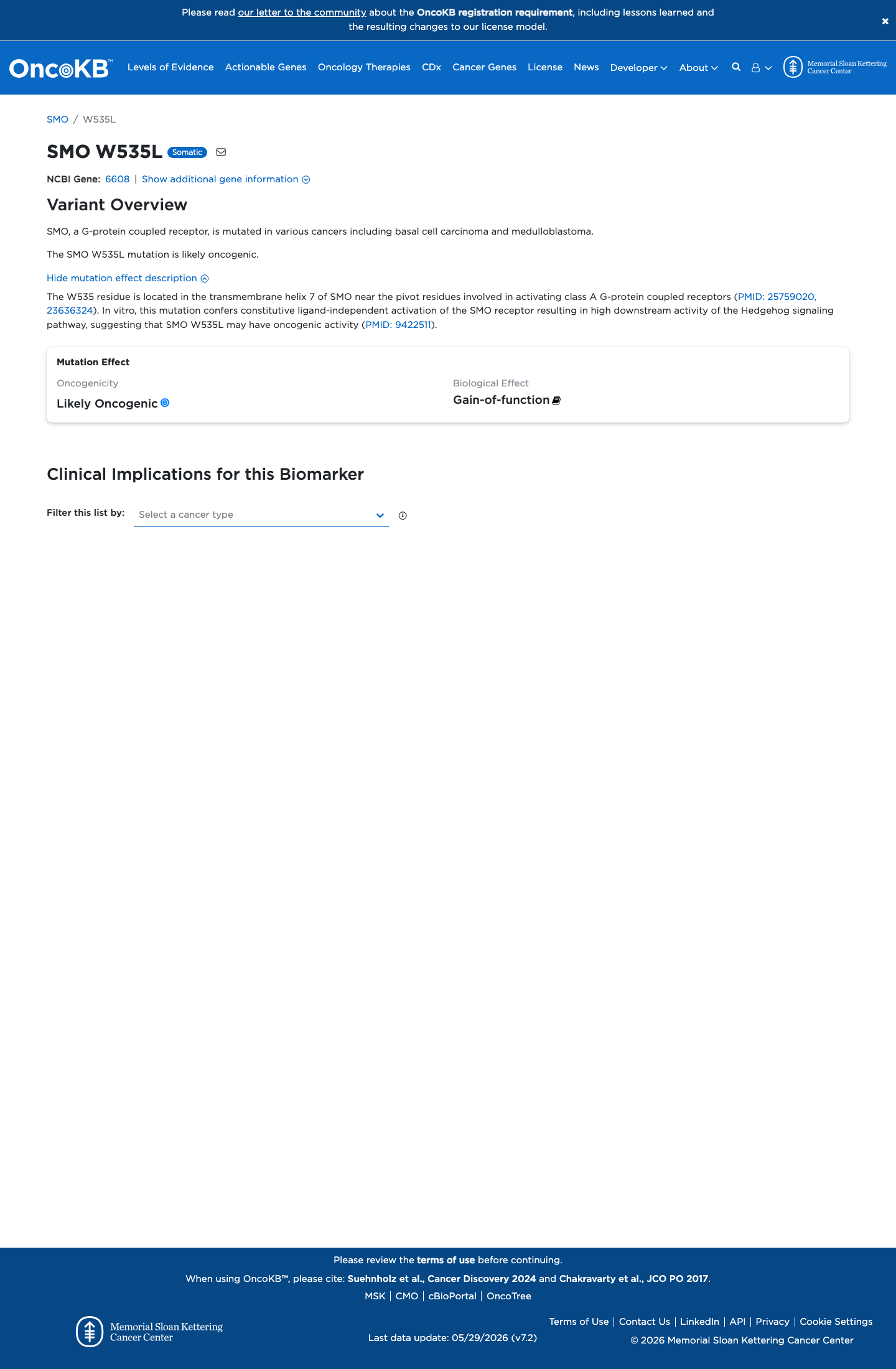
Functional
Likely Oncogenic
OncoKB identified variant-specific curated literature and context relevant to functional review; biological-effect context: Gain-of-function; curated oncogenicity label: Likely Oncogenic.
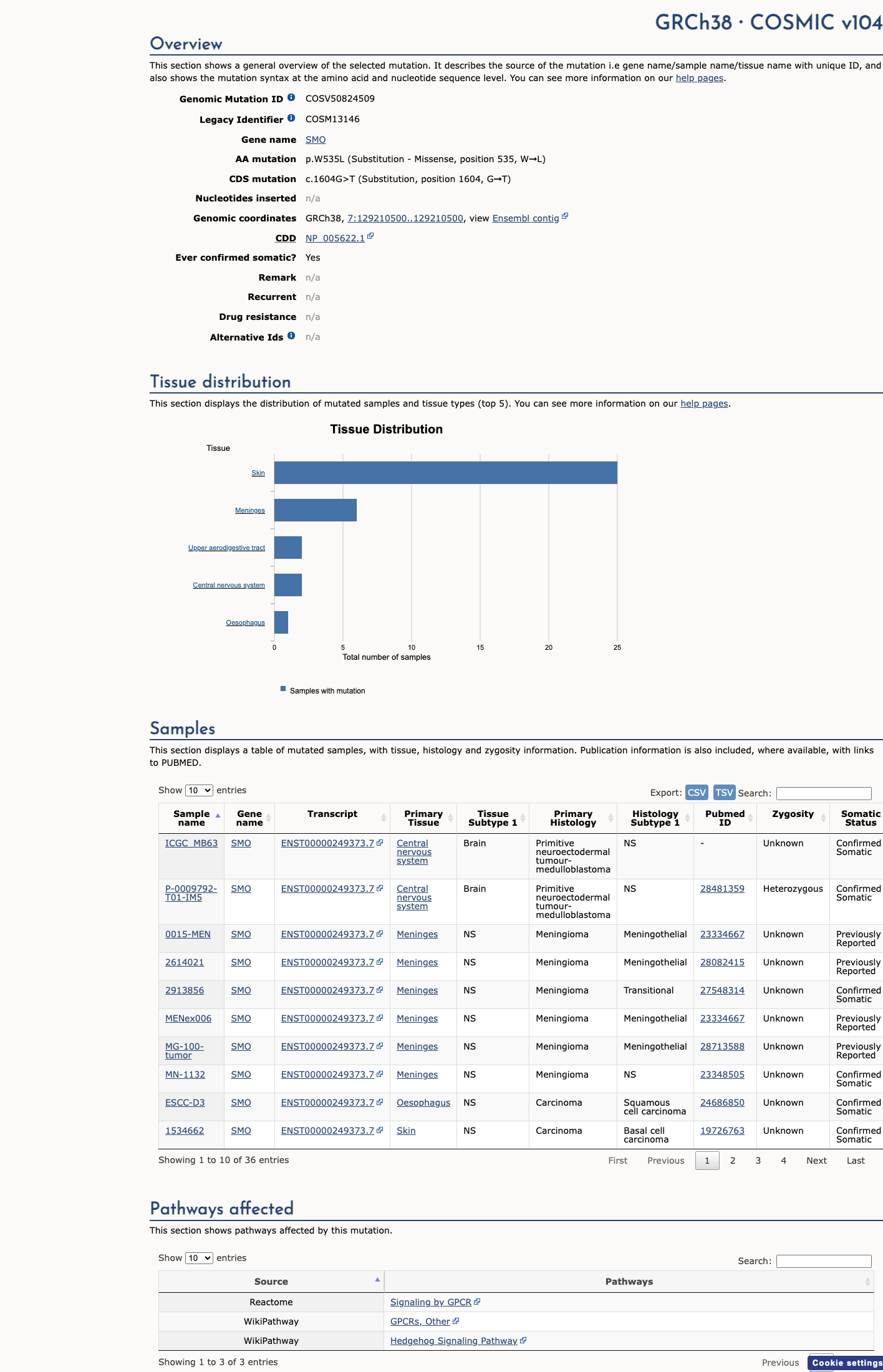
COSMIC
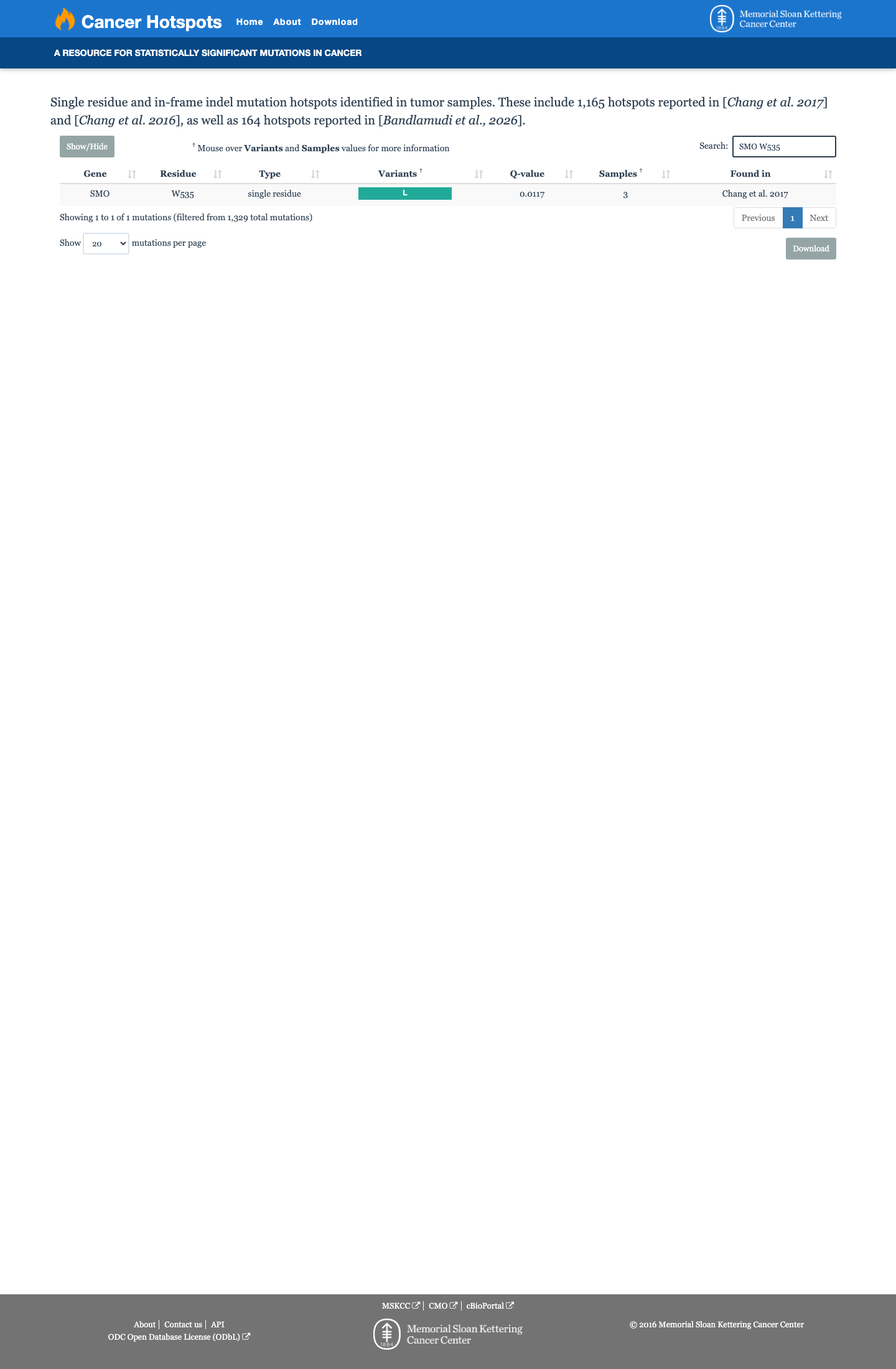
Cancer hotspots
Somatic evidence
Hotspot
COSMIC
This variant lies in a statistically significant hotspot. This variant has previously been reported in somatic cancers (COSMIC; COSV50824509, n = 36 times).
Hotspots
This variant lies in a statistically significant hotspot.
Literature · how each cited paper was used
3papers cited
Each card is an audit: what was searched, what was found, whether it names the variant, which criteria it fed, and why.
Structure of the human smoothened receptor bound to an antitumour agent.
Searched
c.1604G>Tp.Trp535LeuW535LW535Trp535535
Found
Crystal structure of the human SMO receptor 7TM domain at 2.5 Å resolution reveals that W535, located at position 7.55 in helix VII, is a conserved tryptophan critical for receptor autoinhibition. The paper notes that mutation of W535 leads to a constitutively active SMO receptor, providing structural basis for the gain-of-function effect.
Variant
✓ Names this variant — characterised directly
Applied to
→PS3
met
→PM1
met
Why
Variant-specific structural context confirmed; W535 is identified as a critical autoinhibitory residue. Provides structural mechanistic support for PM1 and PS3 assessments.
W535 7.55 in helix VII. The latter tryptophan, conserved among class F and superimposable with the location of the NPxxY motif of class A, is shown to play an important role in receptor activation, as mutation of W535 7.55 leads to a constitutively active SMO receptor.
Location Results section: 'Homology with Frizzled family receptors'; Figure 6 · Context X-ray crystallography of human SMO 7TM domain bound to LY2940680 antagonist; structural analysis · full text
Smoothened variants explain the majority of drug resistance in basal cell carcinoma.
Searched
c.1604G>Tp.Trp535LeuW535LW535Trp535535
Found
W535L identified in 3/30 vismodegib-resistant BCCs and 1/36 untreated BCCs. Functional characterization in Smo−/− MEFs demonstrated W535L is constitutively active (GLI1 reporter activation without SHH ligand), confers high-level vismodegib resistance (IC50 >320 nM vs wildtype ~8 nM), and provides a selective growth advantage under drug treatment. In paired pre/post-treatment biopsies, W535L subclones present at low allele fraction before treatment were enriched during therapy, confirming its role in acquired resistance.
Variant
✓ Names this variant — characterised directly
Applied to
→PS3
met
Why
Variant-specific functional data confirmed in multiple independent assays. Primary evidence for PS3 assessment demonstrating constitutive activity, drug resistance, and selective growth advantage. Somatic cohort data noted but insufficient for germline PS4.
W535L in another three resistant BCCs. Also known as SMO-M2, W535L is a known oncogenic mutation present at low rates in sporadic BCCs and can drive tumor progression in the absence of PTCH1 loss.
Location Results: 'Exome sequencing identifies recurrent SMO mutations in resistant BCC'; Figure 2B, 2E, 4A-F, 5A · Context Smo−/− mouse embryonic fibroblasts (MEFs), GLI-luciferase reporter assays, ASZ001 BCC cell line competition assays (mCherry/GFP), patient-derived BCC sequencing · full text
Activating Smoothened mutations in sporadic basal-cell carcinoma.
Searched
c.1604G>Tp.Trp535LeuW535LTrp535535
Found
Original identification of W535L (SMO-M2) as a constitutively active Smoothened mutation in sporadic basal cell carcinomas. W535L was shown to activate Hedgehog signaling in the absence of PTCH1 loss and contribute to BCC tumorigenesis.
Variant
✓ Names this variant
Applied to
→PS3
met
Why
Variant confirmed in original publication; foundational reference for W535L as activating SMO mutation. Cited in PS3 assessment.
W535L is a known oncogenic mutation present at low rates in sporadic BCCs and can drive tumor progression in the absence of PTCH1 loss (Xie et al., 1998).
Location Confirmed via explicit citation in Atwood et al. 2015 (PMID:25759020), which states: 'Also known as SMO-M2, W535L is a known oncogenic mutation present at low rates in sporadic BCCs and can drive tumor progression in the absence of PTCH1 loss (Xie et al., 1998).' · Context Functional characterization in cell-based Hedgehog signaling assays
Sources & reference links