Back
NM_005732.3:c.1110A>C
p.Leu370Phe · RAD50
ACMG/AMP
0%
complete
Final classification
VUS
PM2BP4
RAD50
c.1110A>C
p.Leu370Phe
missense

The RAD50 gene encodes a protein that works as part of the MRN complex, which detects and repairs double-strand breaks in DNA. This protein is essential for cell growth and viability and helps preserve genome stability through DNA repair, cell cycle checkpoint activation, telomere maintenance, and meiotic recombination. Inherited mutations in RAD50 cause Nijmegen breakage syndrome-like disorder, characterized by progressive microcephaly, short stature, and an increased risk of cancer. RAD50 functions as a tumor suppressor, and loss-of-function mutations in it are found in several human cancers.

This variant

RAD50 encodes an MRN-complex protein essential for DNA double-strand-break repair, and its loss of function causes Nijmegen breakage syndrome-like disorder and contributes to cancer as a tumor suppressor. For p.Leu370Phe, a missense change absent from ~2 million population alleles with benign-leaning in silico predictions but no clinical or functional data, the VUS classification means neither a damaging nor a benign role in RAD50-associated disease is established.

Transcript
NM_005732.3
HGVS · transcript:coding
NM_005732.3:c.1110A>C
GRCh38
chr5:132588745 A>C
GRCh37
chr5:131924437 A>C
No RAD50 ClinGen CSPEC/VCEP exists, so generic ACMG/AMP 2015 rules apply: PM2 (moderate) and BP4 (supporting) conflict in direction and meet no combination threshold, yielding VUS.
Classification rationale
PM2 BP4 VUS
RAD50 c.1110A>C missense

PM2 (Moderate): absent from gnomAD v2.1, v4.1, and gnomAD-Canada — AF = 0 across ~2 million alleles, below the <0.1% cutoff. BP4 (Supporting): REVEL 0.131, BayesDel -0.441836, and SpliceAI max delta 0.01 are concordant for no impact. Final: Variant of Uncertain Significance — the conflicting 1 moderate (PM2) + 1 supporting (BP4) combination meets no Pathogenic, Likely Pathogenic, Benign, or Likely Benign threshold under generic ACMG/AMP 2015.

PM2 + BP4 VUS
LYFE Sciences is an AI system, and it can make mistakes. Criteria may be applied incorrectly, sources may be misread, and a confident-looking classification can still be wrong. Double-check every criterion and its underlying evidence before relying on any call.
Gene diagram · NM_005732.3 · variants mapped to exon structure
RAD50 NM_005732.3
Fetching transcript structure from UCSC…
Applied criteria · 2 applied · 20 assessed
MetEvidence satisfies this criterion.
Not metEvaluated against available evidence; threshold not reached.
Not assessedApplies in principle, but no evidence was found to evaluate it.
N/ADoesn't apply to this variant type.
Applied · 2
Strength Supporting Moderate Strong Very strong
PM2 moderate Pathogenic
Met (moderate): absent from gnomAD v2.1, v4.1, and gnomAD-Canada (AF = 0 across ~2 million alleles), below the <0.1% cutoff.
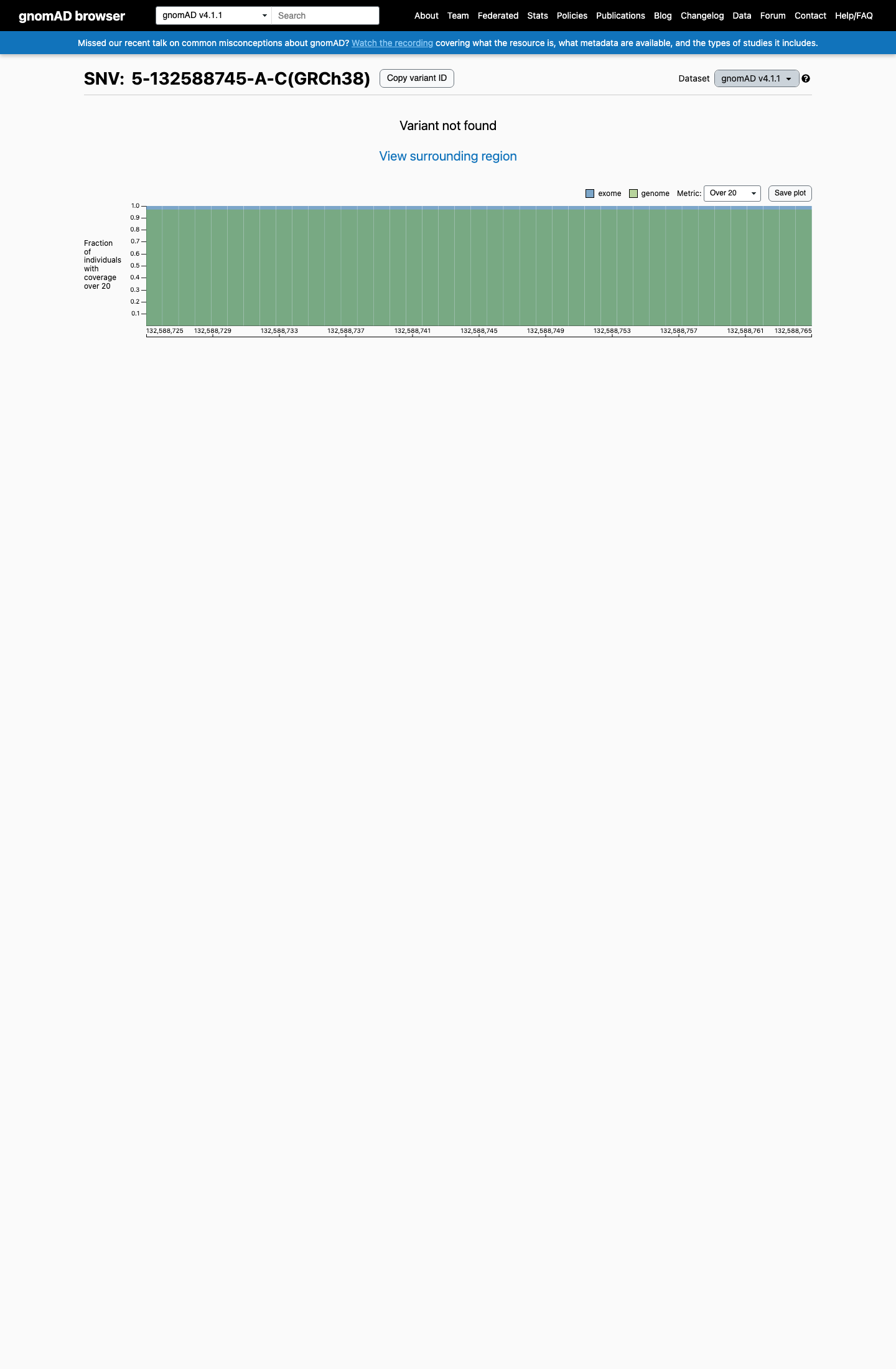
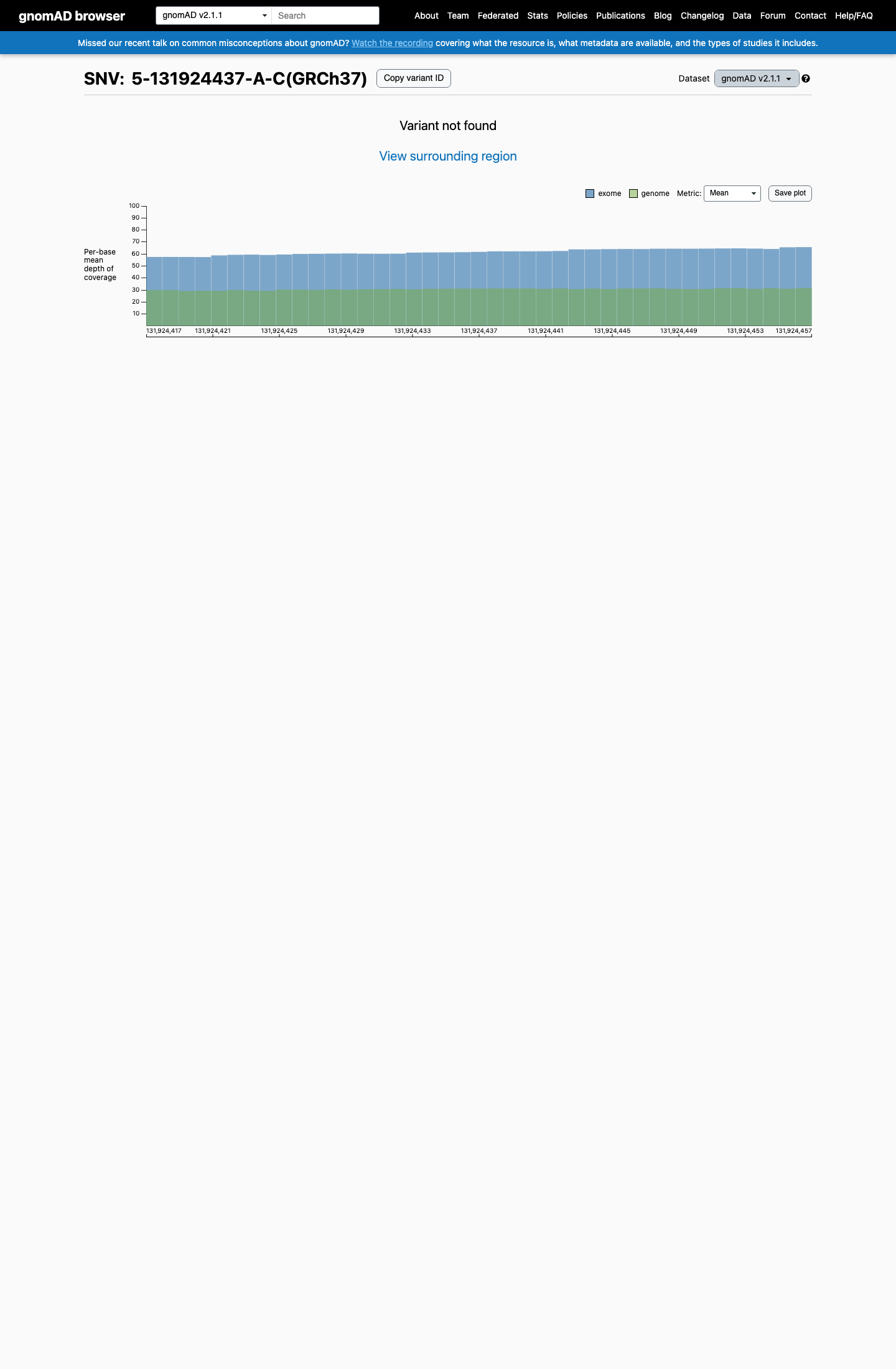
gnomad_v2: variant absent (0/125,748 exomes), 0 homozygotesgnomad_v4: variant absent (0/~1.6M alleles), 0 homozygotesgnomad_canada: variant absent from gnomAD-Canada v1.0 (HostSeq genomes)
BP4 supporting Benign
Met (supporting): REVEL 0.131, BayesDel -0.441836, and SpliceAI max delta 0.01 are concordant for no impact.
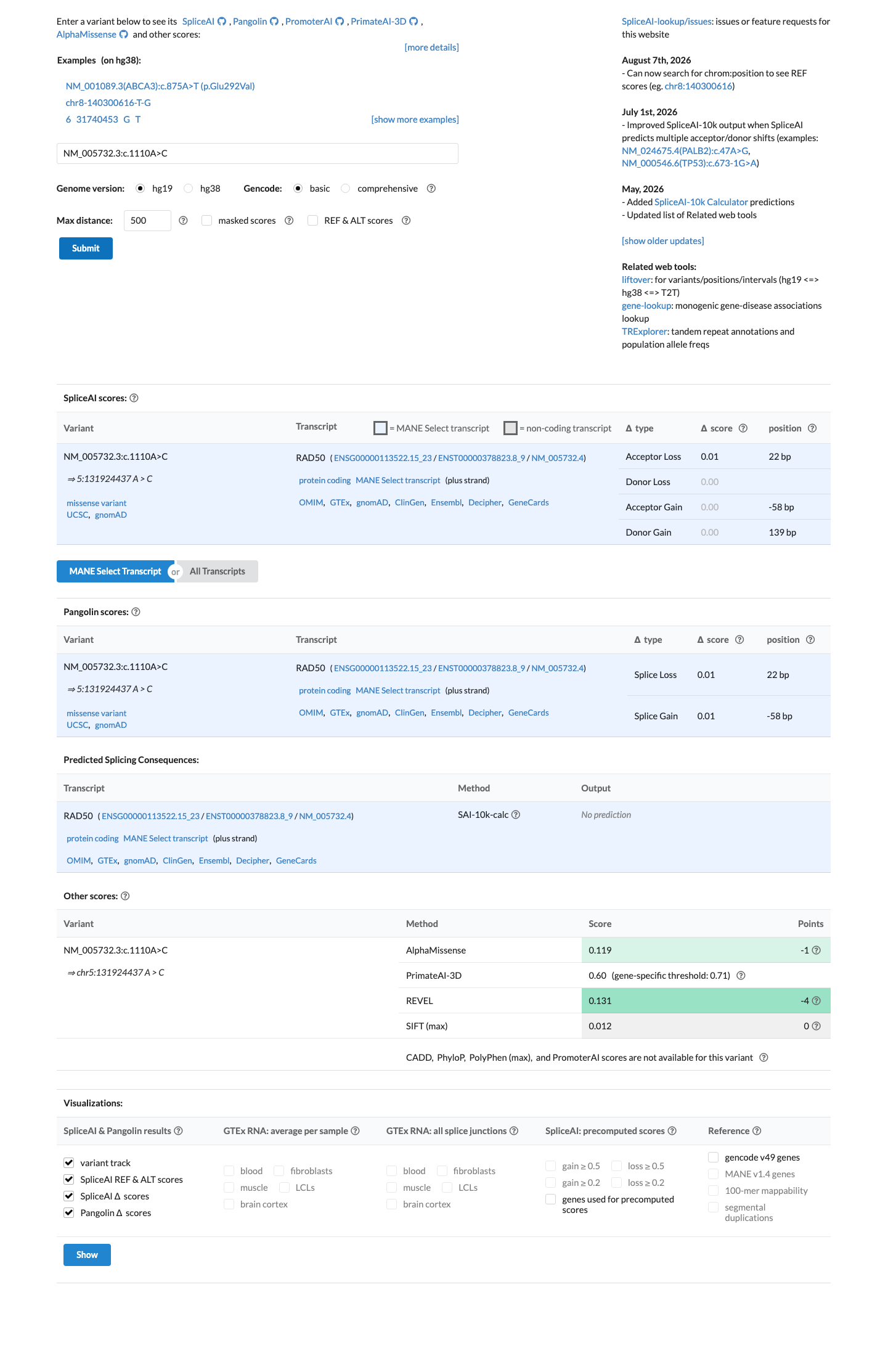
REVEL score 0.131 - low, benign-range missense predictionBayesDel noAF score -0.441836 - negative, benign-range missense predictionSpliceAI max delta score 0.01 (DS_AL 0.01; DS_AG/DS_DG/DS_DL 0.0) - no splice impact predicted
Assessed · not applied · 4 not met · 16 not assessed
Pathogenic
PS1 Not assessed: no established pathogenic record of p.Leu370Phe exists in ClinVar or the literature, so PS1 cannot be confirmed or ruled out.
PS2 Not assessed: no maternity/paternity-confirmed de novo occurrence or family-history data exist for this variant.
PS3 Not assessed: no variant-specific functional study was available; in silico predictions cannot substitute for a functional assay.
PS4 Not assessed: no case-control or case-series data exist showing increased prevalence of this variant in affected individuals.
PM1 Not assessed: no cancer-hotspot hit for RAD50 L370, and no curated domain annotation covers residue 370.
PM3 Not assessed: no proband or phase data exist to establish the variant in trans with a pathogenic RAD50 allele.
PM5 Not assessed: no different missense change at residue 370 has an established pathogenic classification.
PM6 Not assessed: no assumed-de novo evidence exists; no proband or parental-testing data are available.
PP1 Not assessed: no co-segregation data in affected family members exist for this variant.
PP2 Not assessed: no missense constraint data and no evidence that missense variants are a common RAD50 disease mechanism.
PP3 Not met: all computational evidence is concordant for no effect — SpliceAI max delta 0.01, REVEL 0.131, BayesDel -0.441836.
PP4 Not assessed: no proband phenotype or family-history data exist to evaluate phenotype specificity.
Benign
BA1 Not met: allele frequency is 0% across gnomAD v2.1, v4.1, and gnomAD-Canada, far below the >1% BA1 cutoff.
BS1 Not met: allele frequency is 0%, far below the >0.3% BS1 cutoff for this rare recessive disorder.
BS2 Not met: no healthy adult homozygote or carrier is documented — 0 alleles in all population datasets.
BS3 Not assessed: no variant-specific functional study was available to show absence of a damaging effect.
BS4 Not assessed: no non-segregation observations exist for this variant.
BP1 Not assessed: no mutation-spectrum data demonstrate that RAD50 disease is caused primarily by truncating variants.
BP2 Not assessed: no phase or proband data exist to evaluate trans/cis configuration with a pathogenic allele.
BP5 Not assessed: no proband-level data exist to confirm or exclude an alternative molecular diagnosis.
N/A · 6 PVS1 · PM4 · PP5 · BP3 · BP6 · BP7
Research & evidence
Population frequency
gnomAD v4.1 screenshot
gnomAD v4.1
gnomAD v2.1 screenshot
gnomAD v2.1
v4.1
Absent from gnomAD v4.1.
v2.1
Absent from gnomAD v2.1.
🇨🇦 CA
Absent from gnomAD-Canada v1.0.
Allele frequency by ancestry
three datasets · side by side
gnomAD v4.1
Absent · 0 / ?
0 hom
Not observed in any ancestry group.
gnomAD v2.1
Absent · 0 / ?
0 hom
Not observed in any ancestry group.
gnomAD Canada 🇨🇦
Absent · 0 / ?
0 hom
Not observed in any ancestry group.
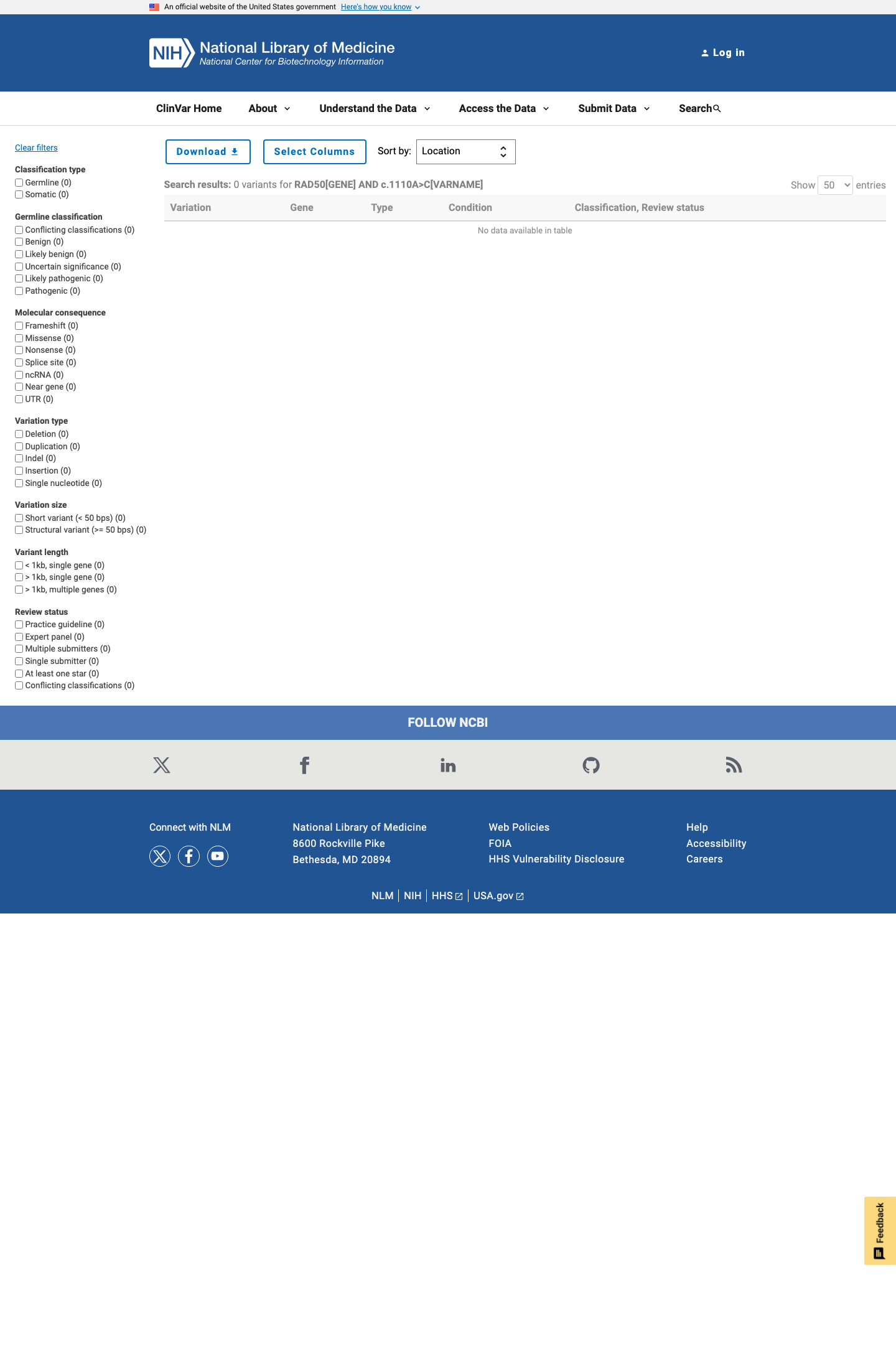
ClinVar screenshot
ClinVar
This variant is absent from ClinVar.
SpliceAI screenshot
In silico
SpliceAI predicts no significant splice impact for this variant (max delta score = 0.01). REVEL score = 0.131. BayesDel score = -0.441836.
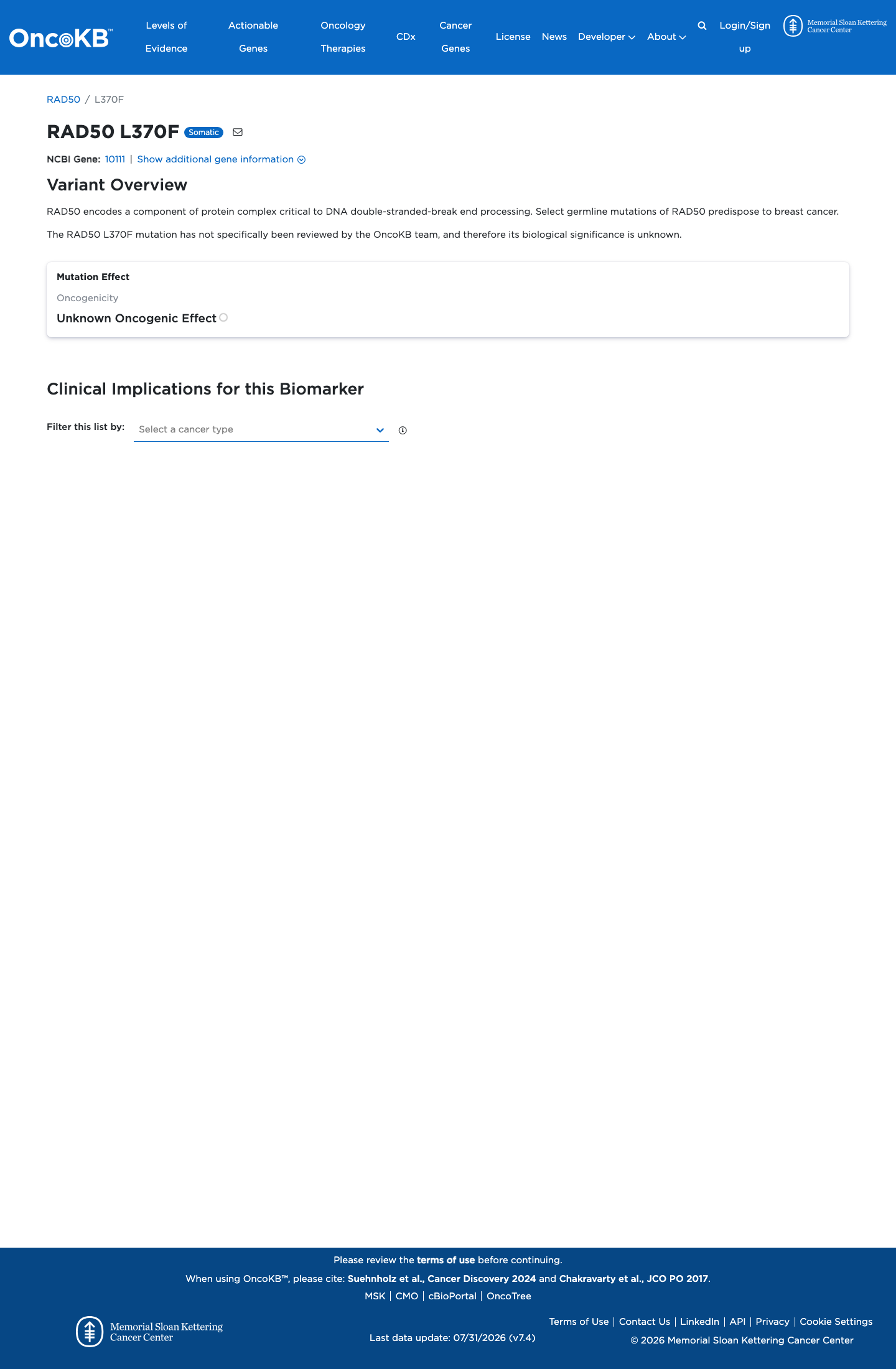
Functional / OncoKB screenshot
Functional Unknown Oncogenic Effect
OncoKB did not identify variant-specific reviewed functional evidence for this variant; gene-level curated context is available for reviewer follow-up. RAD50 encodes a component of protein complex critical to DNA double-stranded-break end processing. Select germline mutations of RAD50 predispose to br
OncoKB ↗
COSMIC screenshot
COSMIC
Cancer hotspots screenshot
Cancer hotspots
Somatic evidence Not in COSMIC / hotspots
COSMIC
This variant does not lie in a statistically significant hotspot. This variant has not previously been reported in somatic cancers (COSMIC).
Hotspots
This variant does not lie in a statistically significant hotspot.
Sources & reference links
8Sources
ClinVar
gnomAD v2.1
gnomAD v4.1
gnomAD-Canada
SpliceAI
OncoKB
COSMIC
Cancer hotspots