NM_006180.4:c.2061C>A (p.His687Gln) is a missense variant in exon 19 of NTRK2. It is absent from all population databases (gnomAD v2.1, v4.1, gnomAD-Canada), meeting PM2.1 No functional studies, case reports, segregation data, de novo observations, or ClinVar classifications are available for this variant. No publications specifically mention NM_006180.4:c.2061C>A.2 Computational predictors are discordant: REVEL score 0.77 supports a deleterious effect, but BayesDel score 0.307 is borderline and does not provide a second concordant predictor to meet PP3. SpliceAI predicts no splicing impact (max delta = 0.00).3 With only PM2 (moderate) met, the evidence is insufficient to classify this variant as likely pathogenic or pathogenic under the ACMG/AMP 2015 framework (PMID:25741868). The variant is classified as a Variant of Uncertain Significance (VUS).4
Final classification
VUS
PM2
NTRK2
c.2061C>A
p.His687Gln
This variant
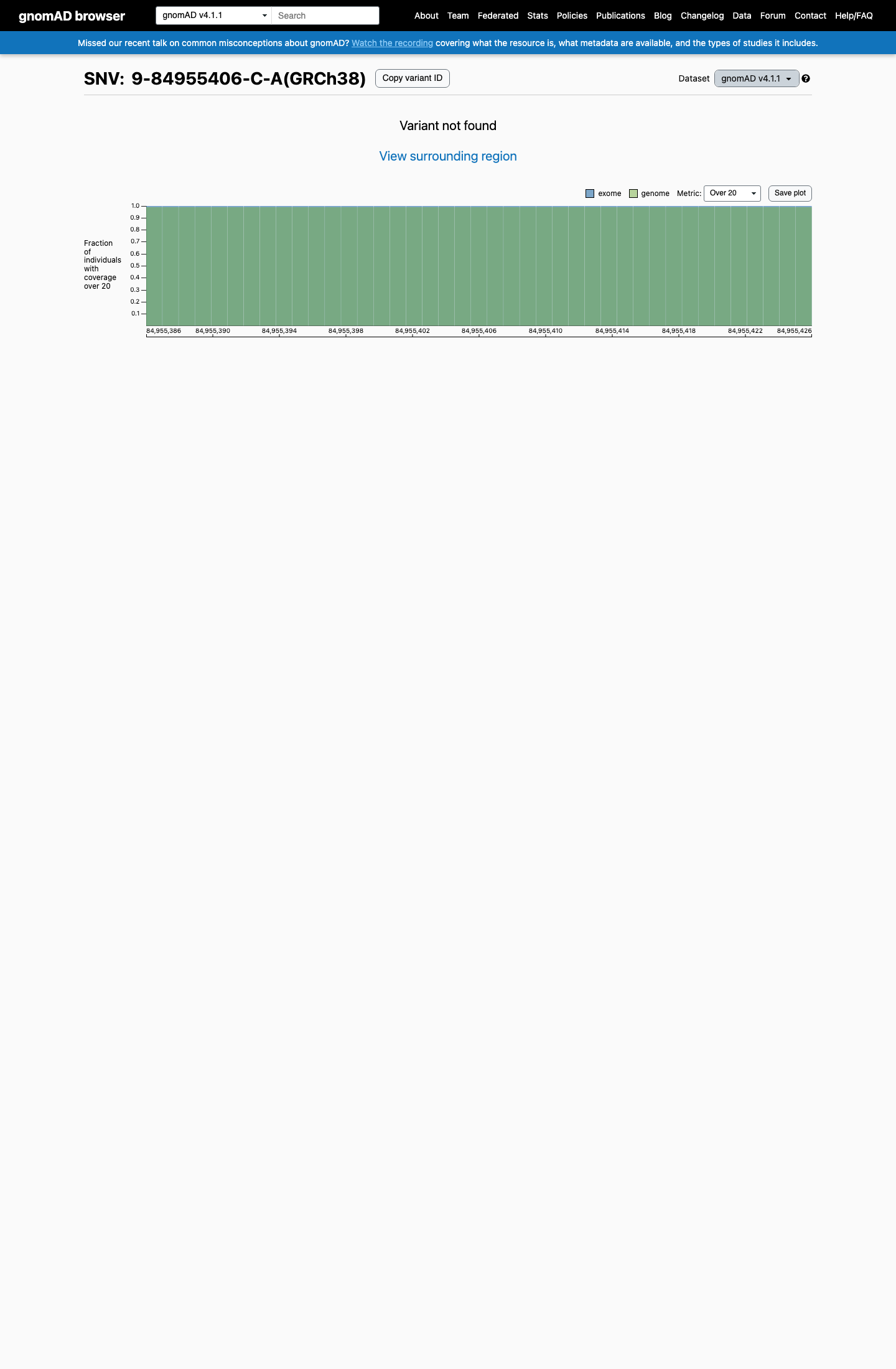
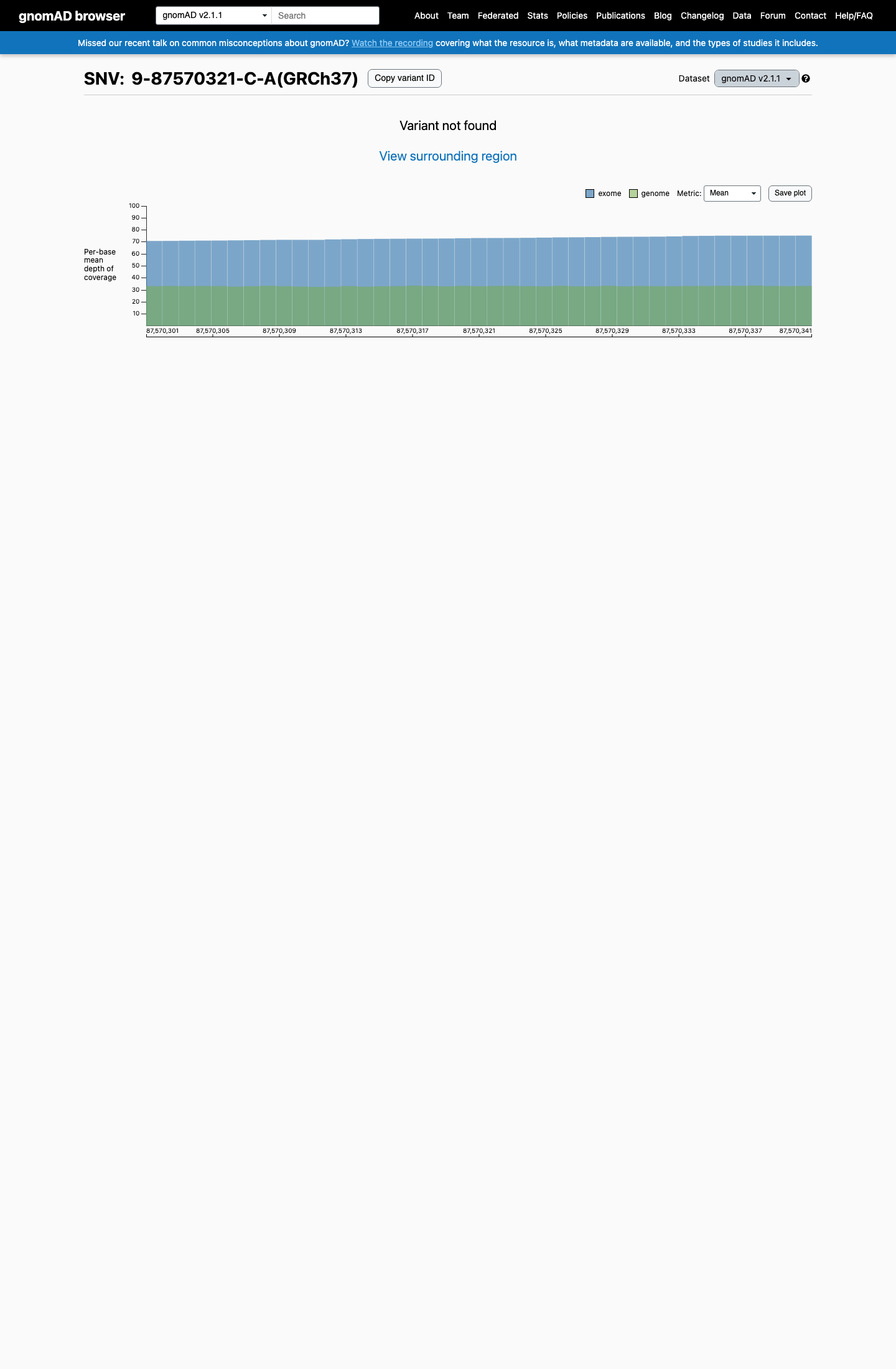
NM_006180.4:c.2061C>A (p.His687Gln) is a missense variant in exon 19 of NTRK2. It is absent from all population databases (gnomAD v2.1, v4.1, gnomAD-Canada), meeting PM2.
gene-specific framework lacked a usable explicit final combination framework, so generic ACMG/AMP 2015 final-combination rules were applied as fallback; applied criteria: PM2 moderate; combination = 1 moderate, which maps to VUS.
Classification rationale
PM2
VUS
NTRK2 c.2061C>A
PM2
→
VUS
3
revelbayesdelspliceai ↗
4
generic_acmg_combination_rules
LYFE Sciences is an AI system, and it can make mistakes. Criteria
may be applied incorrectly, sources may be misread, and a confident-looking
classification can still be wrong. Double-check every criterion and
its underlying evidence before relying on any call.
Gene diagram
· NM_006180.4 · variants mapped to exon structure
NTRK2
NM_006180.4
Fetching transcript structure from UCSC…
Applied criteria · 1 applied · 21 assessed
MetEvidence satisfies this criterion.
Not metEvaluated against available evidence; threshold not reached.
Not assessedApplies in principle, but no evidence was found to evaluate it.
N/ADoesn't apply to this variant type.
Applied · 1
Strength
Supporting
Moderate
Strong
Very strong
PM2
moderate
Pathogenic
NM_006180.4:c.2061C>A is absent from all population databases including gnomAD v2.1, gnomAD v4.1, and gnomAD-Canada v1.0, consistent with a rare variant. Allele frequency is well below the 0.1% PM2 threshold.
Absent from gnomAD v2.1 (exomes).Absent from gnomAD v4.1 (exomes/genomes).Absent from gnomAD-Canada v1.0 (HostSeq genomes).
Assessed · not applied
· 21 not met · 0 not assessed
Pathogenic
PS1
No evidence of an established pathogenic variant with the same amino acid change (p.His687Gln) arising from a different nucleotide substitution.
PS2
No de novo observations (with maternity and paternity confirmed) have been reported for this variant.
PS3
No variant-specific functional studies are available.
PS4
No case-control studies or proband enrichment data are available.
PM1
While p.His687 lies within the NTRK2 tyrosine kinase domain (a well-established functional domain), the variant does not reside in a statistically significant mutational hotspot.
PM5
No pathogenic missense variants have been identified at the same amino acid residue (p.His687).
PM6
No assumed de novo observations (without maternity/paternity confirmation) have been reported for this variant.
PP1
No cosegregation data in affected families are available for this variant.
PP2
Insufficient evidence to establish that NTRK2 has a low rate of benign missense variation.
PP3
REVEL score 0.77 exceeds the 0.5 threshold and supports a deleterious effect, but BayesDel score 0.307 is borderline and does not provide a concordant strong pathogenic prediction.
PP4
No patient phenotype data are available.
Benign
BA1
Allele frequency does not exceed 1% in any population database.
BS1
Allele frequency does not exceed 0.3% in any population database.
BS2
The variant has not been observed in healthy adults.
BS3
No well-established functional studies demonstrating no deleterious effect are available.
BS4
No segregation data in affected families are available.
BP1
While loss-of-function variants in NTRK2 have been implicated in germline disease, there is insufficient evidence that NTRK2-associated disease is caused primarily by truncating variants to the exclusion of missense changes.
BP2
Not observed in trans (or cis) with a pathogenic variant.
BP4
REVEL score 0.77 predicts a deleterious effect, which contradicts benign computational predictions.
BP5
No observation of this variant in a case with an alternate molecular basis for disease.
BP6
No reputable source reports this variant as benign.
N/A · 6
PVS1 · PM3 · PM4 · PP5 · BP3 · BP7
Research & evidence
Population frequency
gnomAD v4.1
gnomAD v2.1
v4.1
Absent from gnomAD v4.1.
v2.1
Absent from gnomAD v2.1.
🇨🇦 CA
Absent from gnomAD-Canada v1.0.
Allele frequency by ancestry
three datasets · side by side
gnomAD v4.1
Absent
· 0 / ?
0 hom
0 hom
Not observed in any ancestry group.
gnomAD v2.1
Absent
· 0 / ?
0 hom
0 hom
Not observed in any ancestry group.
gnomAD Canada 🇨🇦
Absent
· 0 / ?
0 hom
0 hom
Not observed in any ancestry group.

In silico
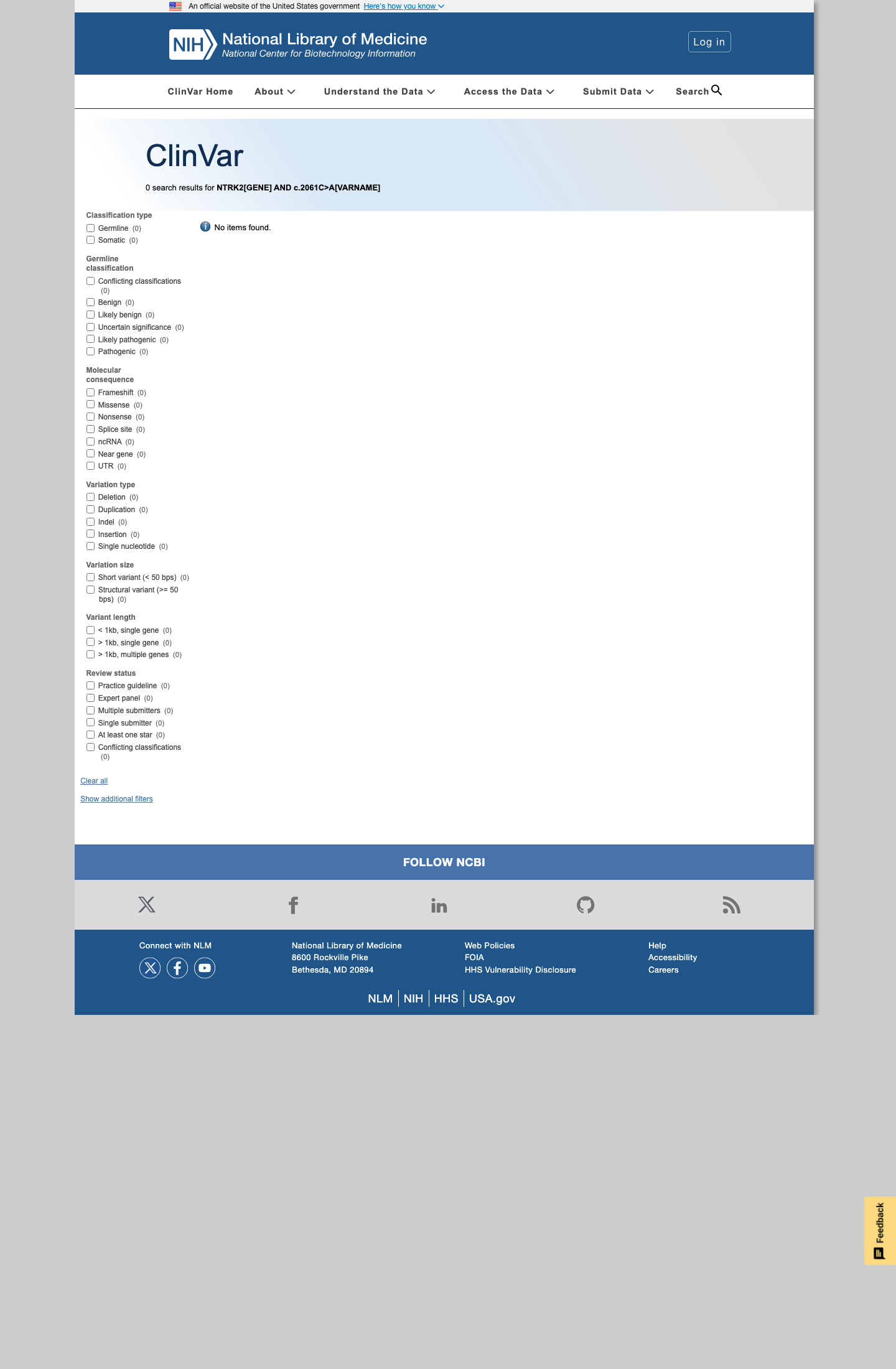
SpliceAI predicts no significant splice impact for this variant (max delta score = 0.00). REVEL score = 0.77. BayesDel score = 0.307499.
Functional
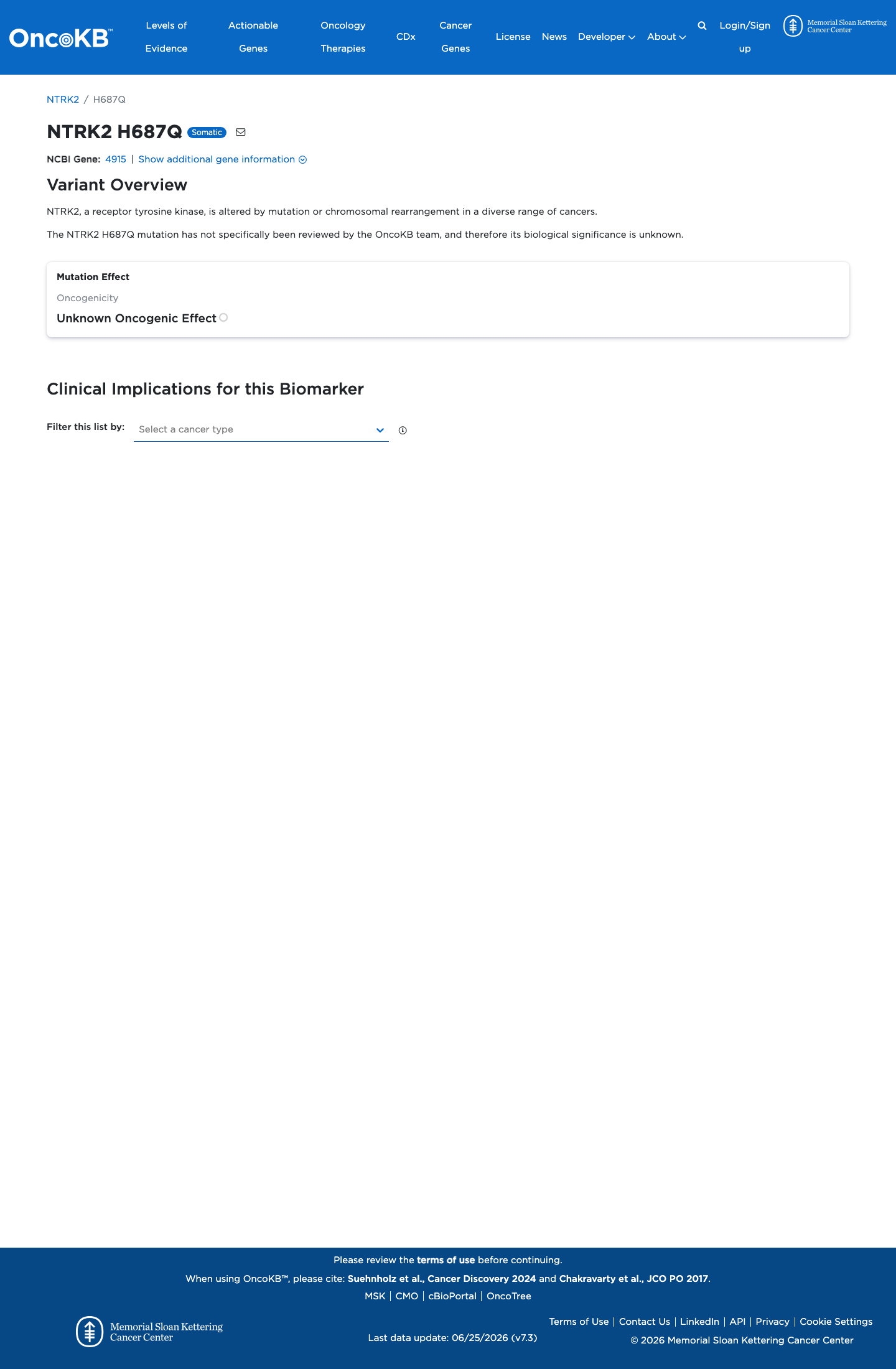
Unknown Oncogenic Effect
OncoKB did not identify variant-specific reviewed functional evidence for this variant; gene-level curated context is available for reviewer follow-up. NTRK2, a receptor tyrosine kinase, is altered by mutation or chromosomal rearrangement in a diverse range of cancers.

COSMIC

Cancer hotspots
Somatic evidence
Not in COSMIC / hotspots
COSMIC
This variant does not lie in a statistically significant hotspot. This variant has not previously been reported in somatic cancers (COSMIC).
Hotspots
This variant does not lie in a statistically significant hotspot.
Sources & reference links