PIK3CA encodes the p110α catalytic subunit of phosphoinositide 3-kinase (PI3K), an enzyme that converts the membrane lipid PIP2 into PIP3, thereby activating signaling cascades such as the AKT-mTOR pathway that promote cell survival, proliferation, growth, and motility. It is among the most commonly mutated genes in cancer, and aberrant activation of PI3K signaling is a driving event in tumor development, with the gene implicated in cancers including cervical cancer. Because this pathway is central to tumor growth, it is a major target of cancer therapies, although drug-induced pathway activation can also contribute to treatment resistance.
This variant
PIK3CA encodes the p110α catalytic subunit of PI3K, and activating mutations drive tumor development through the AKT-mTOR pathway. Although p.Arg93Trp shows an activating effect in functional assays, that evidence combined with absence from population databases is insufficient to establish pathogenicity, so this variant remains a VUS pending further case-based or segregation data.
Transcript
NM_006218.3
HGVS · transcript:coding
NM_006218.3:c.277C>T
GRCh38
chr3:179199102 C>T
GRCh37
chr3:178916890 C>T
BasisVUS: only PS3 (Moderate) and PM2 (Supporting) were met; 1 Moderate + 1 Supporting does not reach any ACMG/AMP 2015 pathogenic or benign threshold.▾
VUS: only PS3 (Moderate) and PM2 (Supporting) were met; 1 Moderate + 1 Supporting does not reach any ACMG/AMP 2015 pathogenic or benign threshold.
Classification rationale
PS3PM2VUS
PIK3CA c.277C>Tmissense · exon 2
PS3 (Moderate): two independent cell-based assays showed increased phospho-AKT signaling and lipid kinase activity relative to wild type, indicating an activating effect. PM2 (Supporting): absent from gnomAD v2.1, gnomAD v4.1, and gnomAD-Canada v1.0. Overall classification VUS: 1 Moderate + 1 Supporting falls below the ACMG/AMP 2015 threshold for likely pathogenic or likely benign.
PS3 + PM2→VUS
Gene diagram
· NM_006218.3 · variants mapped to exon structure
PIK3CANM_006218.3
Fetching transcript structure from UCSC…
Exons
—
Transcript span
—
Strand
—
Variants mapped
—
Source
UCSC ncbiRefSeqCurated
All variants in PIK3CA—click a row to locate it on the plot · use the link column to open its page
Variant ↕
Protein
Location
Classification
Link
Applied criteria · 2 applied · 12 assessed
MetEvidence satisfies this criterion.
Not metEvaluated against available evidence; threshold not reached.
Not assessedApplies in principle, but no evidence was found to evaluate it.
N/ADoesn't apply to this variant type.
Applied · 2
Strength Supporting Moderate Strong Very strong
✓
PS3moderatePathogenic
Met (Moderate): two independent cell-based assays showed increased phospho-AKT signaling and lipid kinase activity relative to wild type, indicating an activating effect.
Rudd et al. 2011 (PMID:21266528): p110alpha-R93W expressed in stably transfected U2OS cells under low-serum conditions showed increased phospho-AKT Ser473 and Thr308 compared with WT; direct quote: 'we observed that the exogenous expression of six mutants, p110alpha-R93W, -G106R, -G106V, -K111E, -delP449-L455, and -E453K, led to increased levels of phospho-AKT Ser473 compared to the wild-type p110alpha'; direct quote: 'we characterized these two mutants functionally and showed that R93W mutation is a gain-of function mutant that leads to increased phosphorylation of AKT on serine 473'; E365K (C2-domain) and H1047R (kinase-domain) were included as positive controls for AKT activation; western blots were repeated in triplicate (technical replicates documented).Burke & Williams 2012 (PMID:22949682): recombinant p110alpha-R93W protein assessed via lipid kinase assay with 5% PIP2-containing vesicles; direct quote: 'All cancer-linked mutations, including mutants in the ABD and ABD-RBD linker, increased basal lipid kinase activity compared with WT, with H1047R acting as the most potent activator'; WT served as reference/negative comparator and H1047R as a canonical activating positive control; assays performed in triplicate.Both papers assess the exact R93W variant (not R93Q or other substitutions at the same codon), satisfying variant-specific grounding.
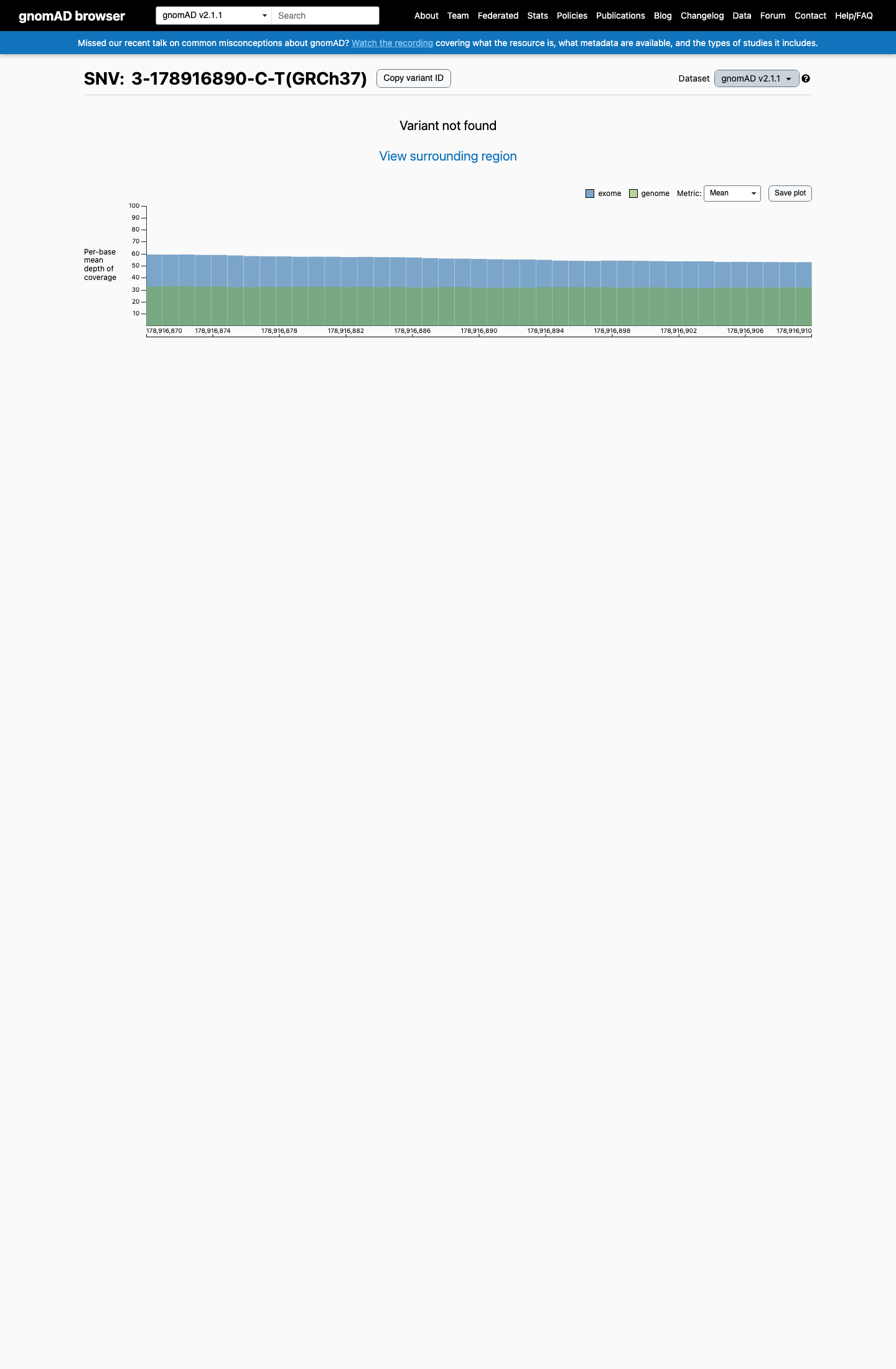
Met (Supporting): absent from gnomAD v2.1, gnomAD v4.1, and gnomAD-Canada v1.0 population cohorts.
The governing Brain Malformations VCEP specification assigns PM2 Supporting when the variant is absent/rare from controls in an ethnically matched cohort population sample (≥1).The variant NM_006218.3:c.277C>T (p.Arg93Trp) is reported as absent from gnomAD v2.1.The variant is reported as absent from gnomAD v4.1.
Assessed · not applied
· 5 not met · 7 not assessed
Pathogenic
PS1Not assessed: no alternate nucleotide change producing the same p.Arg93Trp amino acid change with a prior pathogenic classification was identified.
PS2Not assessed: no parental sequencing, allele-fraction, or tissue data were available to confirm a de novo origin.
PS4Not assessed: no cerebral-malformation case-series or enrichment data were available; somatic cancer occurrence is not phenotype-specific evidence in this context.
PM1Not met: residue Arg93 lies outside the VCEP-approved critical kinase domains (amino acids 322-483 and 797-1068).
PM5Not assessed: no different, previously established pathogenic missense change at residue Arg93 was available for comparison.
PP2Not assessed: no gnomAD/ExAC missense constraint z-score was available to test against the required >3.09 threshold.
Benign
BA1Not met: absent from population databases, with no allele frequency exceeding the >0.0926% threshold.
BS1Not met: no observed allele frequency exceeding the >0.0185% benign threshold.
BS2Not met: fewer than 3 homozygotes in population databases and no well-phenotyped heterozygous family members were documented.
BS3Not met: both functional studies show an activating effect, the opposite of the benign/neutral effect BS3 requires.
BP2Not assessed: no phase-resolved evidence places this variant in cis or trans with a known pathogenic PIK3CA variant.
BP5Not assessed: no independently established alternate molecular basis for the disease was documented.
This variant has been reported in ClinVar as Likely pathogenic (4 clinical laboratories) and as Pathogenic (2 clinical laboratories). (ClinVarID = 1198826)
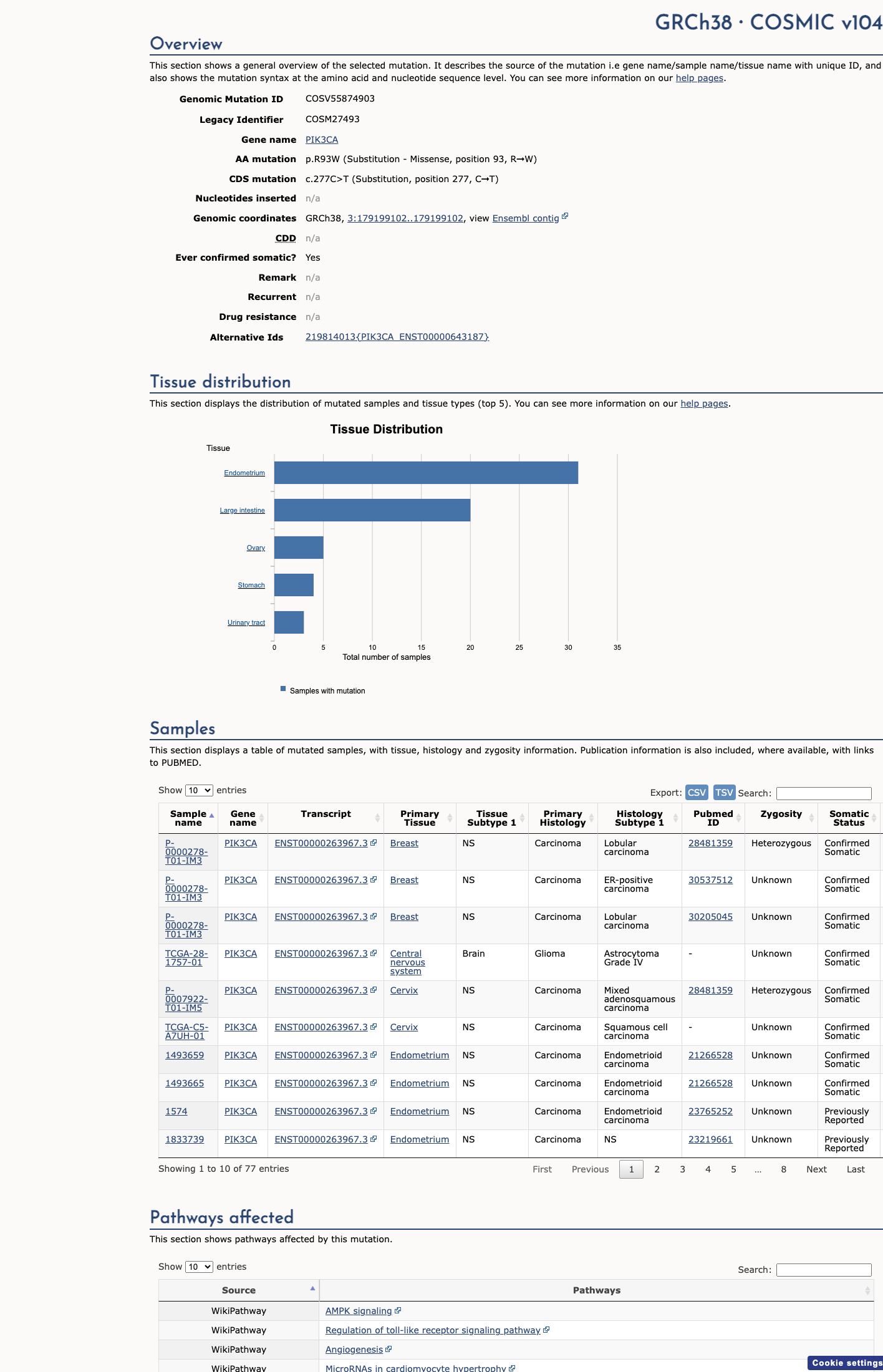
This variant lies in a statistically significant hotspot. This variant has previously been reported in somatic cancers (COSMIC; COSV55874903, n = 76 times).
Hotspots
This variant lies in a statistically significant hotspot.
Each card is an audit: what was searched, what was found, whether it names the variant, which criteria it fed, and why. 4 further PMIDs triaged but not cited — see Sources & references.
A unique spectrum of somatic PIK3CA (p110alpha) mutations within primary endometrial carcinomas.
PMID 21266528 ↗· Rudd ML et al.
· 2011 Mar 15
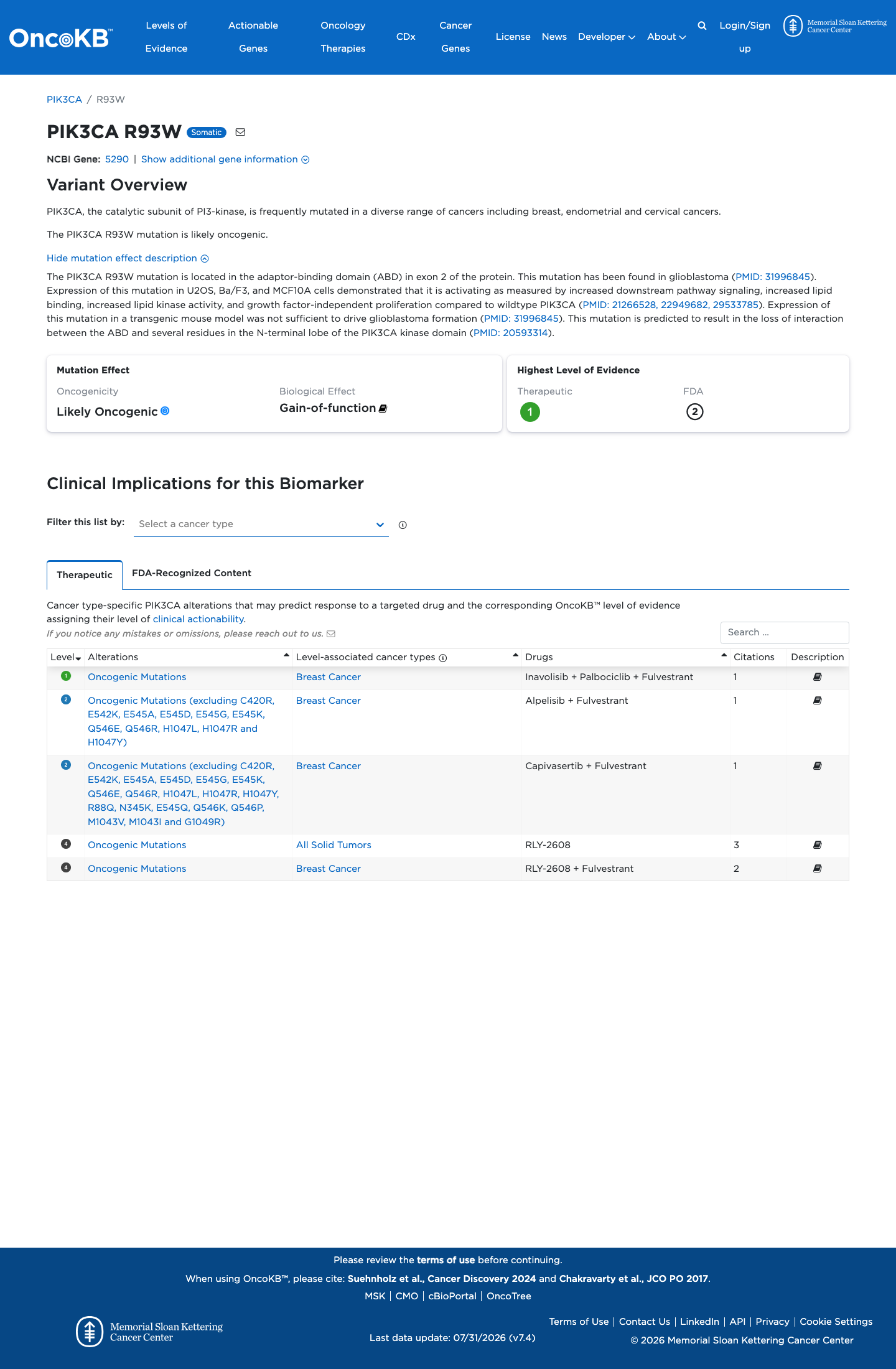
ONCOKB· functional
Searched
R93Wc.277C>Tp.Arg93Trp
Found
Rudd et al. functionally characterized PIK3CA p110alpha mutants recurrent in endometrial cancer, including R93W, by stable expression in U2OS cells and measurement of AKT phosphorylation. R93W increased phospho-AKT Ser473/Thr308 relative to wild-type p110alpha, comparable to the known gain-of-function C2-domain mutant E365K, and was classified by the authors as a gain-of-function mutation.
Variant
✓ Names this variant — characterised directly
Applied to
→PS3
moderate
Cell-based phosphorylation assay (VCEP-endorsed assay class) directly shows R93W increases AKT phosphorylation vs WT, with documented positive controls (E365K, H1047R) and triplicate technical replicates.
we characterized these two mutants functionally and showed that R93W mutation is a gain-of function mutant that leads to increased phosphorylation of AKT on serine 473
Location Results and Discussion sections, description of Figure 2A/2B AKT phosphorylation assay · Context Site-directed mutagenesis of PIK3CA cDNA; stable transfection into U2OS osteosarcoma cells (low endogenous PI3K pathway activity); western blot for phospho-AKT Ser473/Thr308 under low-serum conditions; wild-type p110alpha as baseline comparator; E365K and H1047R as known gain-of-function positive controls; western blots performed in triplicate. · full text
Oncogenic mutations mimic and enhance dynamic events in the natural activation o
Burke and Williams biochemically characterized a panel of cancer-linked PIK3CA p110alpha mutants, including R93W, using purified recombinant protein and lipid kinase assays. R93W showed increased basal lipid kinase activity relative to wild-type, consistent with a gain-of-function biochemical mechanism.
Variant
✓ Names this variant — characterised directly
Applied to
→PS3
moderate
Orthogonal biochemical lipid kinase assay independently corroborates the gain-of-function effect of R93W seen in the cell-based pAKT assay, supporting Moderate-strength PS3.
All cancer-linked mutations, including mutants in the ABD and ABD-RBD linker, increased basal lipid kinase activity compared with WT, with H1047R acting as the most potent activator, followed by N345K and E545K
Location Results, 'Lipid Kinase Activity of Cancer-Linked Mutations' section, Figure 1C · Context Purified recombinant p110alpha/p85alpha protein; in vitro lipid kinase assays with 5% PIP2-containing vesicles, +/- pY-phosphopeptide stimulation; wild-type protein as reference; H1047R kinase-domain mutant as a known strong activating control; assays performed in triplicate. · full text
Sources & reference links
9Sources
CSpec VCEP
ClinVar
gnomAD v2.1
gnomAD v4.1
gnomAD-Canada
SpliceAI
OncoKB
COSMIC
Cancer hotspots
Triaged references · 4 PMIDs not cited in assessment
29533785 ↗Systematic Functional Annotation of Somatic Mutations in Cancer.ONCOKB
20593314 ↗Structural effects of oncogenic PI3Kα mutations.ONCOKB
22918138 ↗Opportunities and challenges associated with clinical diagnostic genome sequencing: a report of the Association for Molecular Pathology.CLINVAR
23619274 ↗American College of Medical Genetics and Genomics technical standards and guidelines: microarray analysis for chromosome abnormalities in neoplastic disorders.CLINVAR