PVS1
Not met: this missense change (p.Pro1582Ser) is not a null variant such as nonsense, frameshift, or splice-site disruption.
PS1
Not assessed: no previously established pathogenic variant producing the same amino acid change (p.Pro1582Ser) via a different nucleotide change was available.
PS2
Not assessed: no parental testing or confirmed de novo occurrence was available to support this criterion.
PS3
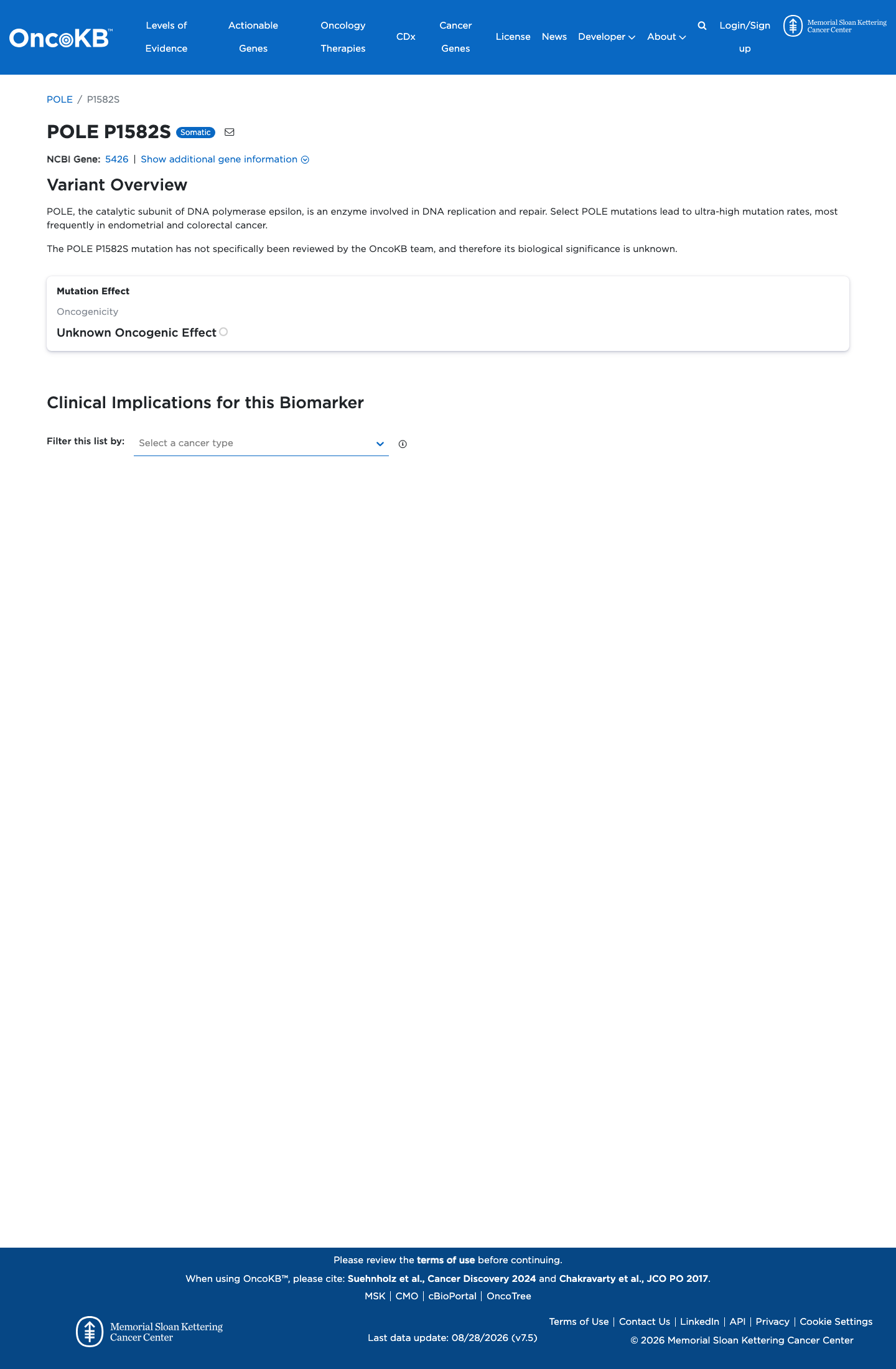
Not met: no functional assay evidence exists for this variant; OncoKB lists it as having unknown oncogenic effect.
PS4
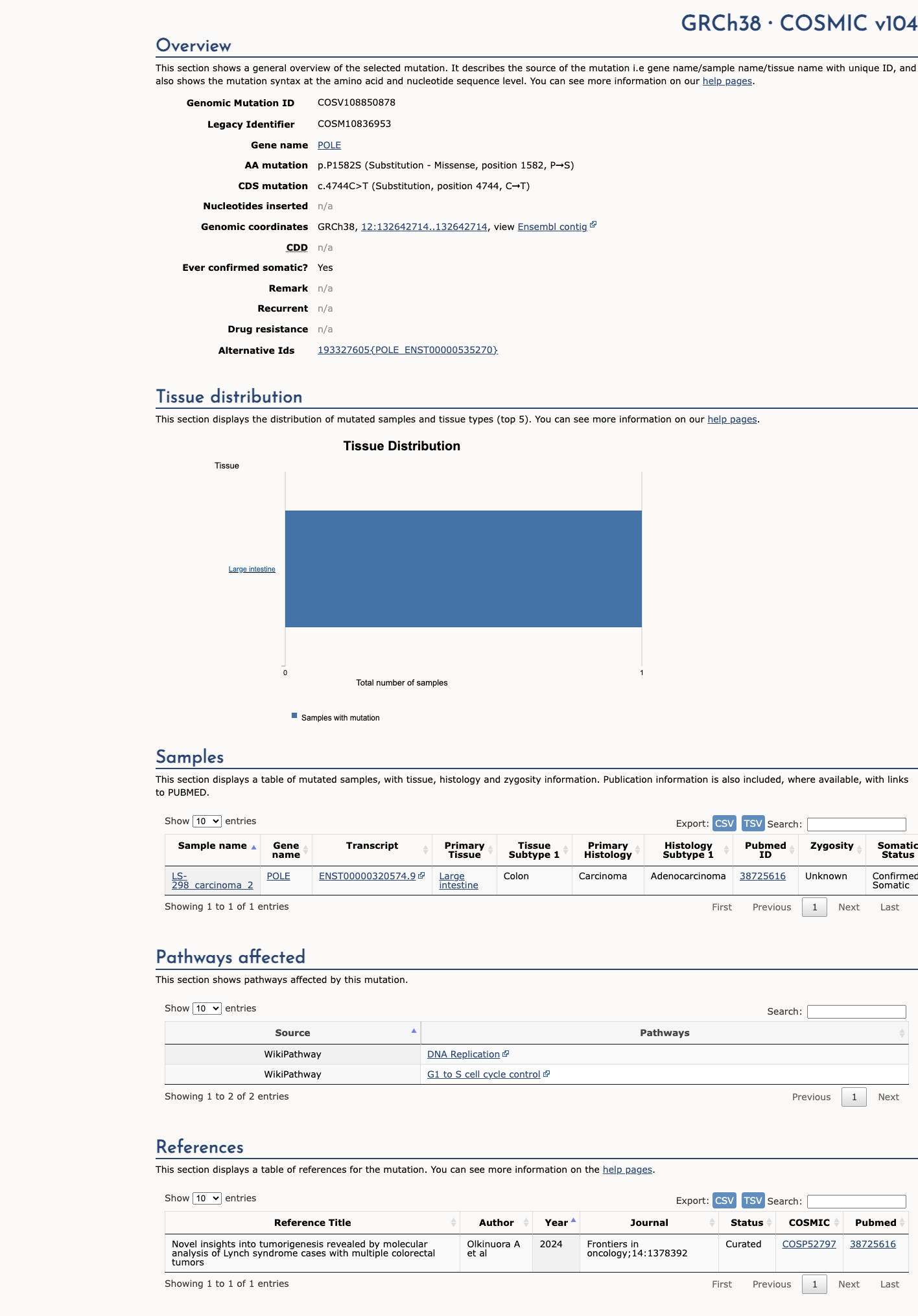
Not met: only one somatic occurrence in COSMIC, well below the required recurrent count of at least 10, with no case-control enrichment.
PM1
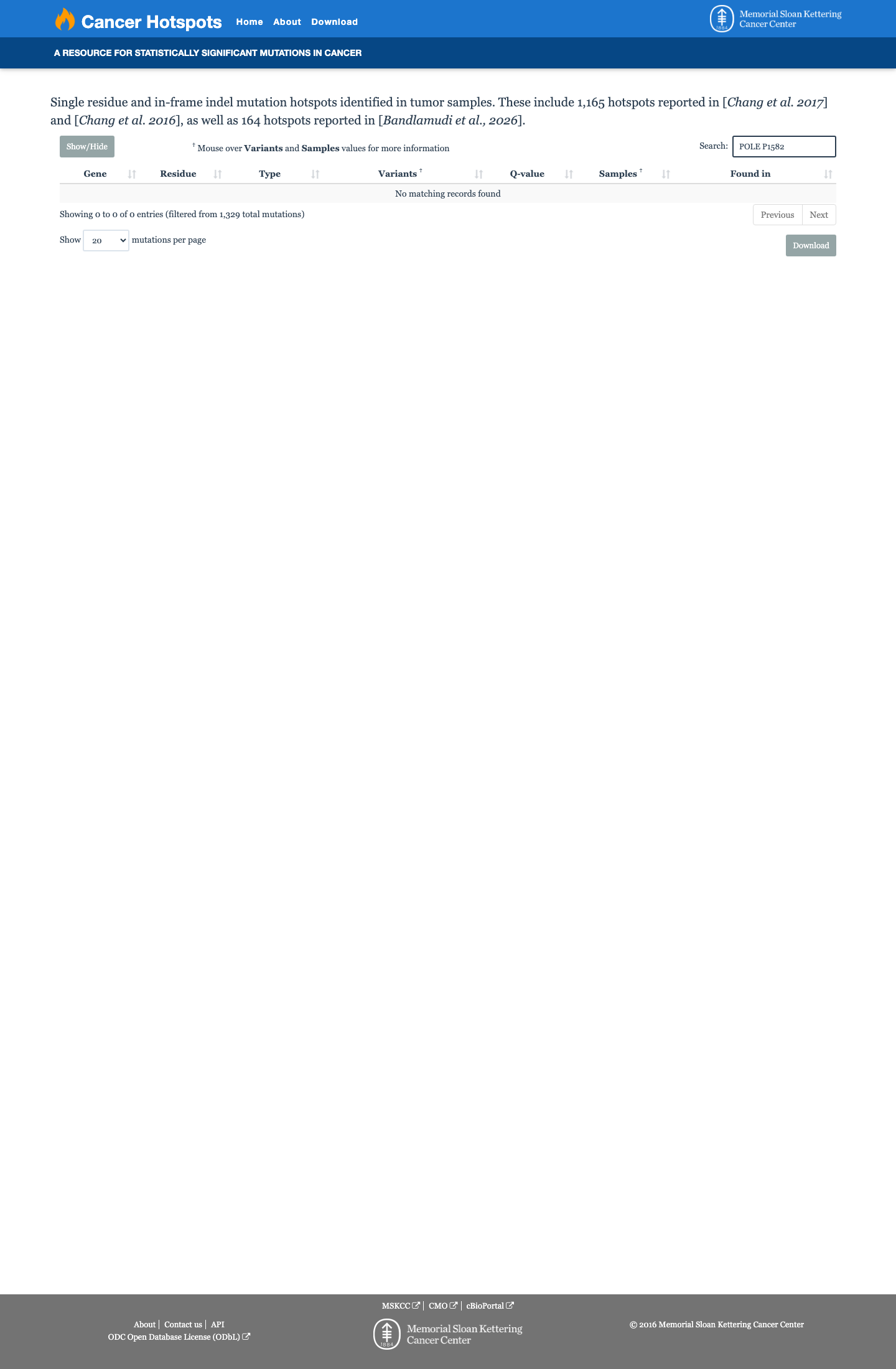
Not met: residue 1582 lies outside the exonuclease-domain hotspot region (~amino acids 268-471) and is not a statistically significant hotspot.
PM2
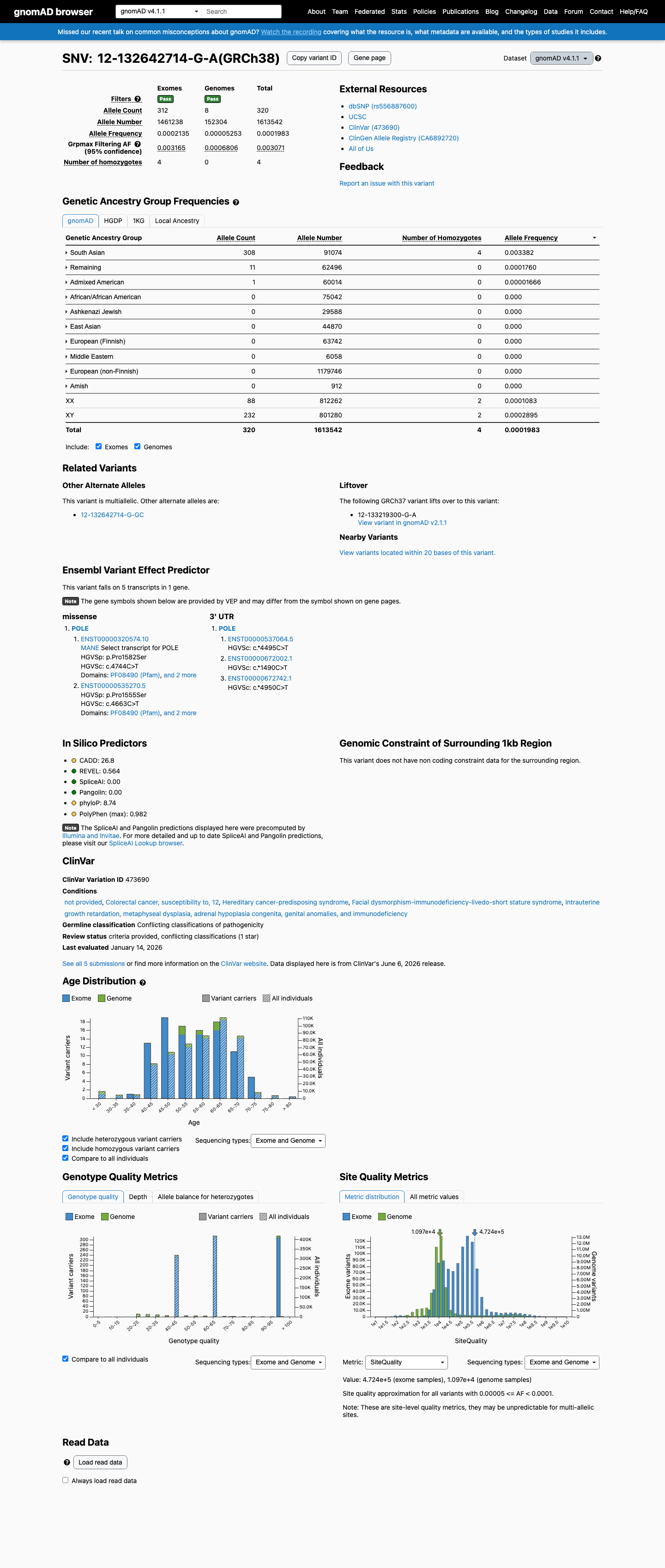
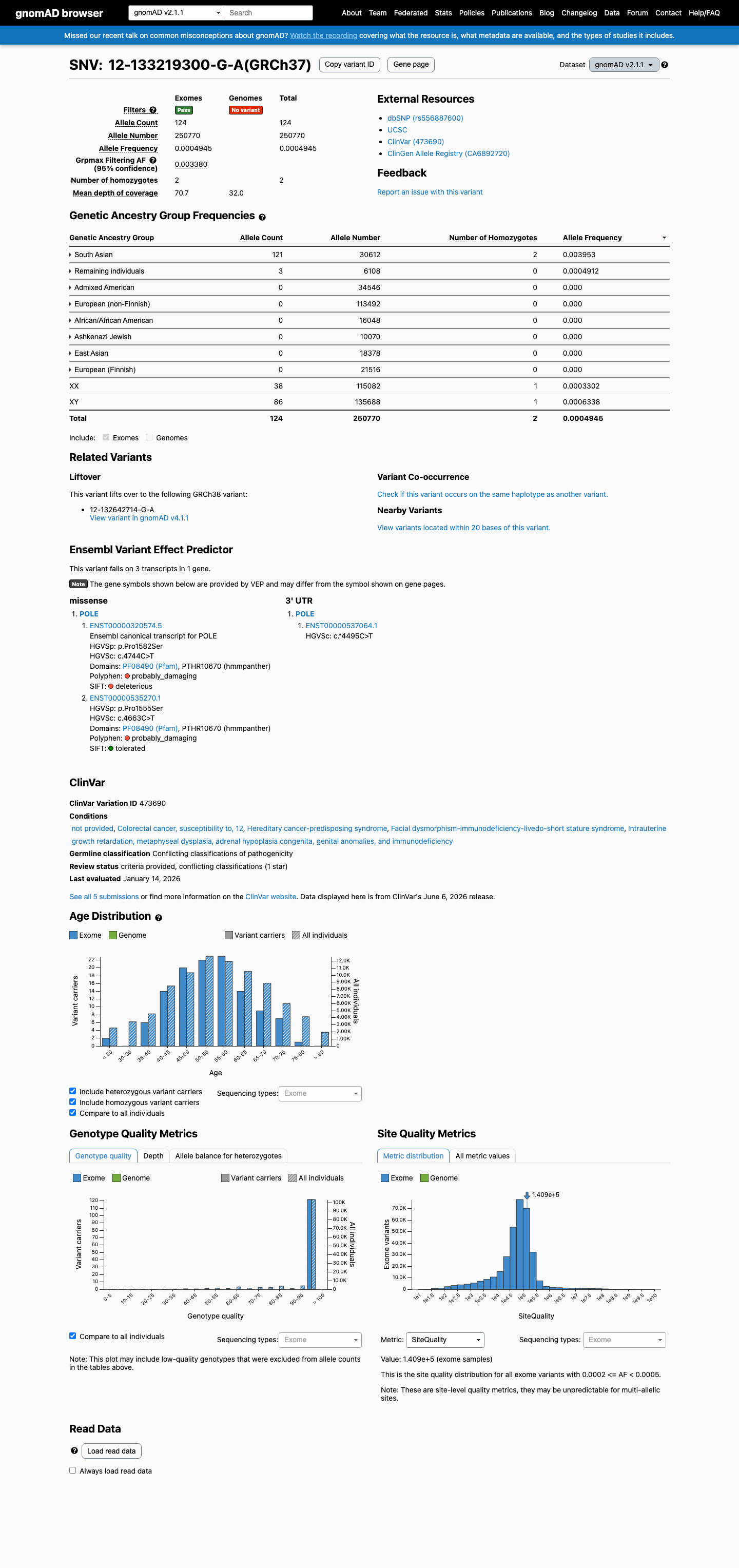
Not met: the highest population frequency is 0.338% (gnomAD South Asian), above the 0.1% rarity threshold.
PM3
Not assessed: no data show the variant in trans with a pathogenic POLE variant.
PM4
Not met: p.Pro1582Ser is a single amino-acid substitution with no protein-length alteration.
PM5
Not assessed: no different pathogenic missense change at codon 1582 was available as a comparator.
PM6
Not assessed: no evidence indicates the variant arose de novo.
PP1
Not assessed: no co-segregation data in affected family members were available.
PP2
Not assessed: POLE's rate of benign missense variation could not be evaluated because no gene-level constraint metric was available.
PP3
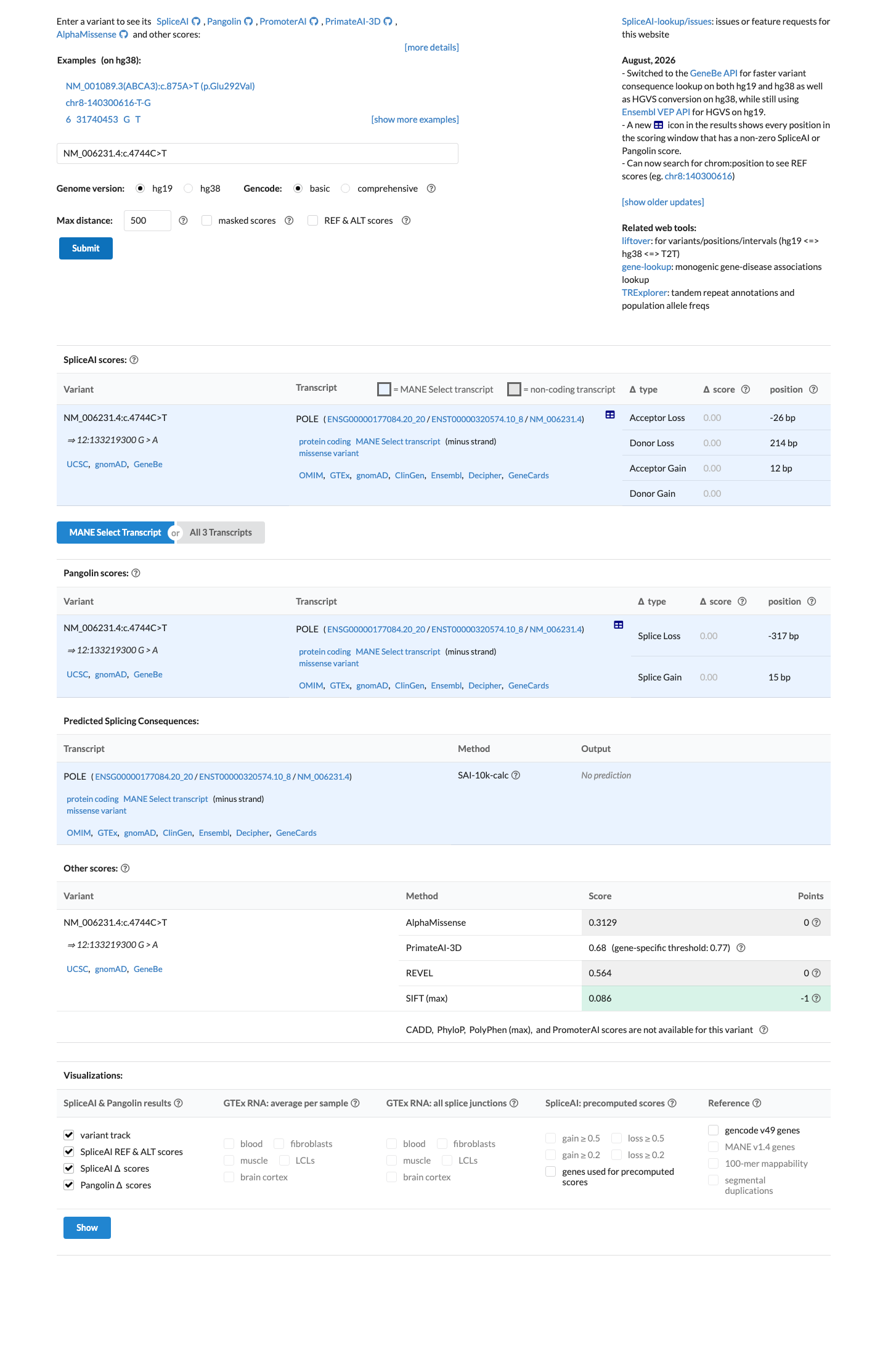
Not met: REVEL score 0.564 is below the ≥0.773 supporting threshold, and SpliceAI predicts no splice impact.
PP4
Not assessed: no phenotype or phenotype-to-genotype specificity evidence was provided.
PP5
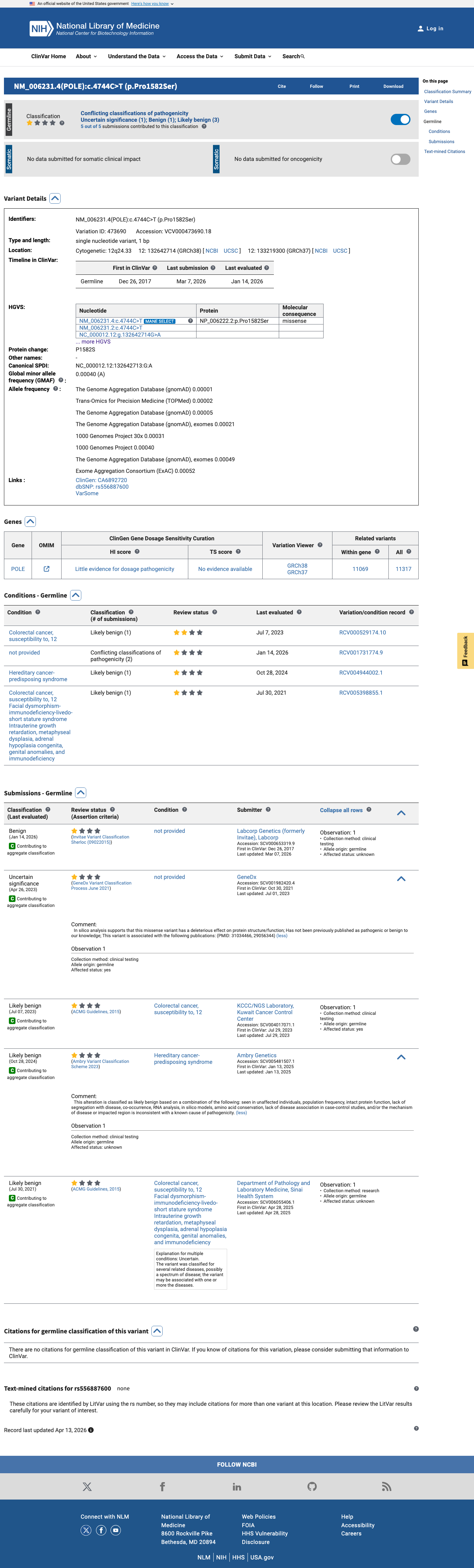
Not met: ClinVar holds no expert-panel pathogenic assertion for this variant, only single-laboratory benign, likely benign, and VUS submissions.