PS1
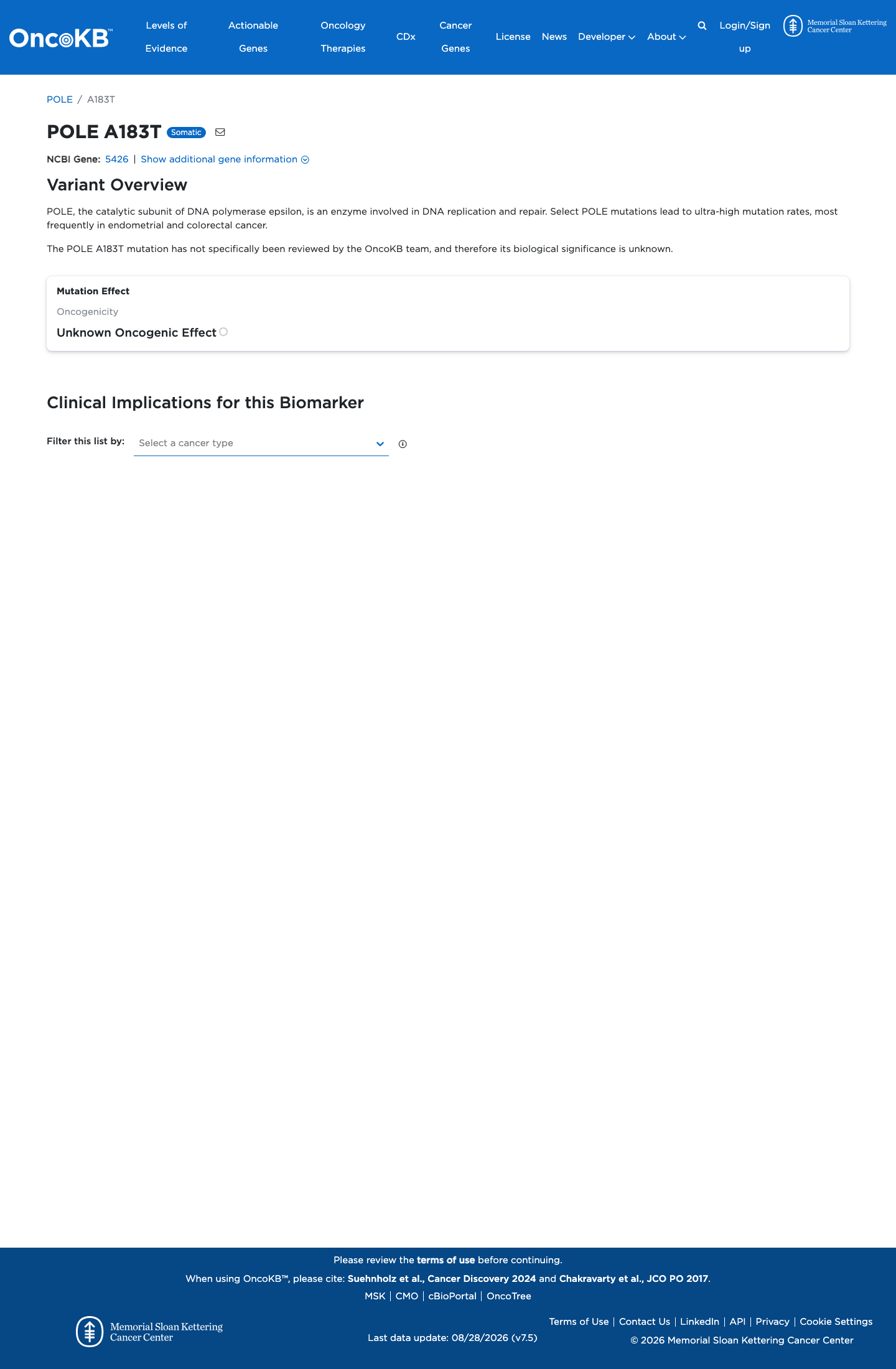
Not met: the governing POLE pathogenic set is p.P286R, p.V411L, p.S297F, p.A456P and p.S459F, and ClinVar records no pathogenic p.Ala183Thr change.
PS2
Not assessed: no confirmed de novo occurrence for c.547G>A, since no parental testing or proband data exists in any available source.
PS3
Not assessed: no functional assay data exist for POLE p.Ala183Thr; the only retrieved functional claims are in-silico (REVEL 0.037), which cannot establish PS3.
PS4
Not met: A183T is absent from Supplementary Table S1 (combined endometrial-cancer recurrence count 0, not >=10), so the POLE custom PS4 rule cannot fire.
PM1
Not met: p.Ala183Thr lies outside the POLE exonuclease/proofreading domain, where the hotspots (p.P286R-p.S459F) and all framework domain variants are located.
PM3
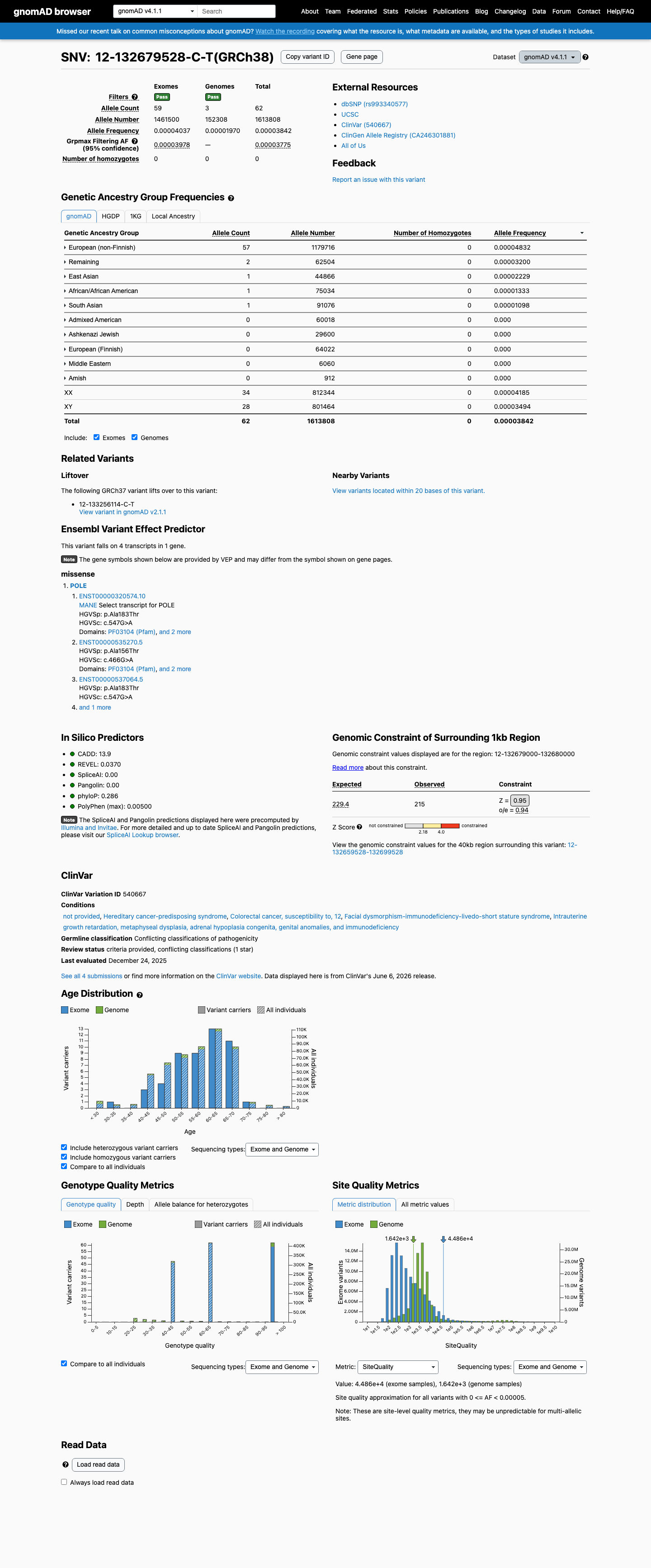
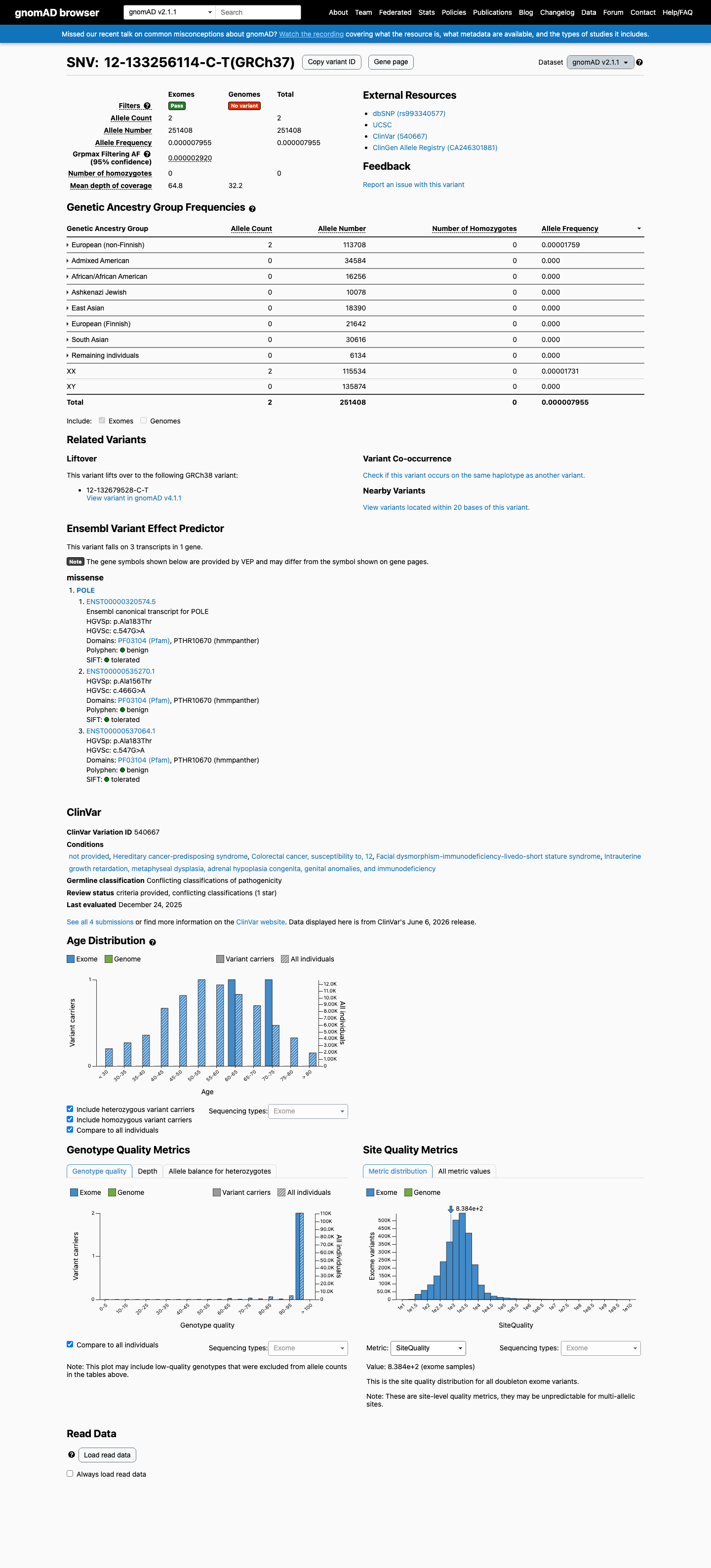
Not assessed: no second POLE variant or phasing data exist, and gnomAD shows 2/251,408 alleles with zero homozygotes, so in-trans configuration is untested.
PM5
Not met: no pathogenic missense change at POLE residue 183 is reported, and same-residue candidate harvesting returned zero comparators.
PM6
Not assessed: no assumed de novo report for c.547G>A exists, as no proband, parental samples or family data were available.
PP1
Not assessed: no pedigree, affected relatives or meioses are reported for c.547G>A, so co-segregation cannot be evaluated.
PP3
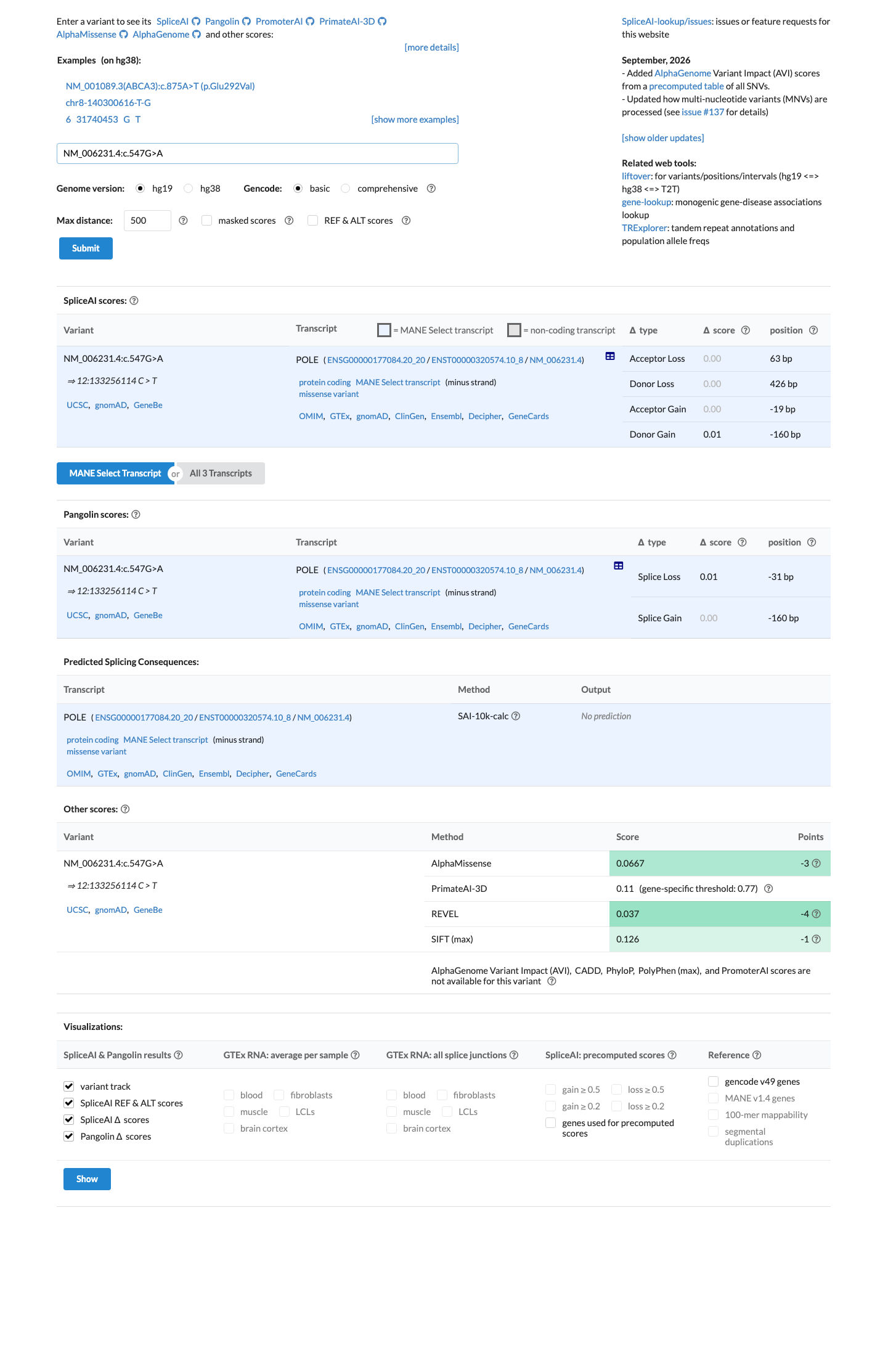
Not met: REVEL 0.037 is far below the 0.644 supporting PP3 threshold, and no splice prediction was available.
PP4
Not assessed: no proband phenotype, HPO terms, or family history were captured, so phenotype specificity for POLE cannot be evaluated.
PP5
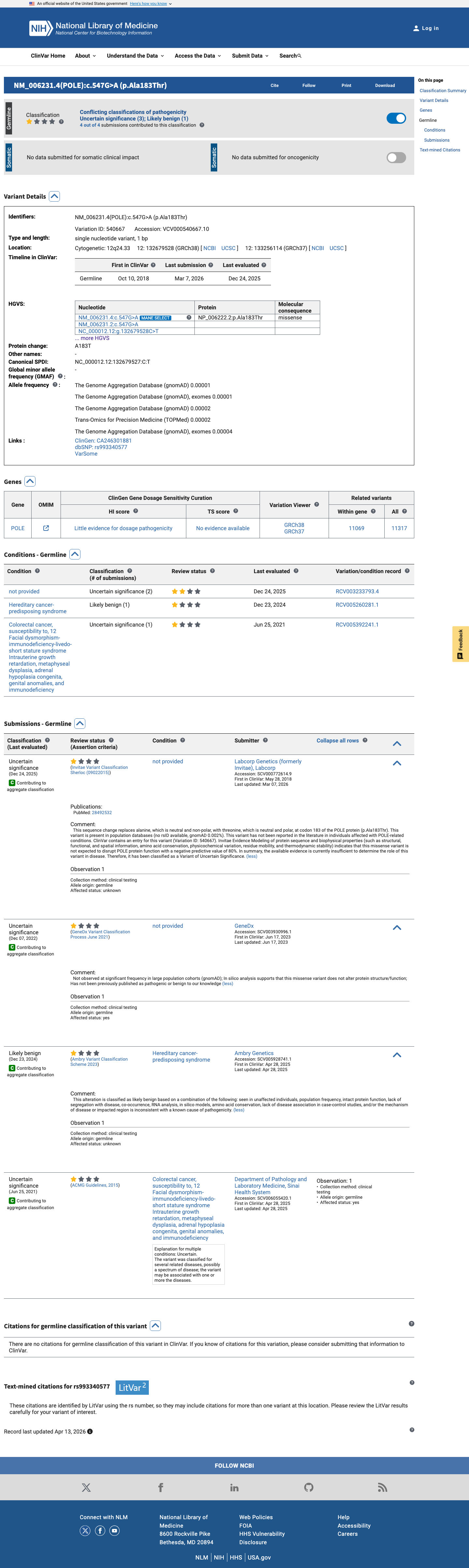
Not met: ClinVar 540667 has zero expert-panel submissions (1-star, conflicting: 3 uncertain, 1 likely benign), so no expert-panel pathogenic assertion supports PP5.