León-Castillo et al. 2020 custom POLE framework · vleon-castillo-2020-custom-framework-v1
0%
complete
Re-run interpretation
Re-run this variant?
This variant was interpreted by pipeline
7.1.5.
The current version is
8.0.0.
Re-running queues a fresh interpretation; the result replaces this page when complete.
Re-runs are not free. Blank = draws on today's public interpretation allowance.
With a code = uses 1 of that code's uses.
POLE encodes the catalytic subunit of DNA polymerase epsilon, the enzyme that replicates the leading strand of DNA during cell division and participates in DNA repair. It contains a proofreading domain that corrects replication errors, keeping the accumulation of mutations in check. Germline mutations in POLE cause polyposis and predispose to colorectal cancer, and are also linked to a rare syndrome of facial dysmorphism, immunodeficiency, livedo, and short stature. Somatic mutations, particularly in the proofreading domain, occur in colorectal and endometrial cancers, where they drive an ultra-mutated tumor phenotype and are associated with better responses to immune checkpoint inhibitors.
This variant
c.941C>A (p.Ser314Ter) destroys most of the proofreading domain of DNA polymerase epsilon, the enzyme that corrects replication errors during cell division, and is predicted to trigger nonsense-mediated decay. A Likely Pathogenic designation for this truncating variant aligns with POLE's established role in colorectal cancer predisposition and with the loss of proofreading capacity expected to compromise genomic stability.
Transcript
NM_006231.4
HGVS · transcript:coding
NM_006231.4:c.941C>A
GRCh38
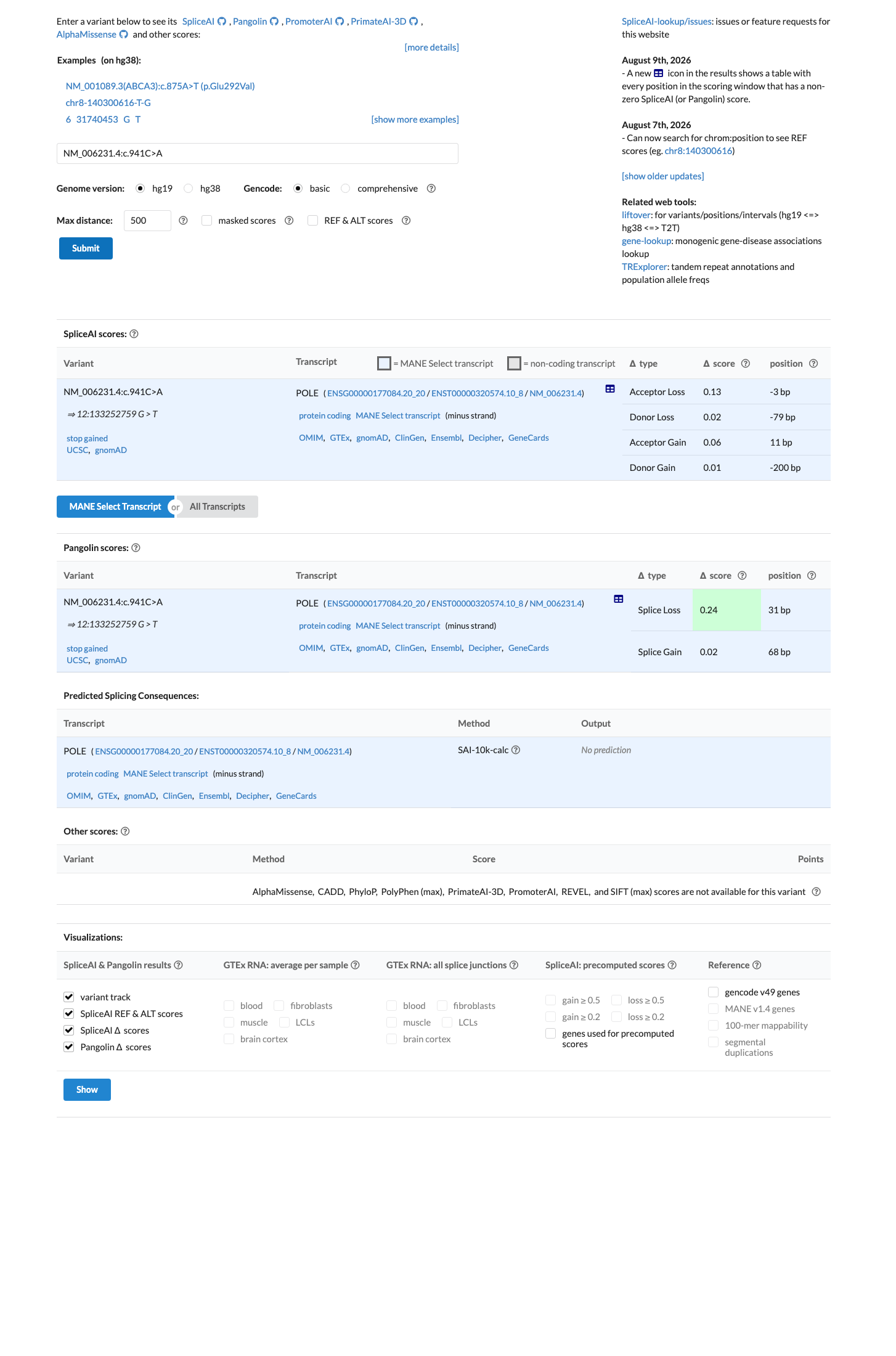
chr12:132676173 G>T
GRCh37
chr12:133252759 G>T
No ClinGen POLE CSPEC exists, so the local Leon-Castillo 2020 framework governs: PVS1 (Very Strong) plus PM2 (Moderate) combine to Likely Pathogenic.
Classification rationale
PVS1PM2Likely Pathogenic
POLE c.941C>Anonsense · exon 10
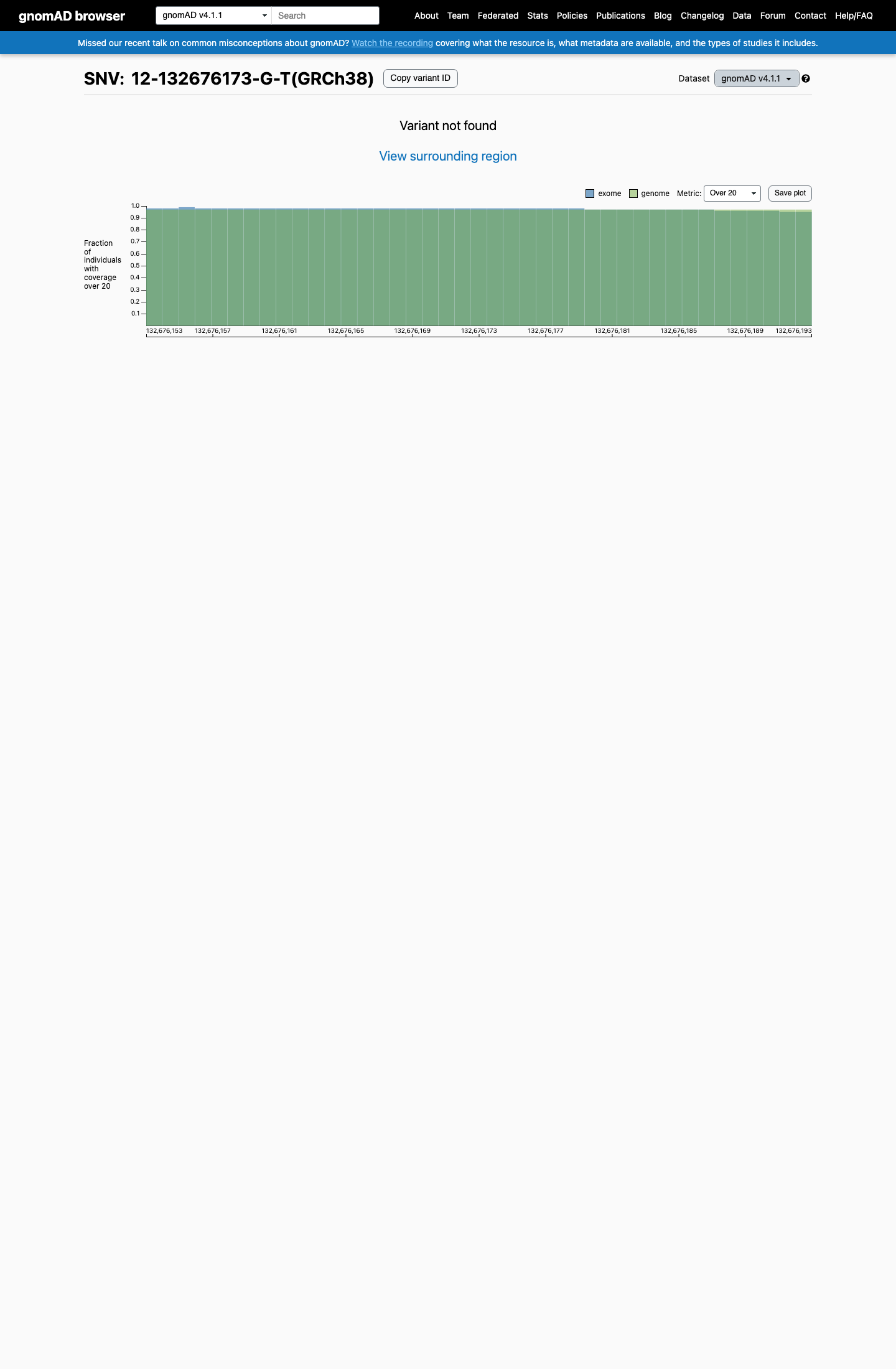
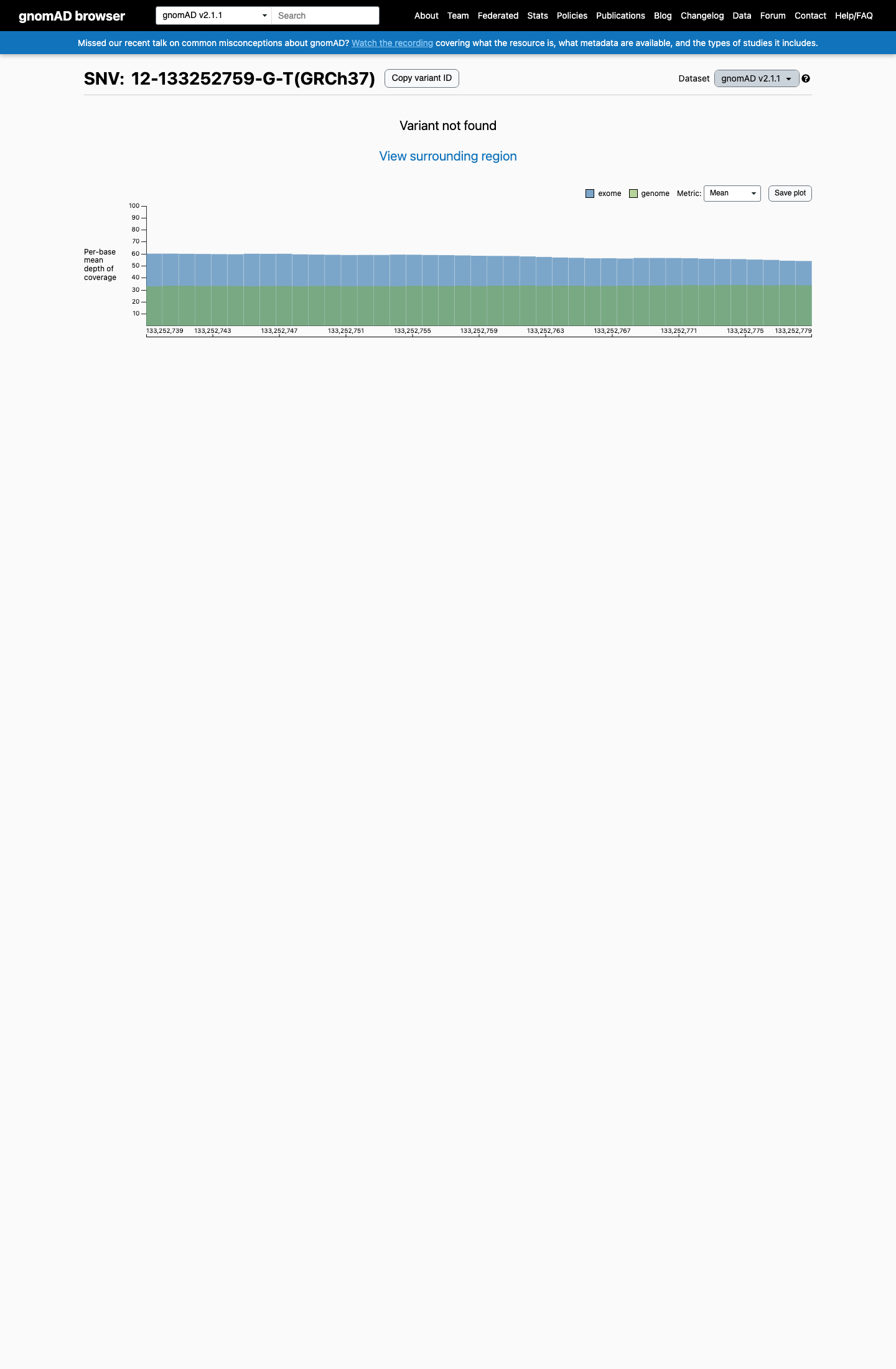
PVS1 (Very Strong): nonsense variant p.(Ser314Ter) predicted to trigger nonsense-mediated decay, truncating >85% of the protein including the proofreading domain. PM2 (Moderate): variant absent from gnomAD v2.1, gnomAD v4.1, and gnomAD-Canada v1.0 population datasets. Combined, PVS1 (Very Strong) + PM2 (Moderate) yields Likely Pathogenic.
PVS1 + PM2→Likely Pathogenic
LYFE Sciences is an AI system, and it can make mistakes. Criteria
may be applied incorrectly, sources may be misread, and a confident-looking
classification can still be wrong. Double-check every criterion and
its underlying evidence before relying on any call.
Gene diagram
· NM_006231.4 · variants mapped to exon structure
POLENM_006231.4
Fetching transcript structure from UCSC…
Exons
—
Transcript span
—
Strand
—
Variants mapped
—
Source
UCSC ncbiRefSeqCurated
All variants in POLE—click a row to locate it on the plot · use the link column to open its page
Protein
Location
Classification
Link
Applied criteria · 2 applied · 17 assessed
MetEvidence satisfies this criterion.
Not metEvaluated against available evidence; threshold not reached.
Not assessedApplies in principle, but no evidence was found to evaluate it.
N/ADoesn't apply to this variant type.
Applied · 2
Strength Supporting Moderate Strong Very strong
✓
PVS1very strongreviewPathogenic
Met (Very Strong): c.941C>A creates stop codon p.(Ser314Ter), predicted to trigger nonsense-mediated decay and remove >85% of POLE's 2286-aa protein. Flagged for human review: gene-disease mechanism and zygosity for this truncating allele are unconfirmed.
prefetch.json normalize step: NM_006231.4:c.941C>A predicted protein NP_006222.2:p.(Ser314Ter); position_first=313, position_last_predicted=314 confirms an early premature stop.variant_validator variant_exonic_positions places the variant in exon 10 (start_exon=end_exon='10') of the transcript.prefetch.json selector_short.exon.c lists 49 total coding exons for NM_006231.4, confirming the premature stop at codon 314 is 39 exons upstream of the terminal exon, well beyond the 50-bp NMD-escape boundary.
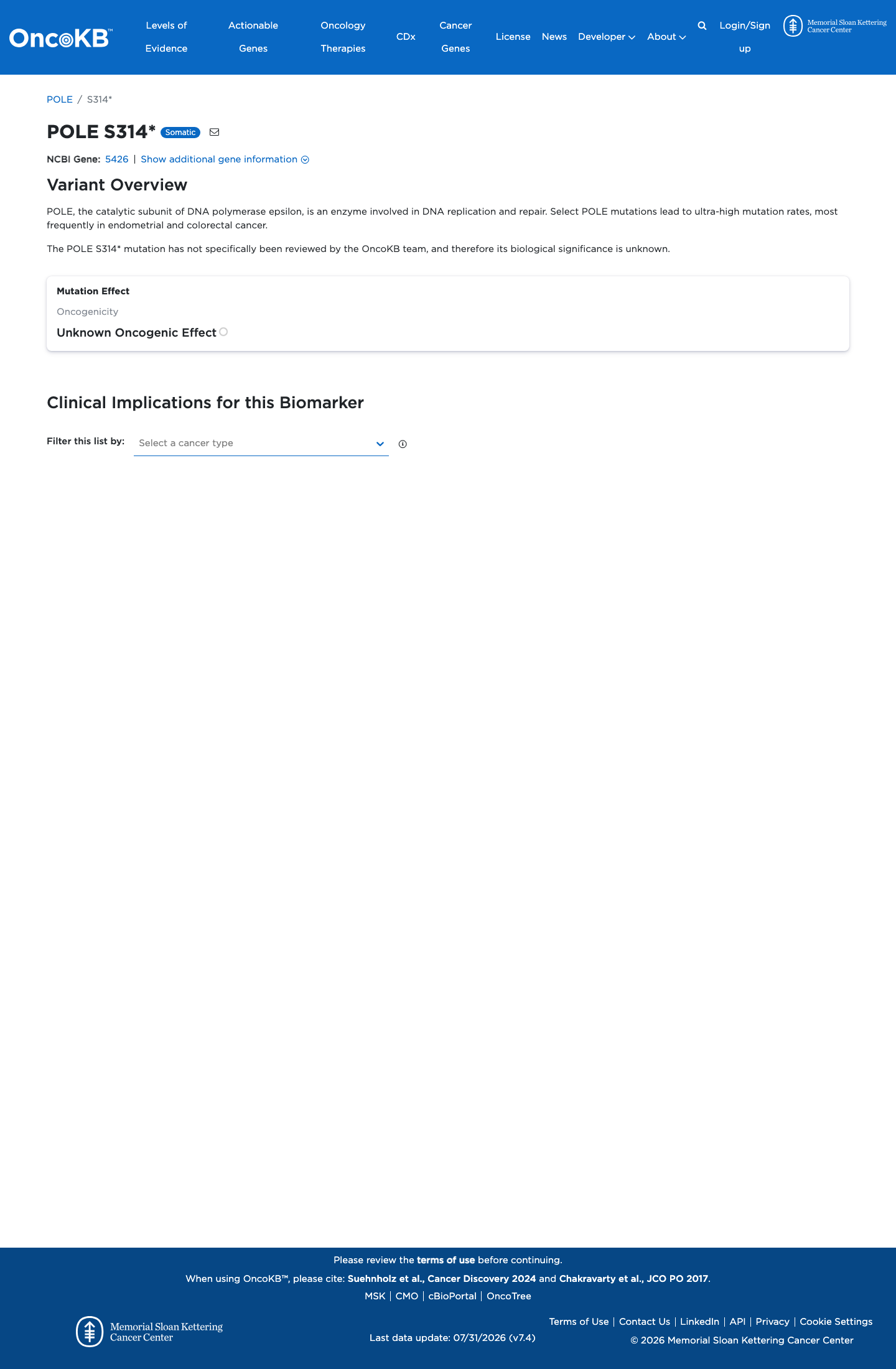
OncoKB did not identify variant-specific reviewed functional evidence for this variant; gene-level curated context is available for reviewer follow-up. POLE, the catalytic subunit of DNA polymerase epsilon, is an enzyme involved in DNA replication and repair. Select POLE mutations lead to ultra-high m