POLE encodes the catalytic subunit of DNA polymerase epsilon, the enzyme that replicates the leading strand of DNA during cell division and participates in DNA repair. It contains a proofreading domain that corrects replication errors, keeping the accumulation of mutations in check. Germline mutations in POLE cause polyposis and predispose to colorectal cancer, and are also linked to a rare syndrome of facial dysmorphism, immunodeficiency, livedo, and short stature. Somatic mutations, particularly in the proofreading domain, occur in colorectal and endometrial cancers, where they drive an ultra-mutated tumor phenotype and are associated with better responses to immune checkpoint inhibitors.
This variant
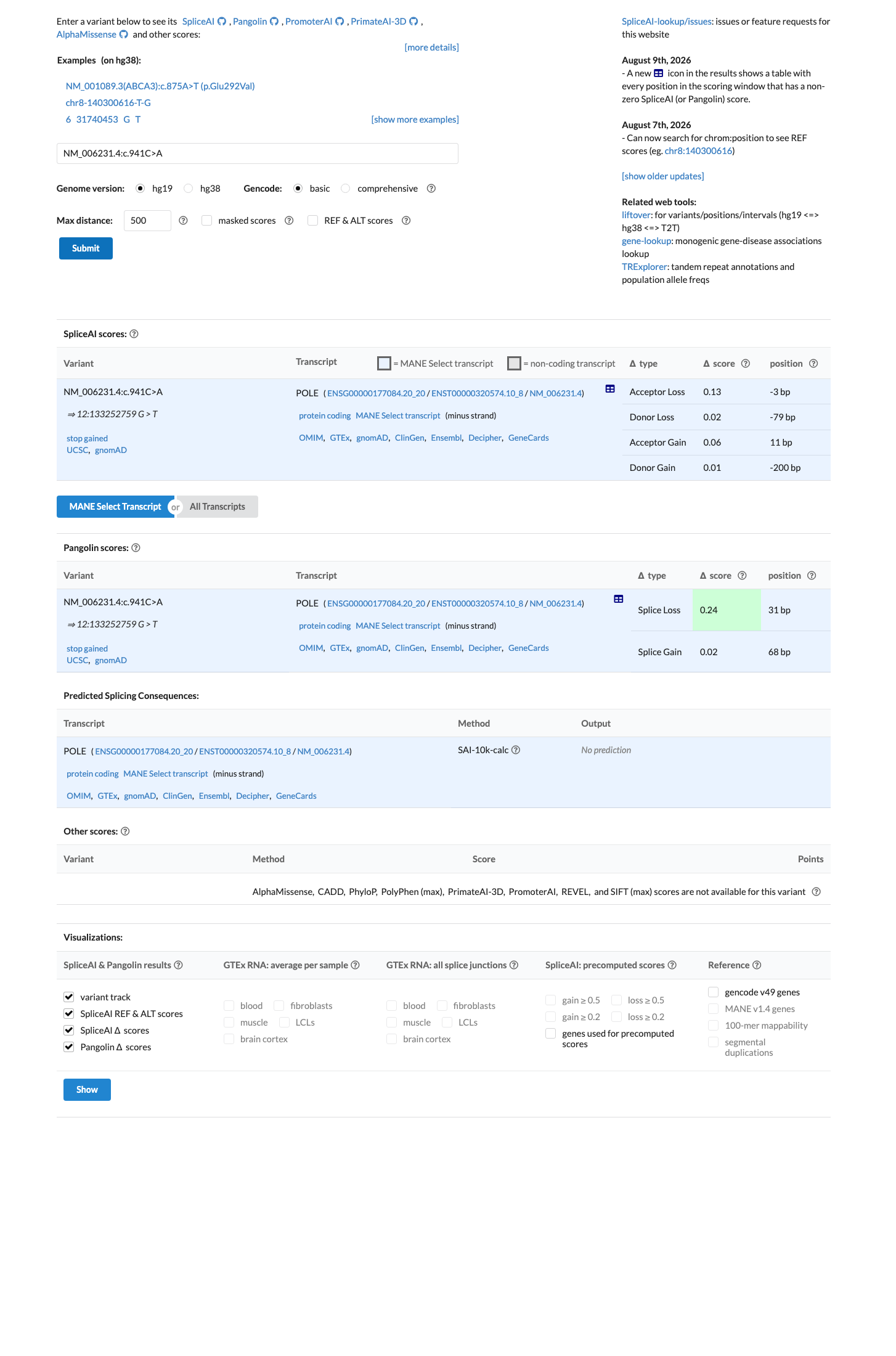
c.941C>A (p.Ser314Ter) destroys most of the proofreading domain of DNA polymerase epsilon, the enzyme that corrects replication errors during cell division, and is predicted to trigger nonsense-mediated decay. A Likely Pathogenic designation for this truncating variant aligns with POLE's established role in colorectal cancer predisposition and with the loss of proofreading capacity expected to compromise genomic stability.
Transcript
NM_006231.4
HGVS · transcript:coding
NM_006231.4:c.941C>A
GRCh38
chr12:132676173 G>T
GRCh37
chr12:133252759 G>T
BasisNo ClinGen POLE CSPEC exists, so the local Leon-Castillo 2020 framework governs: PVS1 (Very Strong) plus PM2 (Moderate) combine to Likely Pathogenic.▾
No ClinGen POLE CSPEC exists, so the local Leon-Castillo 2020 framework governs: PVS1 (Very Strong) plus PM2 (Moderate) combine to Likely Pathogenic.
Classification rationale
PVS1PM2Likely Pathogenic
POLE c.941C>Anonsense · exon 10
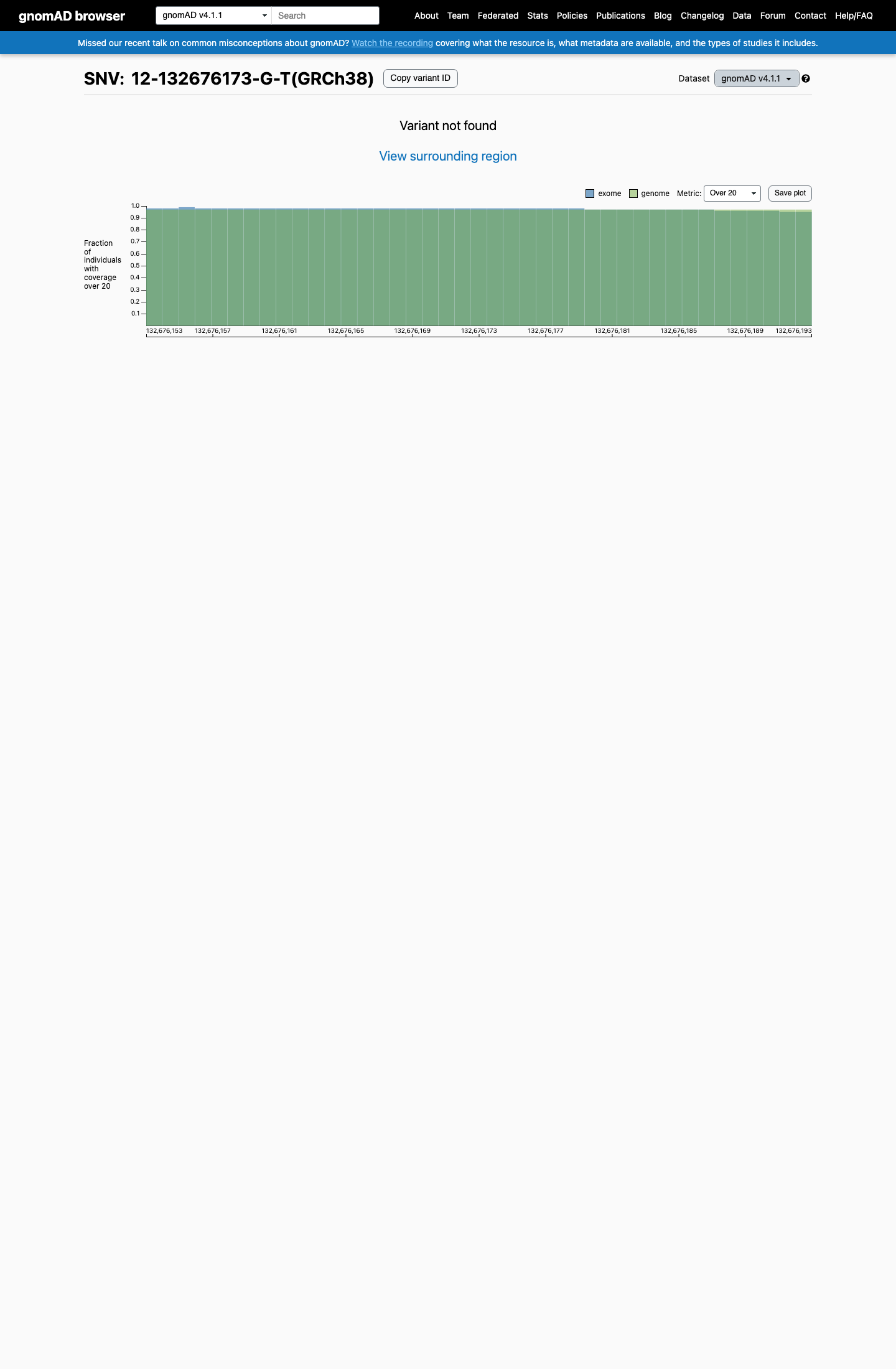
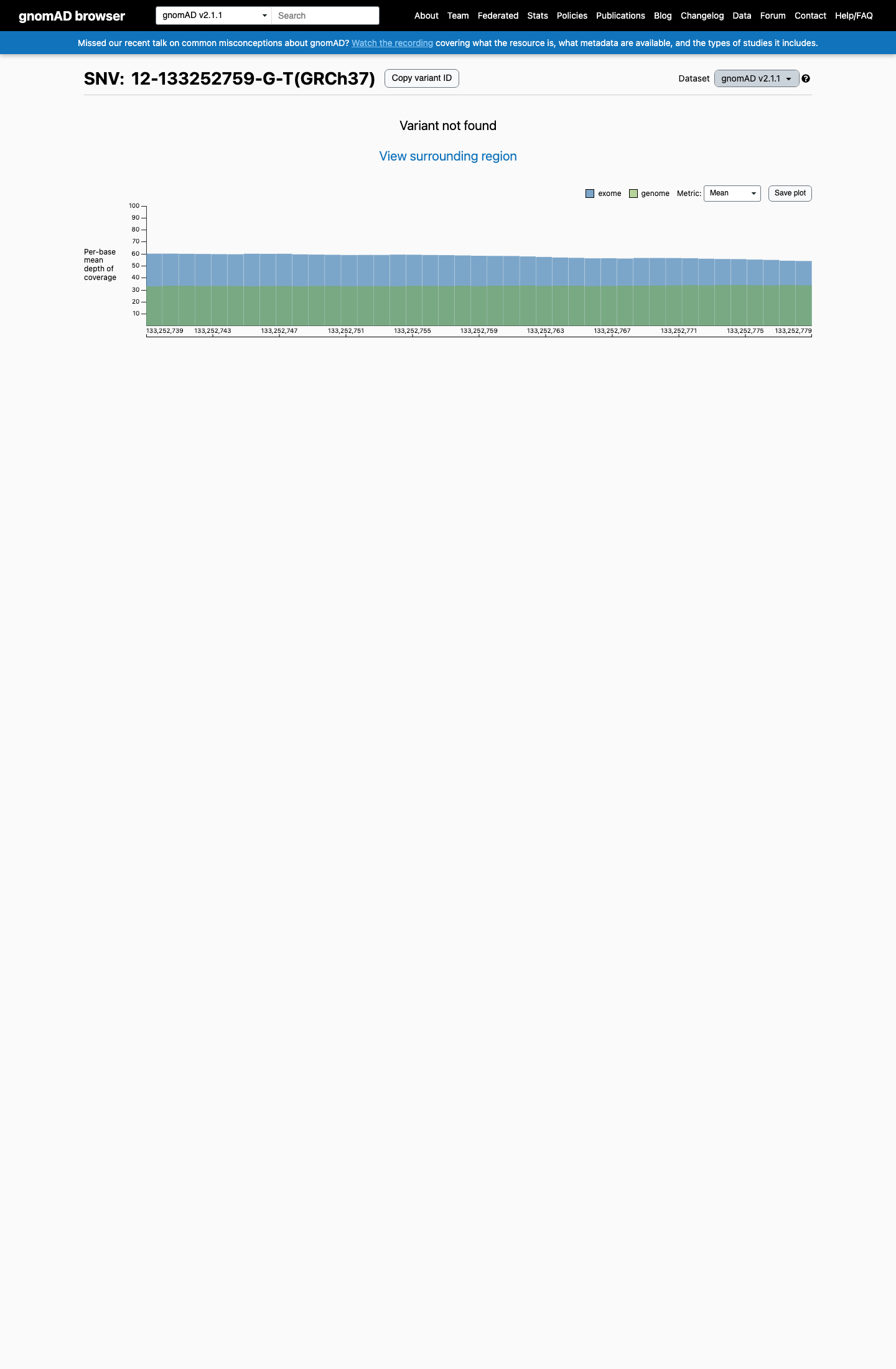
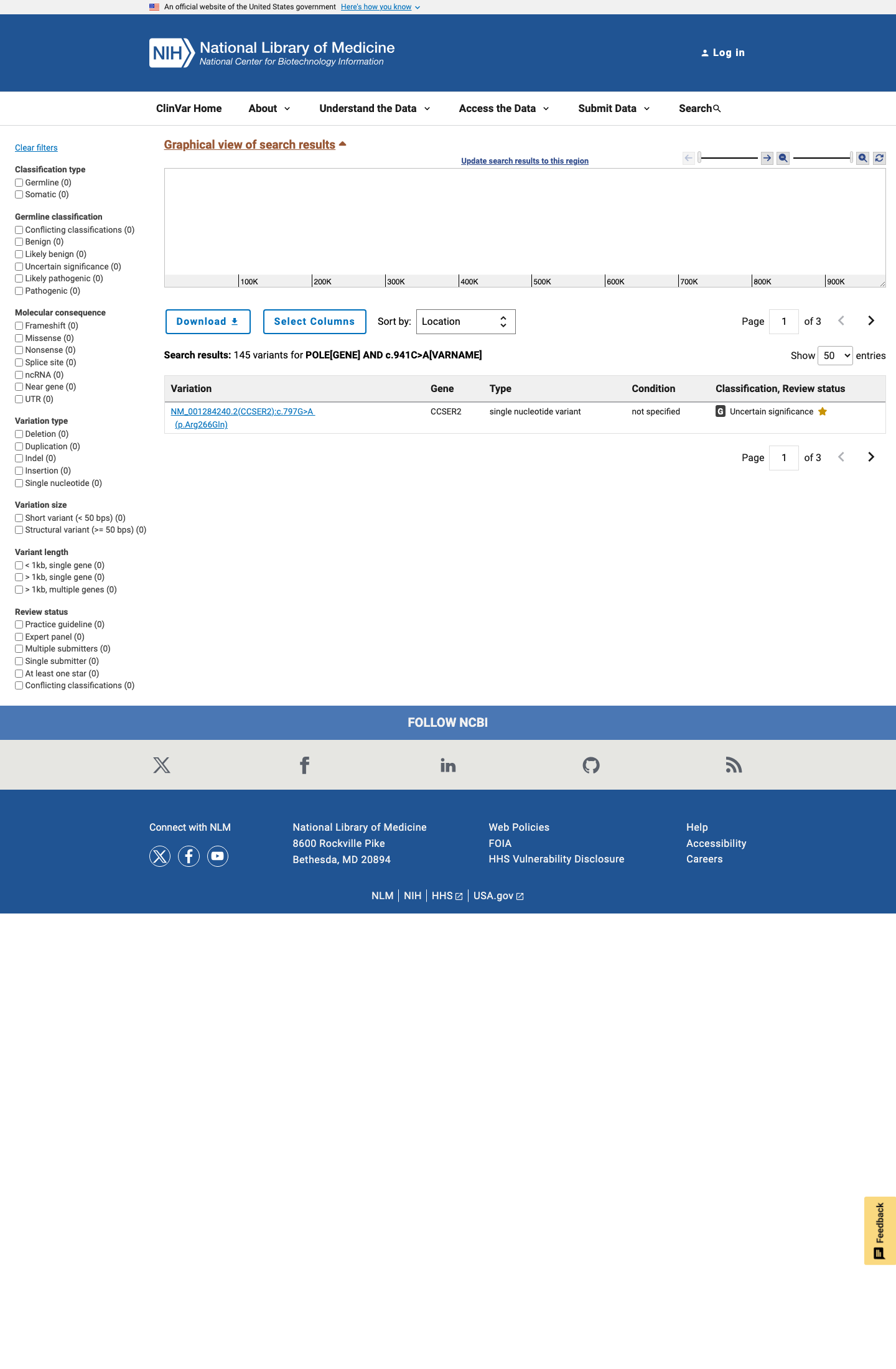
PVS1 (Very Strong): nonsense variant p.(Ser314Ter) predicted to trigger nonsense-mediated decay, truncating >85% of the protein including the proofreading domain. PM2 (Moderate): variant absent from gnomAD v2.1, gnomAD v4.1, and gnomAD-Canada v1.0 population datasets. Combined, PVS1 (Very Strong) + PM2 (Moderate) yields Likely Pathogenic.
PVS1 + PM2→Likely Pathogenic
Gene diagram
· NM_006231.4 · variants mapped to exon structure
POLENM_006231.4
Fetching transcript structure from UCSC…
Exons
—
Transcript span
—
Strand
—
Variants mapped
—
Source
UCSC ncbiRefSeqCurated
All variants in POLE—click a row to locate it on the plot · use the link column to open its page
Variant ↕
Protein
Location
Classification
Link
Applied criteria · 2 applied · 17 assessed
MetEvidence satisfies this criterion.
Not metEvaluated against available evidence; threshold not reached.
Not assessedApplies in principle, but no evidence was found to evaluate it.
N/ADoesn't apply to this variant type.
Applied · 2
Strength Supporting Moderate Strong Very strong
✓
PVS1very strongreviewPathogenic
Met (Very Strong): c.941C>A creates stop codon p.(Ser314Ter), predicted to trigger nonsense-mediated decay and remove >85% of POLE's 2286-aa protein. Flagged for human review: gene-disease mechanism and zygosity for this truncating allele are unconfirmed.
prefetch.json normalize step: NM_006231.4:c.941C>A predicted protein NP_006222.2:p.(Ser314Ter); position_first=313, position_last_predicted=314 confirms an early premature stop.variant_validator variant_exonic_positions places the variant in exon 10 (start_exon=end_exon='10') of the transcript.prefetch.json selector_short.exon.c lists 49 total coding exons for NM_006231.4, confirming the premature stop at codon 314 is 39 exons upstream of the terminal exon, well beyond the 50-bp NMD-escape boundary.
OncoKB did not identify variant-specific reviewed functional evidence for this variant; gene-level curated context is available for reviewer follow-up. POLE, the catalytic subunit of DNA polymerase epsilon, is an enzyme involved in DNA replication and repair. Select POLE mutations lead to ultra-high m