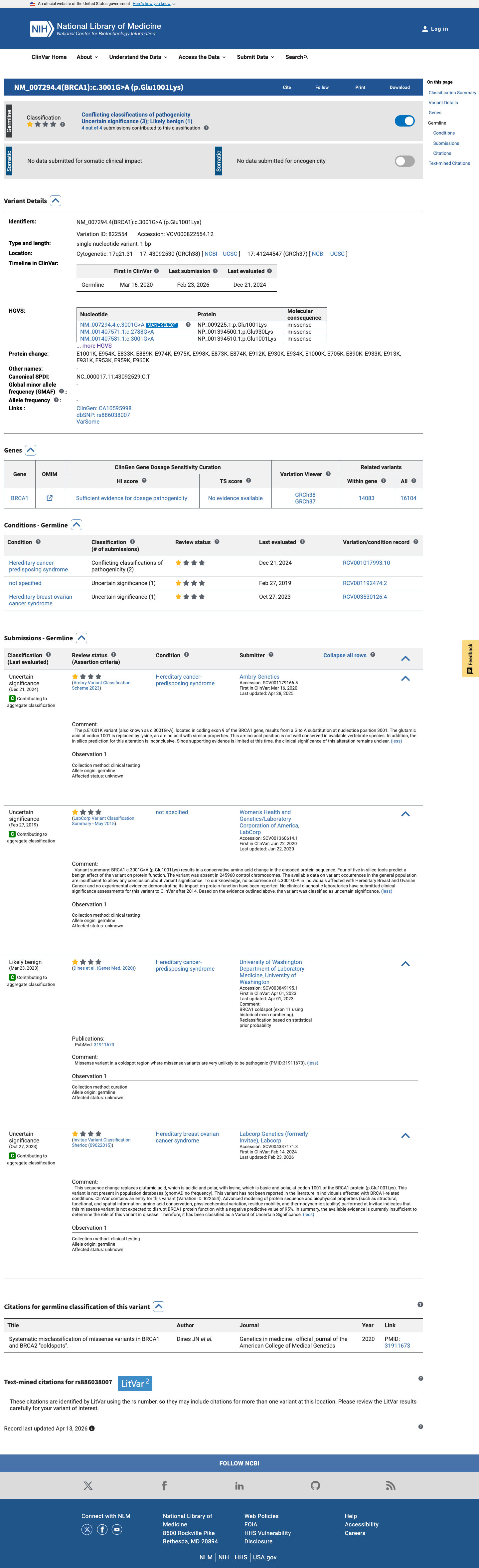
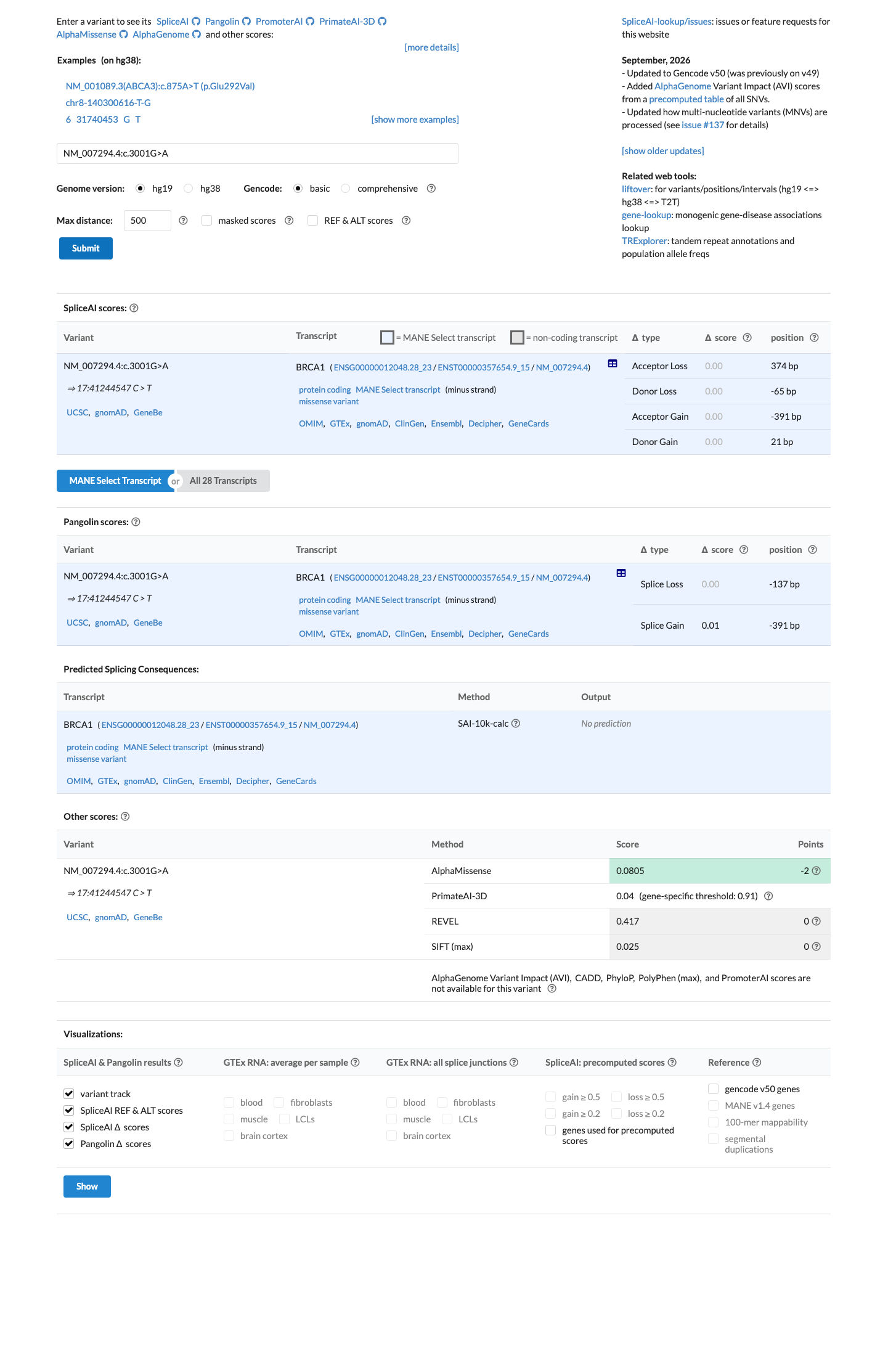
VUS: BP1 (strong) is met because residue 1001 is outside approved BRCA1 domains and SpliceAI max delta is 0.004. VUS: no pathogenic criterion is met, and BP1 (strong) lacks the additional benign evidence required for a benign call.
BRCA1 encodes a large nuclear protein that helps maintain genomic stability by coordinating the repair of DNA double-strand breaks through homologous recombination, and it also regulates transcription and the cell cycle. It acts as a tumor suppressor, working with proteins such as RAD51, BRCA2, BARD1, and PALB2 to preserve genome integrity. Inherited alterations in BRCA1 cause hereditary breast and ovarian cancer syndrome, with elevated risks of breast, ovarian, prostate, and pancreatic cancers, and biallelic loss underlies a rare form of Fanconi anemia. Because BRCA1-driven tumors rely on impaired DNA repair, they are treatable with PARP inhibitors.
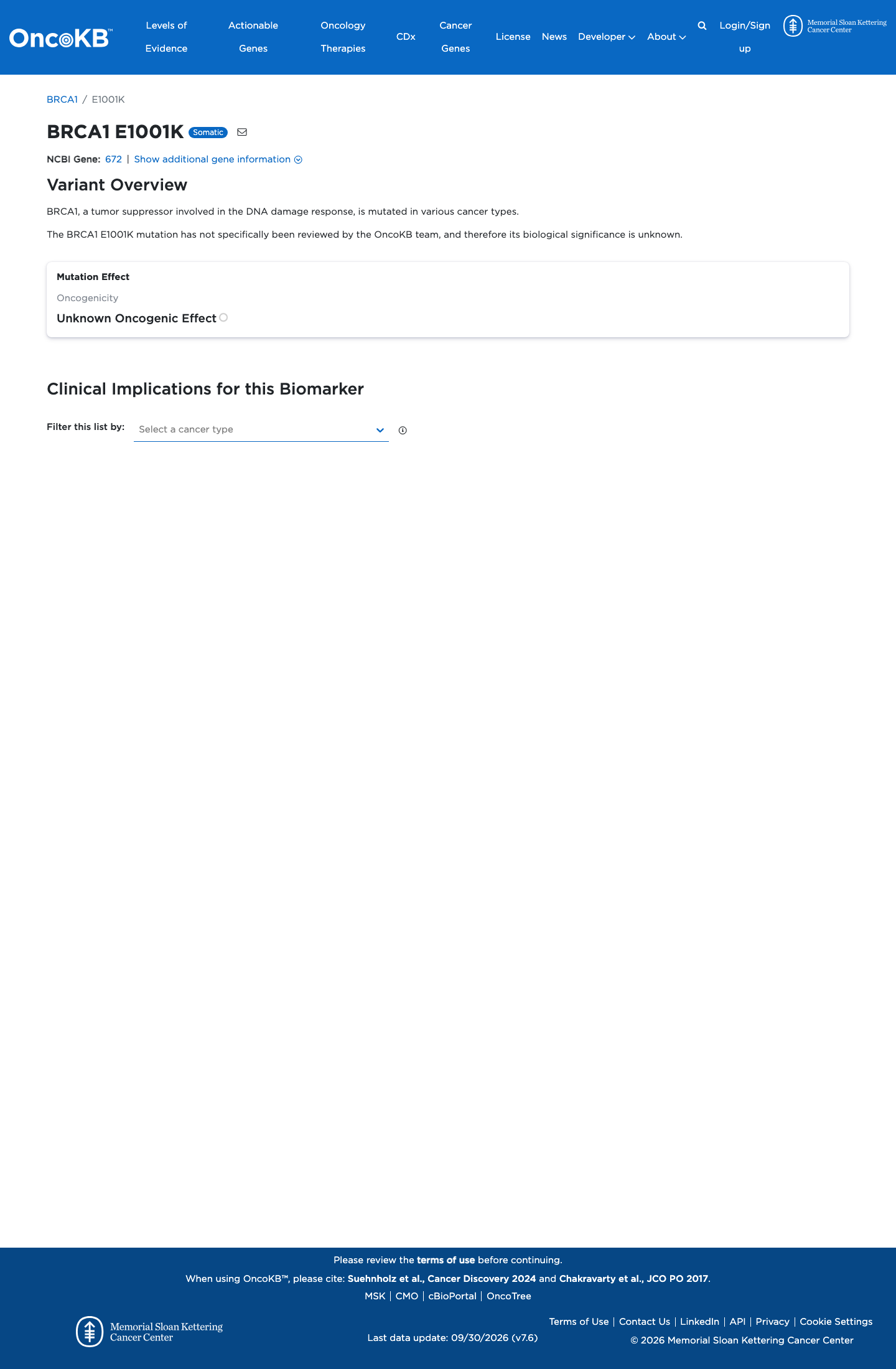
This BRCA1 variant affects a tumor-suppressor gene responsible for homologous-recombination DNA repair and hereditary breast and ovarian cancer susceptibility.
VUS: BP1 (strong) is met because residue 1001 is outside approved BRCA1 domains and SpliceAI max delta is 0.004. VUS: no pathogenic criterion is met, and BP1 (strong) lacks the additional benign evidence required for a benign call.