Analysis in progress
Initialising…
0%
complete
This report is still being assembled — sections appear as each stage finishes. It isn't final yet.
SF3B1
Final classification
VUS
PM2PP2
SF3B1
c.2469G>A
p.Met823Ile
missense · exon 17

SF3B1 encodes a subunit of the splicing factor 3b protein complex, a core component of the U2 snRNP spliceosome that removes introns from messenger RNA and regulates alternative splicing and 3' splice site selection. The protein also helps maintain genomic integrity by contributing to sister chromatid cohesion and chromosome segregation. Somatic mutations in SF3B1 are recurrent in uveal melanoma and myelodysplastic syndromes, particularly subtypes with ring sideroblasts, where they disrupt normal splicing and are thought to act through gain-of-function or dominant negative effects.

This variant

SF3B1 encodes a core spliceosome subunit whose somatic missense mutations are recurrent drivers in uveal melanoma and myelodysplastic syndromes, and whose germline missense variants cause a neurodevelopmental disorder, so missense change is a plausible mechanism for this variant. However, p.Met823Ile is absent from population databases, falls outside known hotspot residues such as K700E, and lacks functional or case-level evidence, so it cannot yet be assigned pathogenic or benign significance. The variant therefore remains a variant of uncertain significance (VUS).

Transcript
NM_012433.3
HGVS · transcript:coding
NM_012433.3:c.2469G>A
GRCh38
chr2:197401427 C>T
GRCh37
chr2:198266151 C>T
Basis Under generic ACMG/AMP 2015 rules (no ClinGen VCEP exists for SF3B1), only PM2 (Moderate) and PP2 (Supporting) were met, which is insufficient for any Pathogenic, Likely Pathogenic, Benign, or Likely Benign combination threshold, yielding a VUS.
Under generic ACMG/AMP 2015 rules (no ClinGen VCEP exists for SF3B1), only PM2 (Moderate) and PP2 (Supporting) were met, which is insufficient for any Pathogenic, Likely Pathogenic, Benign, or Likely Benign combination threshold, yielding a VUS.
Classification rationale
PM2PP2 VUS
SF3B1 c.2469G>A missense · exon 17

PM2 (Moderate): the variant is absent from population controls in gnomAD v2.1, gnomAD v4.1, and gnomAD-Canada v1.0. PP2 (Supporting): missense is an established germline disease mechanism for SF3B1, seen in 17 of 26 reported patients with SF3B1-related neurodevelopmental disorder. Combined, PM2 (Moderate) plus PP2 (Supporting) does not satisfy any ACMG/AMP 2015 Pathogenic, Likely Pathogenic, Benign, or Likely Benign combination, so the variant is classified as VUS.

PM2 + PP2 VUS
Gene diagram · NM_012433.3 · variants mapped to exon structure
SF3B1 NM_012433.3
Fetching transcript structure from UCSC…
Applied criteria · 2 applied · 22 assessed
MetEvidence satisfies this criterion.
Not metEvaluated against available evidence; threshold not reached.
Not assessedApplies in principle, but no evidence was found to evaluate it.
N/ADoesn't apply to this variant type.
Applied · 2
Strength Supporting Moderate Strong Very strong
PM2 moderate Pathogenic
Met (Moderate): absent from all queried population controls, including gnomAD v2.1, v4.1, and gnomAD-Canada v1.0.
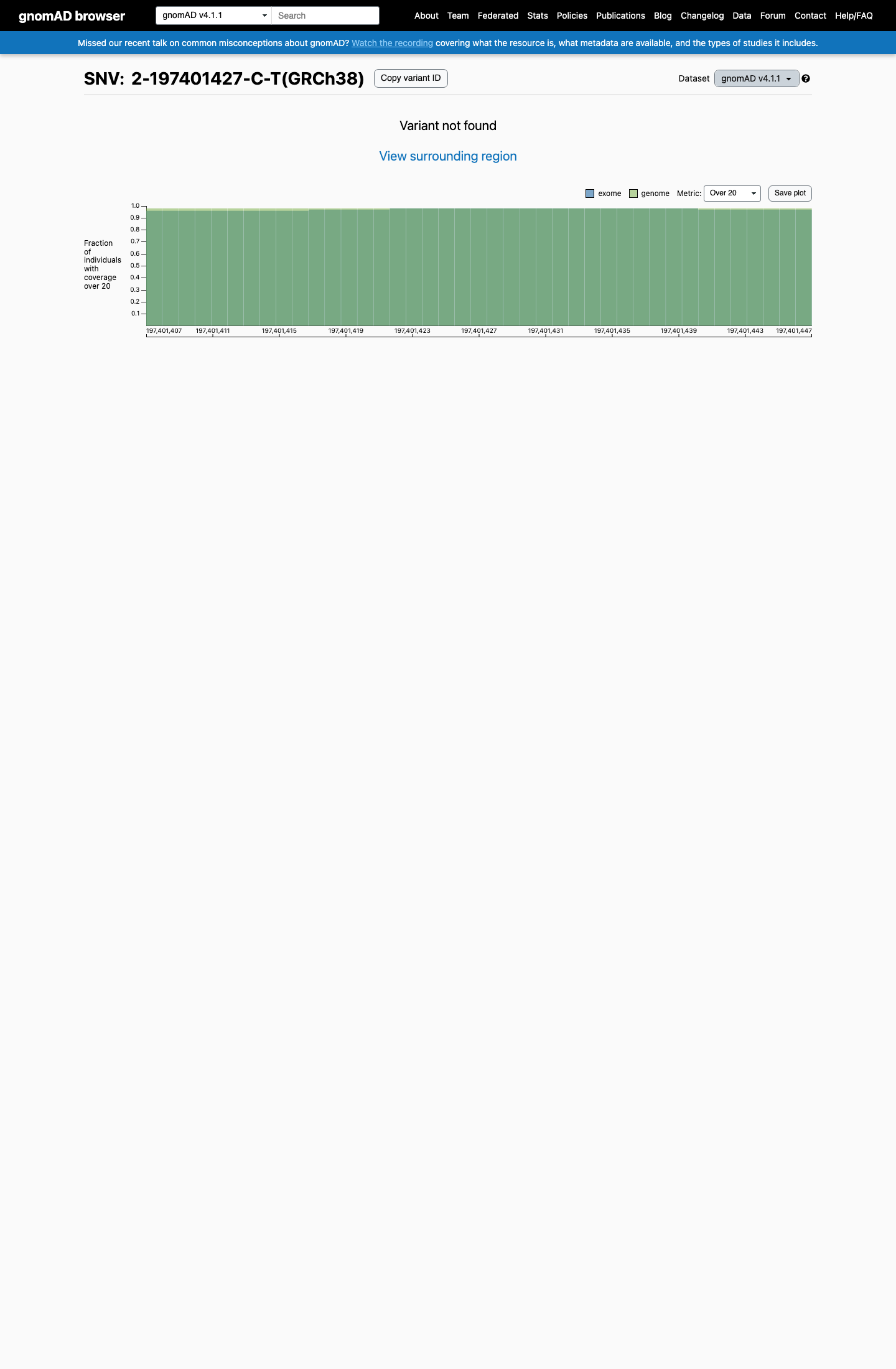
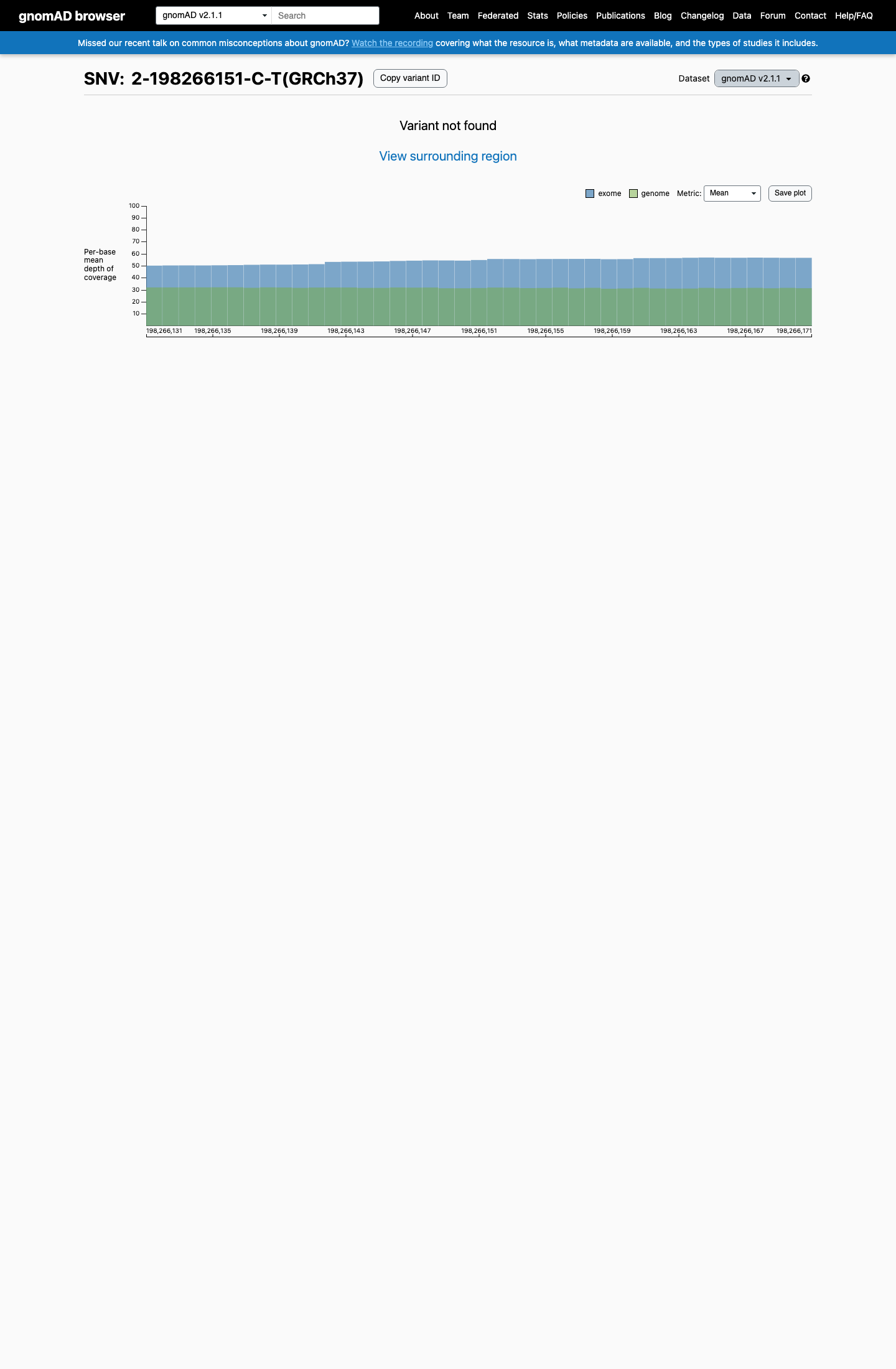
The queried normalized alleles (GRCh37 2-198266151-C>T and GRCh38 2-197401427-C>T) were reported absent from gnomAD v2.1, gnomAD v4.1, and gnomAD-Canada v1.0.
PP2 supporting Pathogenic
Met (Supporting): missense is an established germline disease mechanism for SF3B1, documented in 17 of 26 reported patients.
PMID:41577671 (full-text extract, retrieved via pvs1_gene_context literature search): cohort of 26 individuals with SF3B1 constitutional heterozygous variants; missense variants (n=17) were largely de novo and associated with a more severe/syndromic phenotype than the loss-of-function subset (n=9), establishing missense substitution as a recognized SF3B1 germline disease mechanism distinct from LoF.pvs1_gene_context.json mechanism_rationale and supporting_sources confirm SF3B1 germline disease-context literature was reviewed as part of gene-level mechanism assessment.
Assessed · not applied · 8 not met · 14 not assessed
Pathogenic
PS1 Not assessed: no established-pathogenic p.Met823Ile allele from a different nucleotide change exists; the variant is absent from ClinVar.
PS2 Not assessed: no proband phenotype or parental genotype data were available to establish a confirmed de novo occurrence.
PS3 Not assessed: no validated functional assay data for p.Met823Ile were available.
PS4 Not assessed: no case-control or enrichment data for this variant were available.
PM1 Not met: residue 823 shows no statistically significant hotspot signal in cancerhotspots.org and no somatic recurrence in COSMIC.
PM3 Not assessed: no affected-proband observations with a pathogenic variant in trans, or recessive disease context, were available.
PM5 Not assessed: no different missense change at residue 823 previously established as pathogenic was identified.
PM6 Not assessed: no de novo occurrence or parental testing was reported.
PP1 Not assessed: no familial co-segregation data were available.
PP3 Not met: REVEL score 0.571 falls below the >=0.644 PP3_Supporting threshold, in the indeterminate zone.
PP4 Not assessed: no phenotype data for a carrier of this variant were available.
PP5 Not met: no exact-variant ClinVar record exists, so no expert-panel Pathogenic or Likely pathogenic assertion supports PP5.
Benign
BA1 Not met: the variant is absent from gnomAD v2.1, v4.1, and gnomAD-Canada v1.0, so no allele frequency reaches the BA1 threshold.
BS1 Not met: the variant is absent from all queried population datasets, so it cannot exceed the expected benign frequency.
BS2 Not assessed: no observations in well-phenotyped unaffected individuals were provided.
BS3 Not assessed: no functional assay data demonstrating normal protein function were available.
BS4 Not assessed: no unaffected variant-positive relatives or other non-segregation observations were provided.
BP1 Not met: missense is an established disease mechanism for SF3B1, so the truncation-only premise of BP1 does not apply.
BP2 Not assessed: no co-occurring pathogenic variant or phase evidence was available.
BP4 Not met: REVEL score 0.571 is well above the <=0.290 BP4_Supporting threshold, in the indeterminate zone.
BP5 Not assessed: no alternate molecular diagnosis could be evaluated from the available data.
BP6 Not met: no exact-variant ClinVar record exists, so no expert-panel Benign or Likely benign assertion supports BP6.
N/A · 4 PVS1 · PM4 · BP3 · BP7
Research & evidence
Population frequency
gnomAD v4.1 screenshot
gnomAD v4.1
gnomAD v2.1 screenshot
gnomAD v2.1
v4.1
Absent from gnomAD v4.1.
v2.1
Absent from gnomAD v2.1.
🇨🇦 CA
Absent from gnomAD-Canada v1.0.
Allele frequency by ancestry
three datasets · side by side
gnomAD v4.1
Absent · 0 / ?
0 hom
Not observed in any ancestry group.
gnomAD v2.1
Absent · 0 / ?
0 hom
Not observed in any ancestry group.
gnomAD Canada 🇨🇦
Absent · 0 / ?
0 hom
Not observed in any ancestry group.
ClinVar screenshot
ClinVar
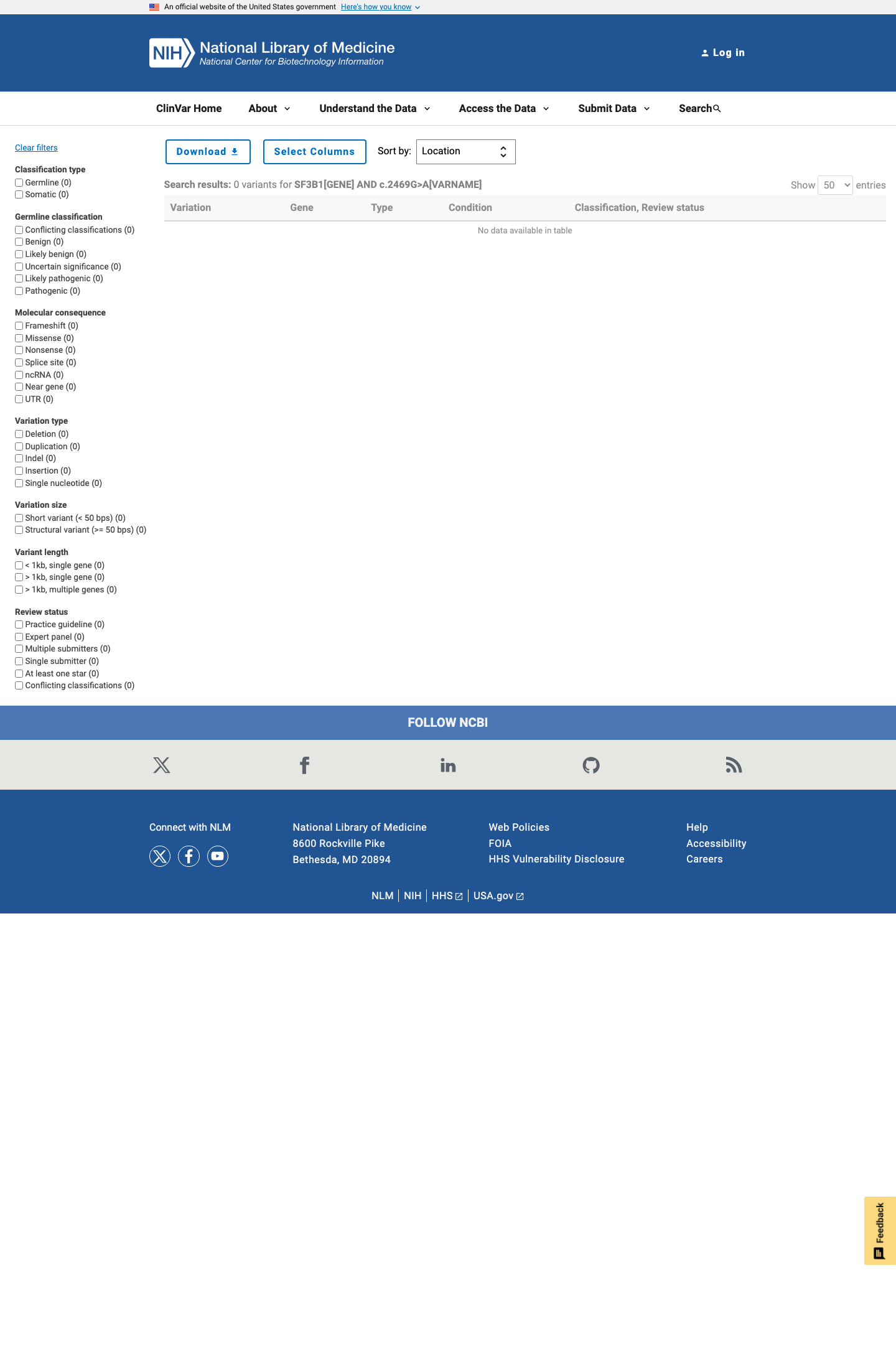
This variant is absent from ClinVar.
SpliceAI screenshot
In silico
SpliceAI predicts no significant splice impact for this variant (max delta score = 0.03). REVEL score = 0.571. BayesDel score = 0.150289.
Functional No data
No calibrated functional assay or RNA evidence was identified for this variant.
OncoKB ↗
COSMIC screenshot
COSMIC
Cancer hotspots screenshot
Cancer hotspots
Somatic evidence Not in COSMIC / hotspots
COSMIC
This variant does not lie in a statistically significant hotspot. This variant has not previously been reported in somatic cancers (COSMIC).
Hotspots
This variant does not lie in a statistically significant hotspot.
Sources & reference links
8Sources
ClinVar
gnomAD v2.1
gnomAD v4.1
gnomAD-Canada
SpliceAI
OncoKB
COSMIC
Cancer hotspots