This variant was interpreted by pipeline
7.1.0.
The current version is
8.0.0.
Re-running queues a fresh interpretation; the result replaces this page when complete.
Re-runs are not free. Blank = draws on today's public interpretation allowance.
With a code = uses 1 of that code's uses.
RET encodes a receptor tyrosine kinase that, when activated by GDNF-family ligands, triggers signaling pathways involved in cell growth, differentiation, migration, and survival, and is essential for development of the nervous system and neural crest-derived tissues. Germline changes in RET cause Hirschsprung disease, congenital central hypoventilation syndrome, and the inherited cancer syndromes multiple endocrine neoplasia type 2A and 2B and familial medullary thyroid carcinoma. In cancer, RET is a proto-oncogene that can be turned on by point mutations or gene rearrangements, driving malignancies such as medullary and papillary thyroid carcinoma, lung adenocarcinoma, and chronic myelomonocytic leukemia, and abnormal RET activity has also been linked to invasion and metastasis in pancreatic cancer and to endocrine therapy resistance in breast cancer.
This variant
RET germline missense changes at established hotspot codons cause medullary thyroid carcinoma and MEN2 syndromes, but c.1783G>A (p.Glu595Lys) falls outside those hotspots. With only extreme population rarity supporting it and no functional, segregation, or case-level evidence, the variant remains a VUS and cannot yet be linked to RET-driven disease.
Transcript
NM_020975.6
HGVS · transcript:coding
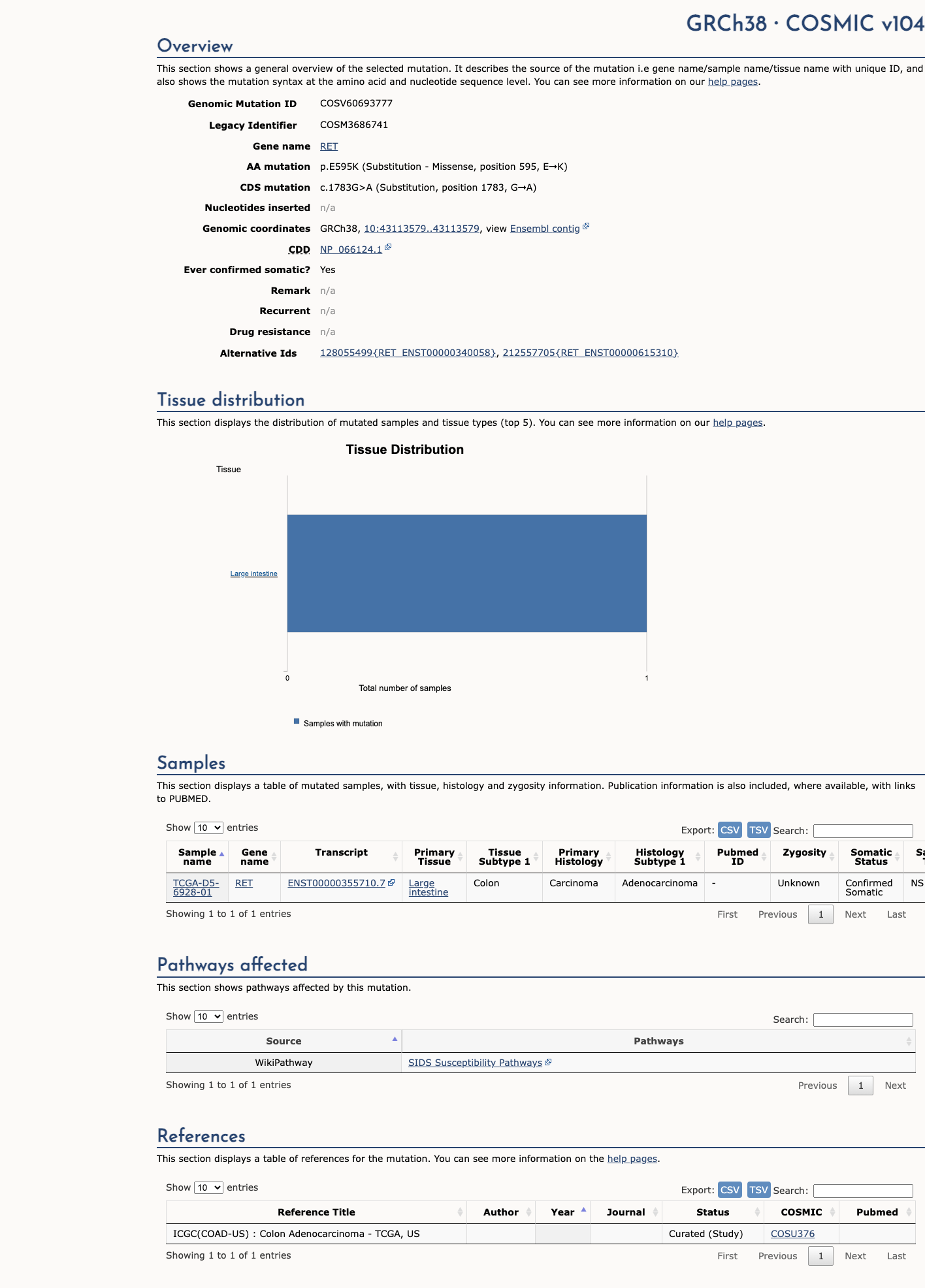
NM_020975.6:c.1783G>A
GRCh38
chr10:43113579 G>A
GRCh37
chr10:43609027 G>A
VUS: only PM2 (supporting) is met — gnomAD v4.1 AF 1.86e-06, below the <0.1% threshold — and a lone supporting criterion satisfies no pathogenic combination, yielding Uncertain Significance.
Classification rationale
PM2VUS
RET c.1783G>Amissense
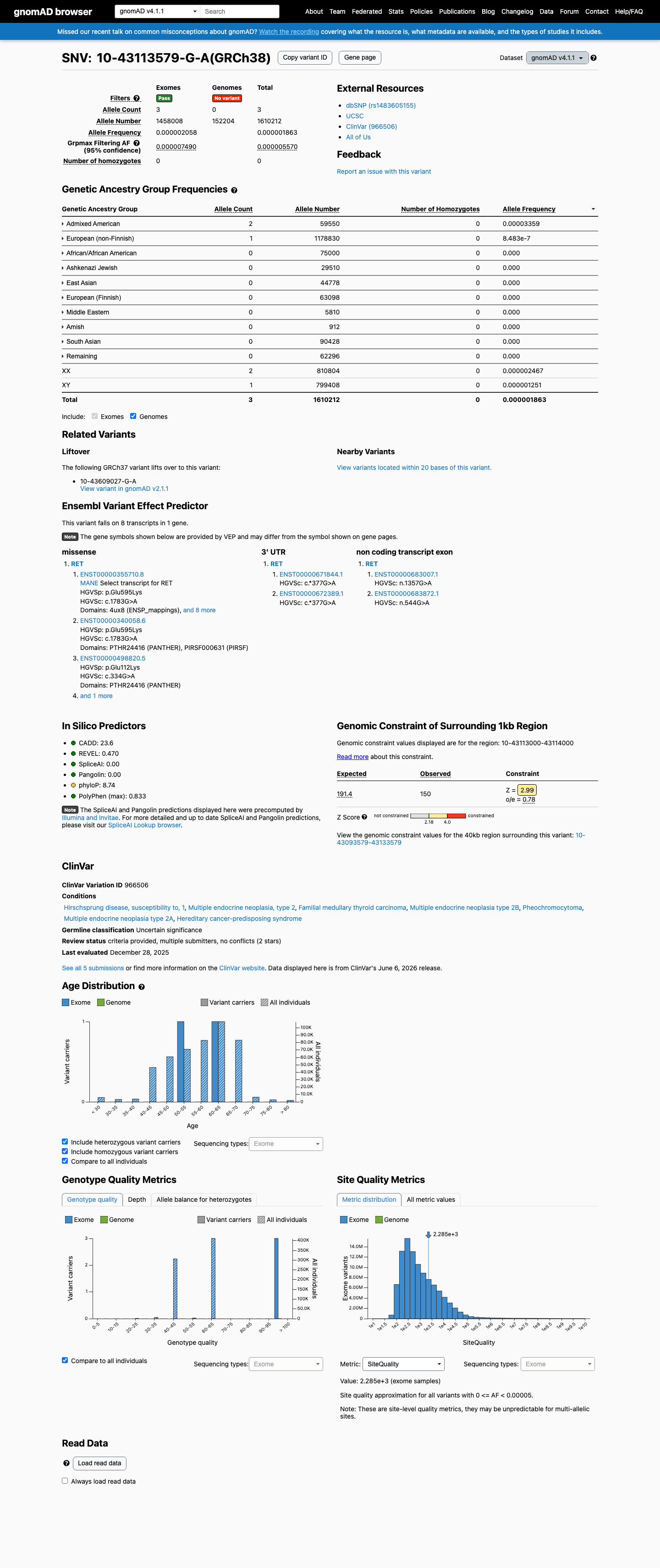
PM2 (Supporting): ultra-rare in population databases — gnomAD v4.1 total AF 1.86e-06 (max subpopulation 0.00336%, 0 homozygotes), below the <0.1% PM2 threshold. Overall classification: VUS — the single supporting criterion satisfies no Likely Pathogenic or Pathogenic combination under generic ACMG/AMP 2015 (PMID:25741868).
PM2→VUS
LYFE Sciences is an AI system, and it can make mistakes. Criteria
may be applied incorrectly, sources may be misread, and a confident-looking
classification can still be wrong. Double-check every criterion and
its underlying evidence before relying on any call.
Gene diagram
· NM_020975.6 · variants mapped to exon structure
RETNM_020975.6
Fetching transcript structure from UCSC…
Exons
—
Transcript span
—
Strand
—
Variants mapped
—
Source
UCSC ncbiRefSeqCurated
All variants in RET—click a row to locate it on the plot · use the link column to open its page
Protein
Location
Classification
Link
Applied criteria · 1 applied · 21 assessed
MetEvidence satisfies this criterion.
Not metEvaluated against available evidence; threshold not reached.
Not assessedApplies in principle, but no evidence was found to evaluate it.
N/ADoesn't apply to this variant type.
Applied · 1
Strength Supporting Moderate Strong Very strong
✓
PM2supportingPathogenic
Met (supporting): ultra-rare in population databases — gnomAD v4.1 total AF 1.86e-06 (max subpopulation 0.00336%, 0 homozygotes), below the <0.1% PM2 threshold.
Assessed · not applied
· 12 not met · 9 not assessed
Pathogenic
PS2Not assessed: no de novo occurrence, proband data, or parental testing was available for this variant.
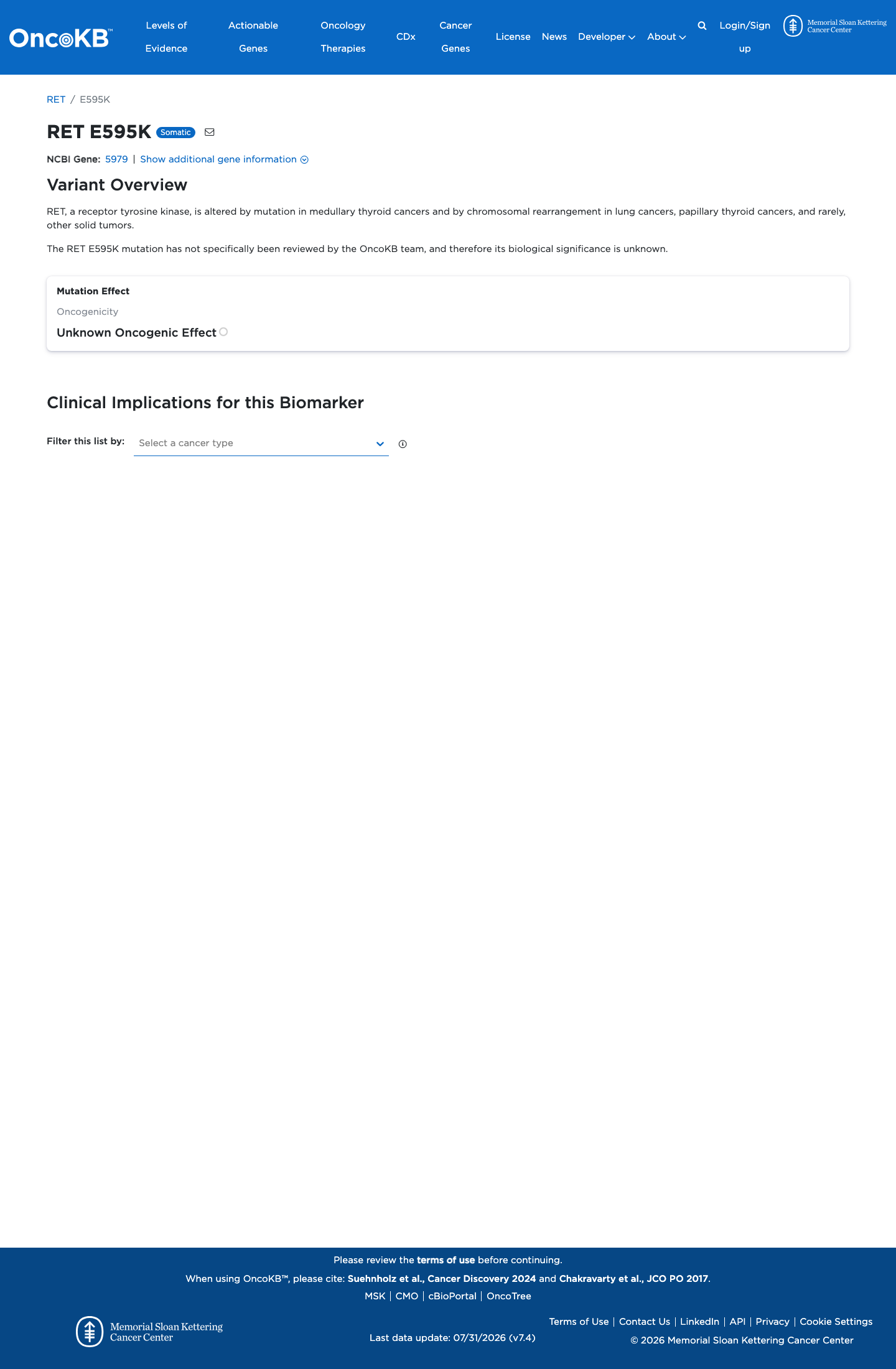
PS3Not met: no functional studies exist for p.Glu595Lys; OncoKB classifies E595K as 'Unknown Oncogenic Effect' with no variant-specific functional evidence.
PS4Not assessed: no case-control or cohort data exist for this exact variant, which is absent even from the only validated cohort paper (PMID:35534704).
PM1Not met: p.Glu595 is not in a mutational hotspot — absent from CancerHotspots.org, and the established MEN2 cysteine hotspots (C609-C634) exclude it.
PM5Not assessed: no pathogenic alternate missense change at Glu595 (e.g., E595Q/E595A) has been reported for comparison.
PM6Not assessed: no evidence of a de novo event — no proband data, parental testing, or de novo report exists for this variant.
PP1Not assessed: no segregation data exist — no pedigree, affected-relative genotyping, or segregation report for this variant.
PP2Not assessed: no missense constraint data (e.g., gnomAD missense Z-score) was available to confirm a low rate of benign RET missense variation.
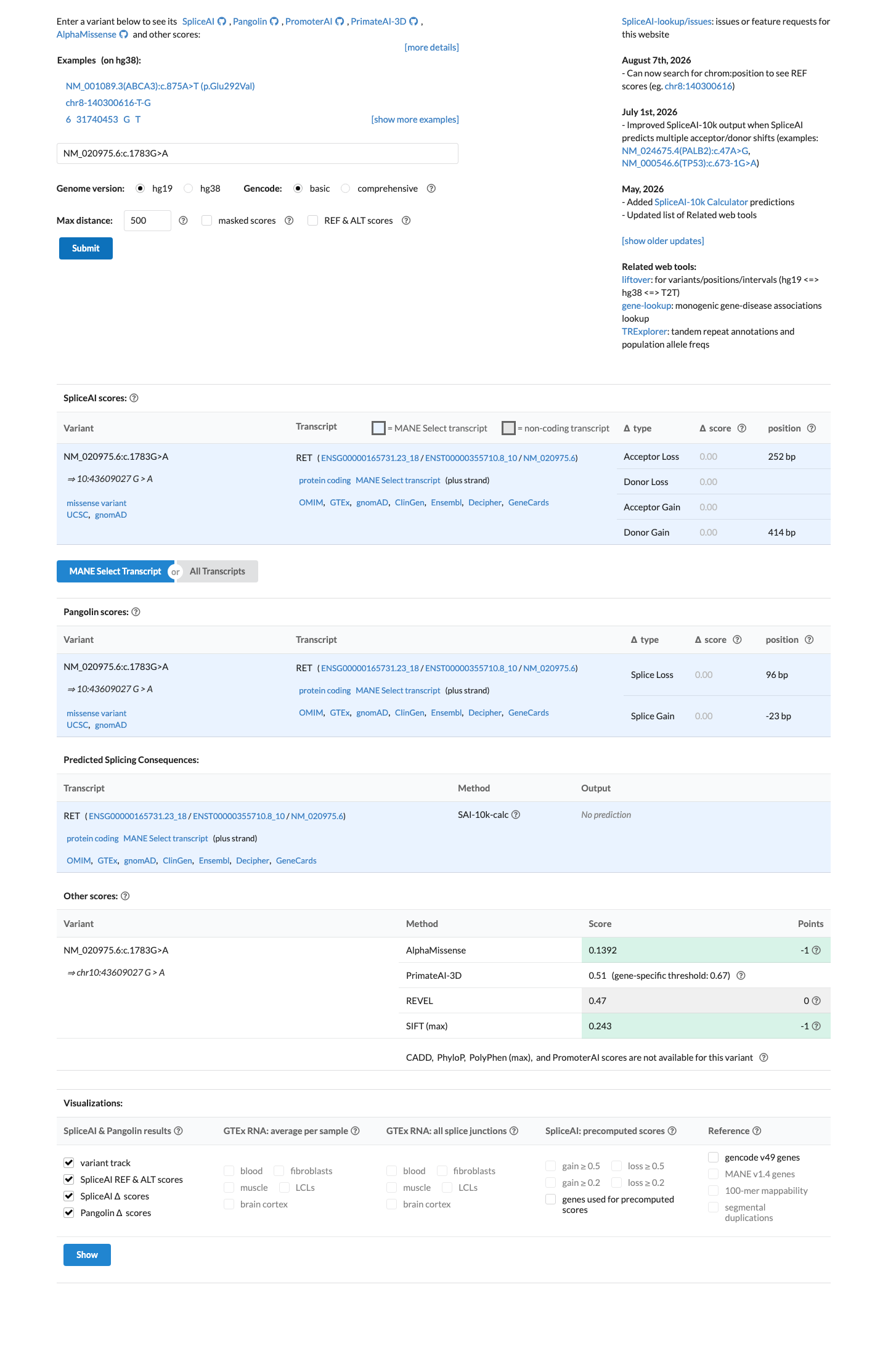
PP3Not met: BayesDel 0.197 is the only pathogenic-leaning score; REVEL 0.47 is indeterminate and SpliceAI max delta 0.00 shows no splice impact, so multiple lines of support are lacking.
PP4Not assessed: no case-level phenotype documentation exists; the ClinVar record-level conditions are asserted labels with no documented carrier phenotype.
PP5Not met: no ClinVar expert-panel classification exists for this exact variant (0 expert-panel submissions, 2-star review), so the PP5 trigger is absent.
Benign
BA1Not met: maximum allele frequency 0.00336% is more than 300-fold below the >5% BA1 stand-alone threshold.
BS1Not met: gnomAD v4.1 total AF 0.00019% is ~90-fold below the >0.3% BS1 threshold, and frequency is not greater than expected for MEN2.
BS2Not met: gnomAD carriers (1-3 heterozygous, 0 homozygotes) lack phenotype or age data, so a healthy-adult status with full penetrance cannot be established.
BS3Not met: no functional studies exist to show a lack of damaging effect; SpliceAI's delta 0.00 is an in-silico prediction, not a functional assay.
BS4Not assessed: no family studies exist — no non-segregation observations (unaffected carriers or affected non-carriers) for this variant.
BP1Not met: RET is not primarily a truncating-disease gene — germline missense gain-of-function variants are a primary MEN2/FMTC mechanism.
BP2Not met: no cis- or trans-phase observation of this variant with a pathogenic variant was reported.
BP4Not met: only SpliceAI (max delta 0.00) supports no impact; REVEL 0.47 is indeterminate and BayesDel 0.197 is pathogenic-leaning, failing the multiple-lines requirement.
BP5Not assessed: no case-level data document an alternate molecular basis of disease in a carrier of this variant.
BP6Not met: no ClinVar expert-panel benign classification exists for this exact variant (0 expert-panel submissions), so the BP6 trigger is absent.
N/A · 6PVS1 · PS1 · PM3 · PM4 · BP3 · BP7
Research & evidence
Population frequency
gnomAD v4.1
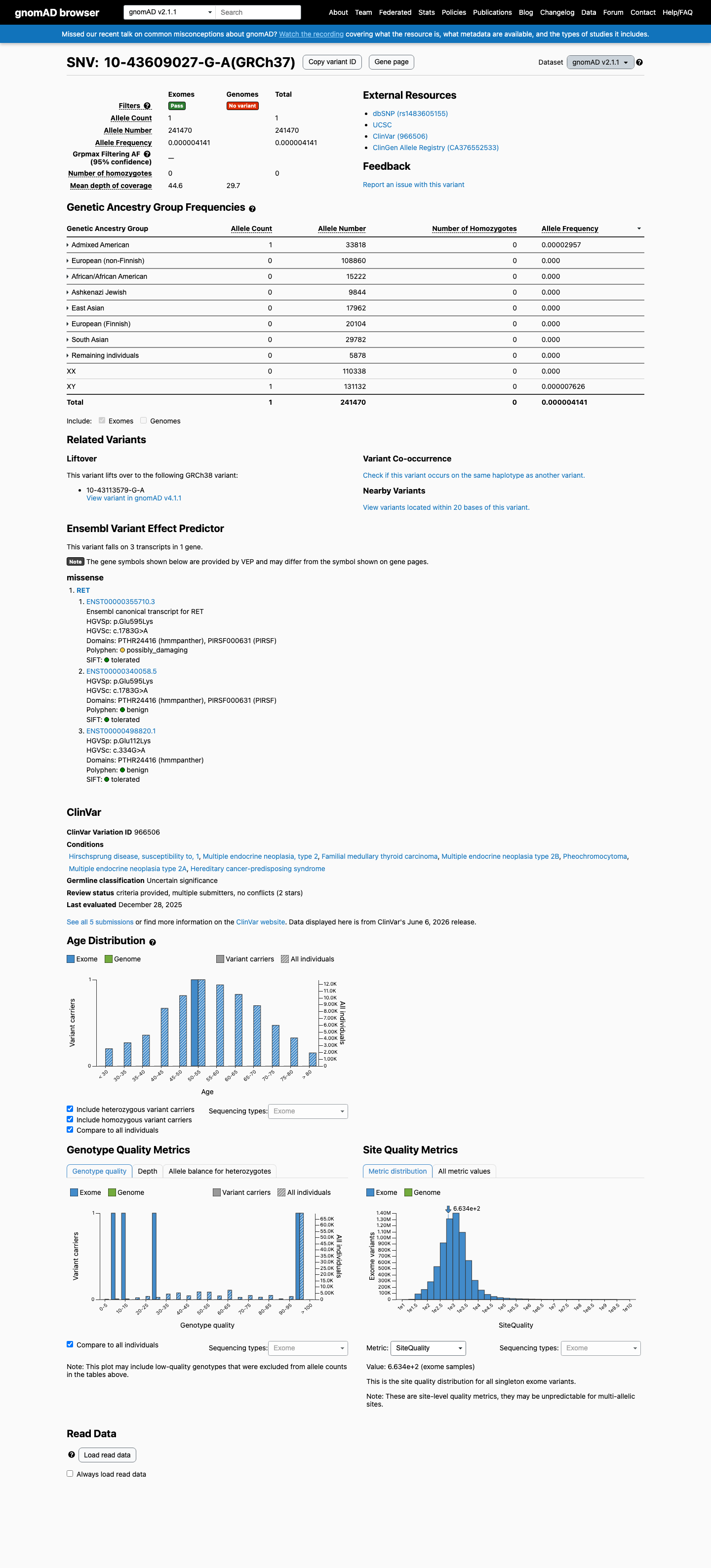
gnomAD v2.1
v4.1
This variant is present in gnomAD v4.1 (AF= 1.86311e-06; MAF= 0.00019%, 3/1610212 alleles, homozygotes = 0) and has highest observed frequency in the Admixed American population (AF= 3.35852e-05; MAF= 0.00336%, 2/59550 alleles, homozygotes = 0); grpmax FAF= 5.57e-06.
v2.1
This variant is present in gnomAD v2.1 (AF= 4.1413e-06; MAF= 0.00041%, 1/241470 alleles, homozygotes = 0) and has highest observed frequency in the Admixed American population (AF= 2.95701e-05; MAF= 0.00296%, 1/33818 alleles, homozygotes = 0).
🇨🇦 CA
Absent from gnomAD-Canada v1.0.
Allele frequency by ancestry
three datasets · side by side
gnomAD v4.1
0.00019%
· 3 / 1,610,212
0 hom · FAF 0.00056%
Admixed American
2 / 59,550
0.0034%
European (non-Finnish)
1 / 1,178,830
8.5e-05%
+ 8 not observed (Remaining individuals, European (Finnish), Amish, East Asian, Middle Eastern, South Asian, Ashkenazi Jewish, African/African American)
gnomAD v2.1
0.00041%
· 1 / 241,470
0 hom
Admixed American
1 / 33,818
0.003%
+ 7 not observed (African/African American, Ashkenazi Jewish, East Asian, European (Finnish), European (non-Finnish), Remaining individuals, South Asian)
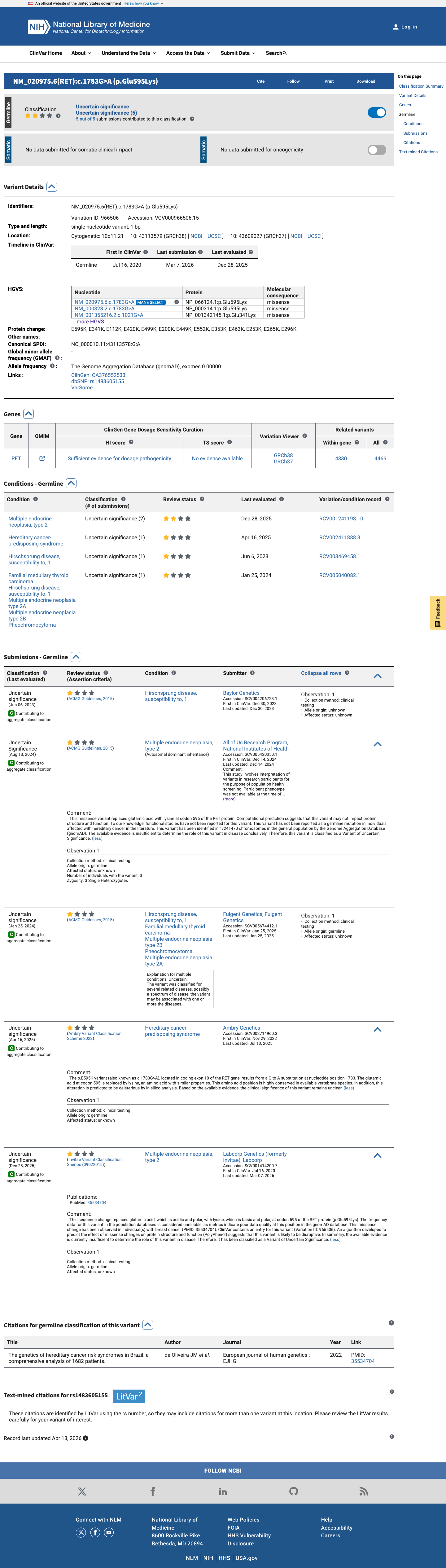
This variant has been reported in ClinVar as Uncertain significance (4 clinical laboratories) and as Uncertain Significance (1 clinical laboratory). (ClinVarID = 966506)
OncoKB did not identify variant-specific reviewed functional evidence for this variant; gene-level curated context is available for reviewer follow-up. RET, a receptor tyrosine kinase, is altered by mutation in medullary thyroid cancers and by chromosomal rearrangement in lung cancers, papillary thyro
This variant does not lie in a statistically significant hotspot. This variant has previously been reported in somatic cancers (COSMIC; COSV60693777, n = 1 times).
Hotspots
This variant does not lie in a statistically significant hotspot.
Each card is an audit: what was searched, what was found, whether it names the variant, which criteria it fed, and why. 5 further PMIDs triaged but not cited — see Sources & references.
Rule & framework references · cited for criterion definitions, not variant evidence
25741868 ↗Standards and guidelines for the interpretation of sequence variants: a joint consensus recommendation of the American College of Medical Genetics and Genomics and the Association for Molecular Pathology.
35534704 ↗The genetics of hereditary cancer risk syndromes in Brazil: a comprehensive analysis of 1682 patients.
Sources & reference links
8Sources
ClinVar
gnomAD v2.1
gnomAD v4.1
gnomAD-Canada
SpliceAI
OncoKB
COSMIC
Cancer hotspots
Triaged references · 5 PMIDs not cited in assessment
15604628 ↗Genetic cancer risk assessment and counseling: recommendations of the national society of genetic counselors.CLINVAR
24493721 ↗American Society of Clinical Oncology Expert Statement: collection and use of a cancer family history for oncology providers.CLINVAR
26389258 ↗Cancer Genetics Risk Assessment and Counseling (PDQ®): Health Professional VersiCLINVAR
26389271 ↗Genetics of Endocrine and Neuroendocrine Neoplasias (PDQ®): Health Professional CLINVAR
34012068 ↗ACMG SF v3.0 list for reporting of secondary findings in clinical exome and genome sequencing: a policy statement of the American College of Medical Genetics and Genomics (ACMG).CLINVAR