PALB2 encodes a tumor suppressor protein that partners with BRCA2 (and also interacts with BRCA1) to repair double-stranded DNA breaks through the homologous recombination pathway. It acts as a scaffold that stabilizes BRCA2 in the cell nucleus and helps recruit DNA-repair machinery to sites of damage. Inherited mutations in PALB2 increase susceptibility to breast cancer, with smaller associated risks for ovarian, pancreatic, and prostate cancer and melanoma, and inheriting two mutated copies causes Fanconi anemia complementation group N. Rare somatic alterations in PALB2 are also found across various tumor types.
This variant
PALB2 is a tumor suppressor that helps repair double-stranded DNA breaks through its partnership with BRCA2, and inherited mutations in it raise the risk of breast and other cancers. A Likely Benign classification for the missense change c.829G>A (p.Asp277Asn) indicates current evidence does not support it disrupting this DNA-repair function or meaningfully increasing cancer risk.
Transcript
NM_024675.4
HGVS · transcript:coding
NM_024675.4:c.829G>A
GRCh38
chr16:23635717 C>T
GRCh37
chr16:23647038 C>T
Rule19 (Benign Supporting >=2) is satisfied by BP1 and BP4 at supporting strength, giving an overall classification of Likely Benign.
Classification rationale
BP1BP4Likely Benign
PALB2 c.829G>Amissense · exon 4
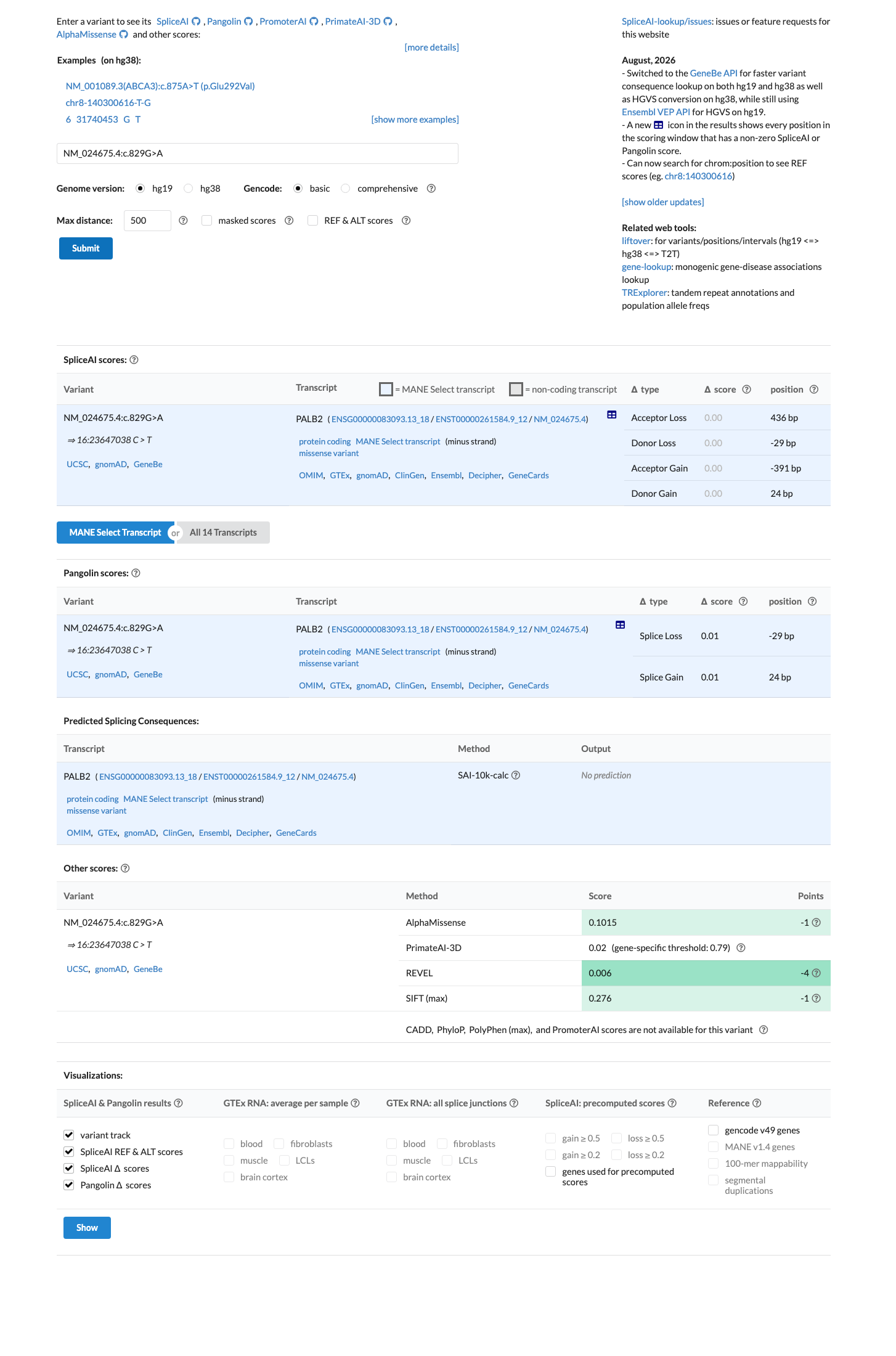
BP1 (Supporting): missense change (p.Asp277Asn); the PALB2 rules apply BP1 to all missense variants. BP4 (Supporting): SpliceAI max delta 0.002 meets the <=0.1 threshold, indicating no predicted splice impact. Overall: Likely Benign, produced by Rule19 (at least two supporting benign criteria, BP1 plus BP4).
BP1 + BP4→Likely Benign
Gene diagram
· NM_024675.4 · variants mapped to exon structure
PALB2NM_024675.4
Fetching transcript structure from UCSC…
Exons
—
Transcript span
—
Strand
—
Variants mapped
—
Source
UCSC ncbiRefSeqCurated
All variants in PALB2—click a row to locate it on the plot · use the link column to open its page
Protein
Location
Classification
Link
Applied criteria · 2 applied · 10 assessed
MetEvidence satisfies this criterion.
Not metEvaluated against available evidence; threshold not reached.
Not assessedApplies in principle, but no evidence was found to evaluate it.
N/ADoesn't apply to this variant type.
Applied · 2
Strength Supporting Moderate Strong Very strong
✓
BP1supportingBenign
Met (Supporting): BP1 applies to all missense variants under the PALB2 rules, and c.829G>A is missense (p.Asp277Asn).
The PALB2 Version 1.2 VCEP BP1 rule states: Apply to all missense variants.Case normalization identifies NM_024675.4:c.829G>A as NP_078951.2:p.(Asp277Asn), confirming a missense consequence.
Met (Supporting): SpliceAI max delta 0.002 meets the <=0.1 threshold, indicating no predicted splice impact.
PALB2 VCEP BP4: splice analysis must be considered for all variant types and BP4 is assigned for no predicted splice impact at SpliceAI <=0.1; the VCEP does not permit missense protein-predictor BP4 evidence for PALB2.SpliceAI for NM_024675.4:c.829G>A reports a maximum delta score of 0.002, below the VCEP BP4 cutoff of 0.1.REVEL 0.006 and BayesDel -0.862298 were not counted, preventing duplicate computational evidence and respecting the VCEP exclusion of PALB2 missense protein predictors; BayesDel lacks a verified calibrated threshold publication/table in this case.
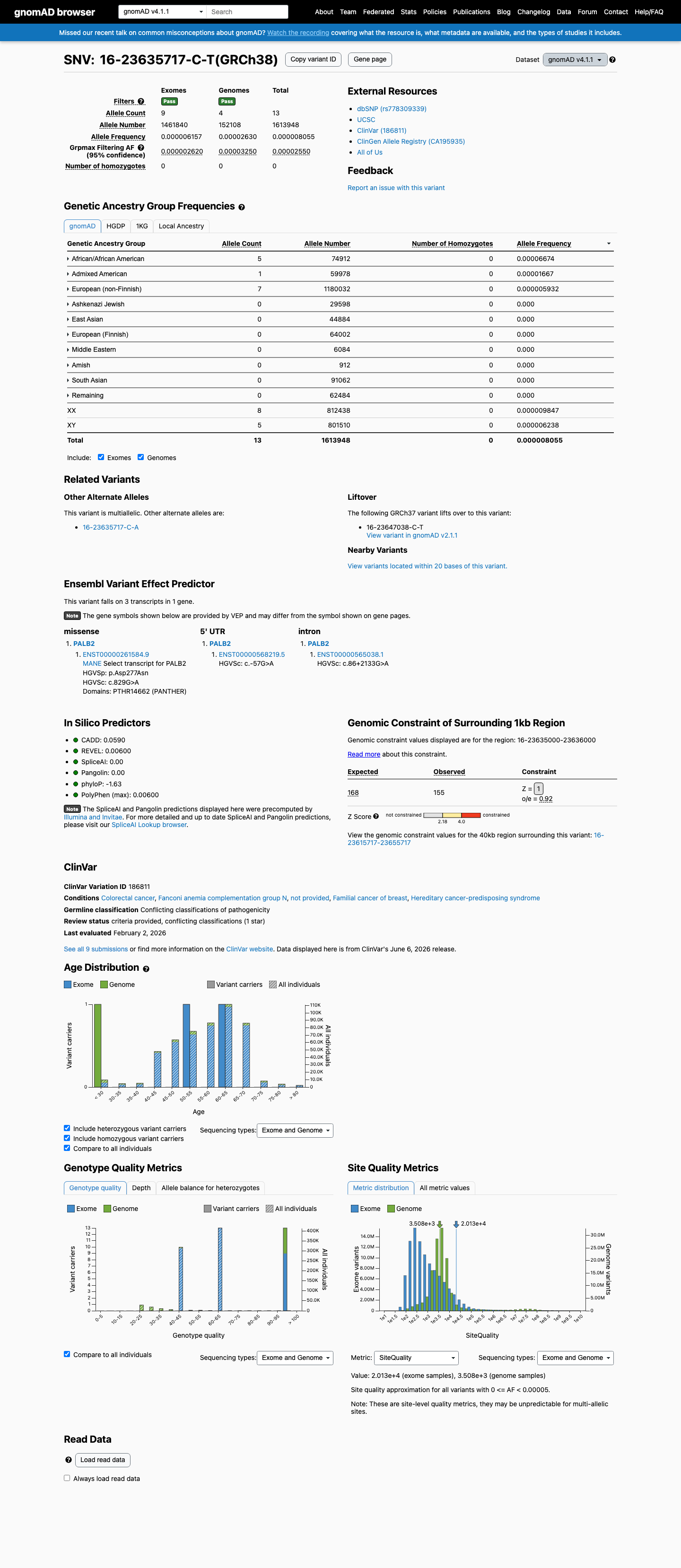
This variant is present in gnomAD v4.1 (AF= 8.05478e-06; MAF= 0.00081%, 13/1613948 alleles, homozygotes = 0) and has highest observed frequency in the African/African American population (AF= 6.6745e-05; MAF= 0.00667%, 5/74912 alleles, homozygotes = 0); grpmax FAF= 2.55e-05.
v2.1
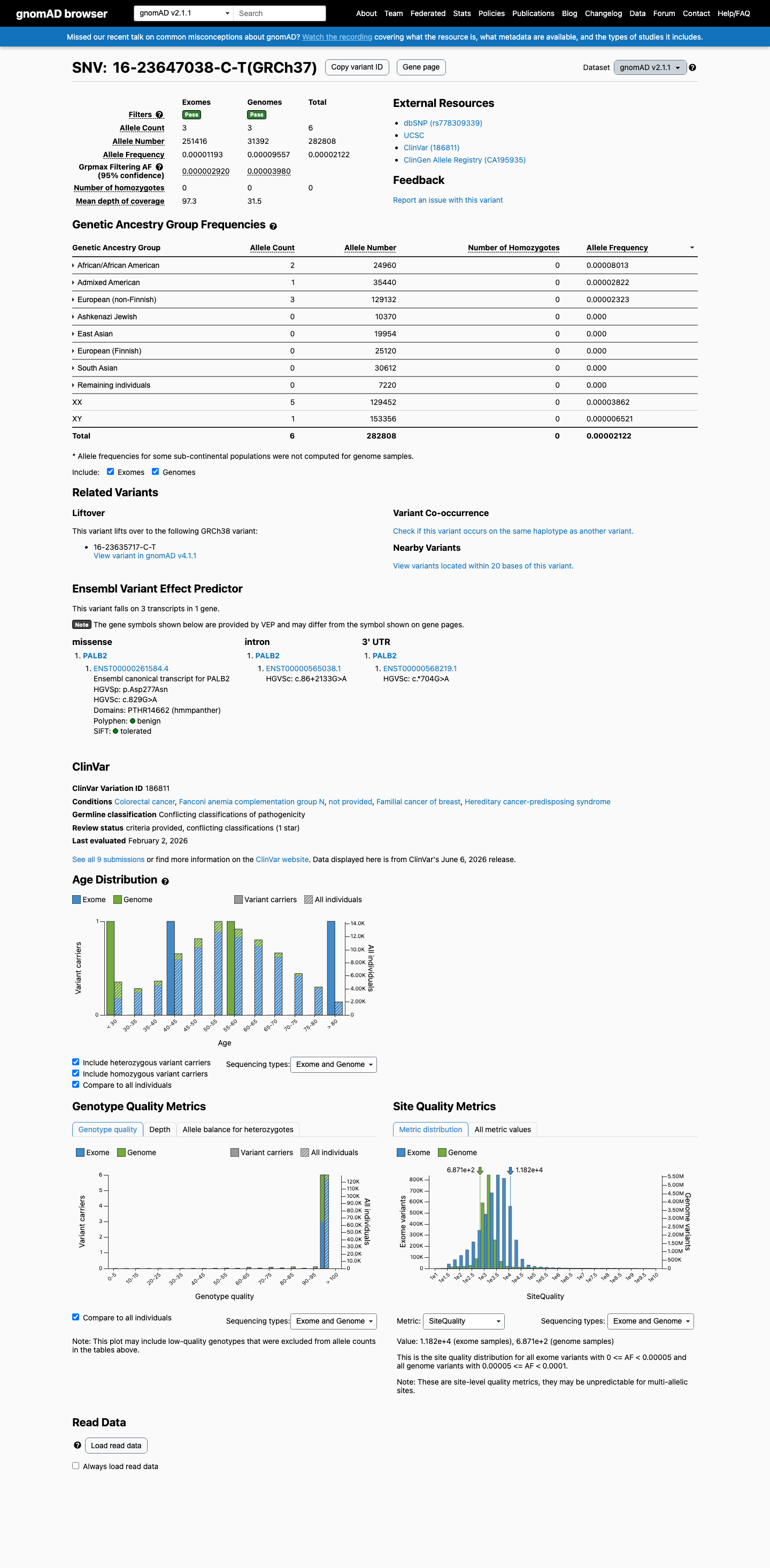
This variant is present in gnomAD v2.1 (AF= 2.12158e-05; MAF= 0.00212%, 6/282808 alleles, homozygotes = 0) and has highest observed frequency in the African/African American population (AF= 8.01282e-05; MAF= 0.00801%, 2/24960 alleles, homozygotes = 0); grpmax FAF= 3.98e-05.
🇨🇦 CA
Absent from gnomAD-Canada v1.0.
Allele frequency by ancestry
three datasets · side by side
gnomAD v4.1
0.00081%
· 13 / 1,613,948
0 hom · FAF 0.0026%
African/African American
5 / 74,912
0.0067%
Admixed American
1 / 59,978
0.0017%
European (non-Finnish)
7 / 1,180,032
0.00059%
+ 7 not observed (Remaining individuals, European (Finnish), Amish, East Asian, Middle Eastern, South Asian, Ashkenazi Jewish)
gnomAD v2.1
0.0021%
· 6 / 282,808
0 hom · FAF 0.004%
African/African American
2 / 24,960
0.008%
Admixed American
1 / 35,440
0.0028%
European (non-Finnish)
3 / 129,132
0.0023%
+ 5 not observed (Ashkenazi Jewish, East Asian, European (Finnish), Remaining individuals, South Asian)
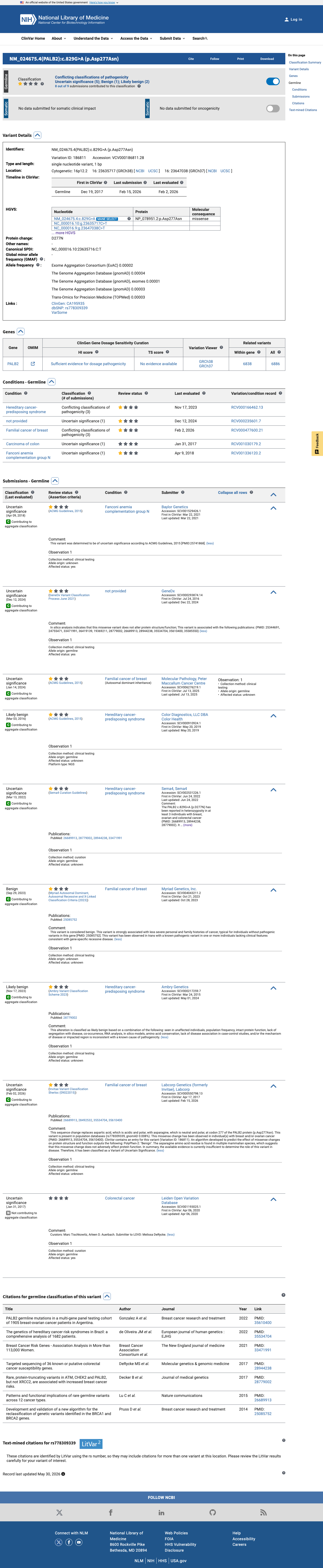
This variant has been reported in ClinVar as Uncertain significance (4 clinical laboratories) and as Likely benign (2 clinical laboratories) and as Benign (1 clinical laboratory). (ClinVarID = 186811)
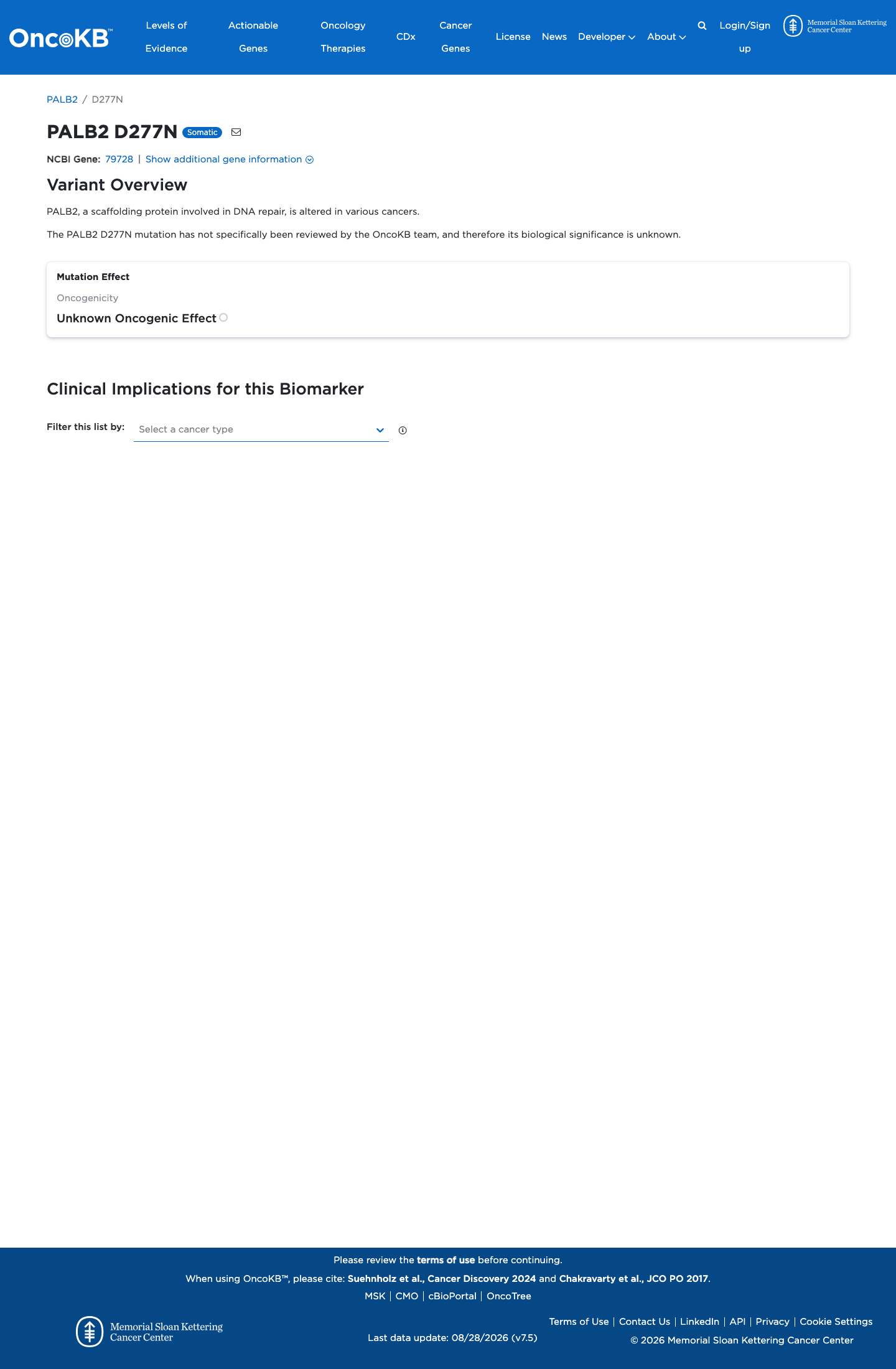
OncoKB did not identify variant-specific reviewed functional evidence for this variant; gene-level curated context is available for reviewer follow-up. PALB2, a scaffolding protein involved in DNA repair, is altered in various cancers.
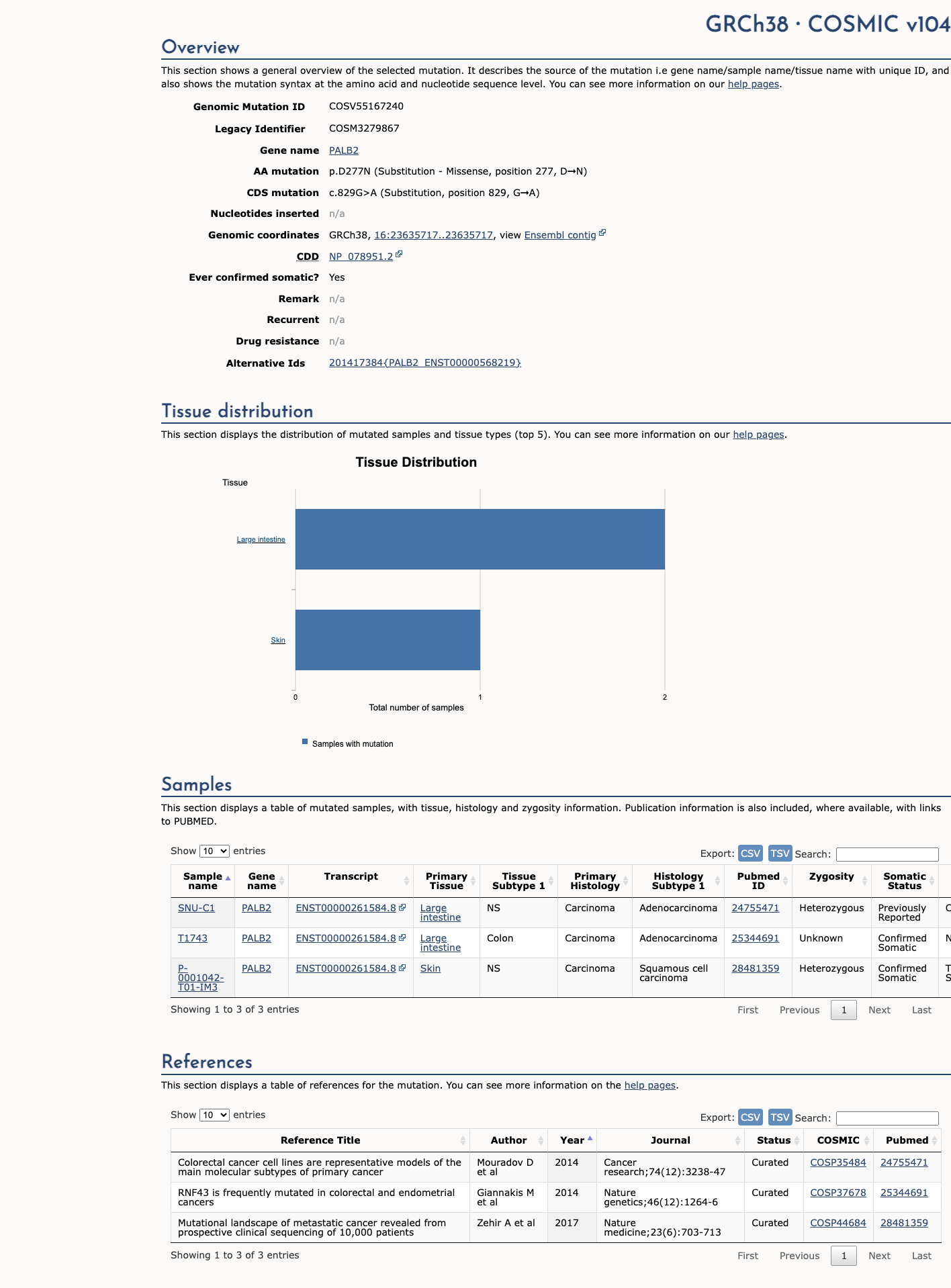
This variant does not lie in a statistically significant hotspot. This variant has previously been reported in somatic cancers (COSMIC; COSV55167240, n = 3 times).
Hotspots
This variant does not lie in a statistically significant hotspot.
Triaged references · 8 PMIDs not cited in assessment
23012255 ↗ESMO Consensus Guidelines for management of patients with colon and rectal cancer. a personalized approach to clinical decision making.CLINVAR
23852704 ↗Tumor markers in colorectal cancer, gastric cancer and gastrointestinal stromal cancers: European group on tumor markers 2014 guidelines update.CLINVAR
25741868 ↗Standards and guidelines for the interpretation of sequence variants: a joint consensus recommendation of the American College of Medical Genetics and Genomics and the Association for Molecular Pathology.CLINVAR
26689913 ↗Patterns and functional implications of rare germline variants across 12 cancer types.CLINVAR
28779002 ↗Rare, protein-truncating variants in ATM, CHEK2 and PALB2, but not XRCC2, are associated with increased breast cancer risks.CLINVAR
28944238 ↗Targeted sequencing of 36 known or putative colorectal cancer susceptibility genes.CLINVAR
20301425 ↗BRCA1- and BRCA2-Associated Hereditary Breast and Ovarian Cancer.CLINVAR
24996433 ↗RAS testing of colorectal carcinoma—a guidance document from the Association of Clinical Pathologists Molecular Pathology and Diagnostics Group.CLINVAR