Back
NM_033360.3:c.34G>T
p.Gly12Cys · KRAS
ClinGen RASopathy Expert Panel Specifications to the ACMG/AMP Variant Interpretation Guidelines for KRAS Version 2.3 · v2.3
0%
complete
Final classification
VUS
PS3PM1PM2PP3
KRAS
c.34G>T
p.Gly12Cys
missense · exon 2

KRAS encodes a small GTPase in the RAS family that cycles between active and inactive states to regulate cell growth and signaling through pathways such as MAPK/ERK and PI3K/AKT/mTOR. Activating changes in KRAS are common drivers of many cancers, including pancreatic, colorectal, and lung cancers, where they promote uncontrolled cell proliferation. Germline alterations in KRAS also cause developmental disorders such as Noonan syndrome and cardio-facio-cutaneous syndrome, which carry an increased predisposition to cancer.

This variant

This codon-12 KRAS substitution affects a small GTPase that regulates growth signaling and whose activating alterations drive RASopathy-related developmental disease and multiple cancers.

Transcript
NM_033360.3
HGVS · transcript:coding
NM_033360.3:c.34G>T
GRCh38
chr12:25245351 C>A
GRCh37
chr12:25398285 C>A
VUS: PM1 (moderate) plus PS3, PM2, and PP3 (supporting) do not satisfy any KRAS Version 2.3 classification-combination rule.
Classification rationale
PS3PM1PM2PP3 VUS
KRAS c.34G>T missense · exon 2

PS3 supporting: one approved functional assay showed increased KRAS activation. PM1 moderate: p.Gly12Cys lies in the approved P-loop domain spanning residues 10–17. PM2 supporting: the variant is absent from gnomAD. PP3 supporting: REVEL 0.853 exceeds the KRAS missense threshold of 0.7.

PS3 + PM1 + PM2 + PP3 → VUS
LYFE Sciences is an AI system, and it can make mistakes. Criteria may be applied incorrectly, sources may be misread, and a confident-looking classification can still be wrong. Double-check every criterion and its underlying evidence before relying on any call.
Gene diagram · NM_033360.3 · variants mapped to exon structure
KRAS NM_033360.3
Fetching transcript structure from UCSC…
Applied criteria · 4 applied · 13 assessed
MetEvidence satisfies this criterion.
Not metEvaluated against available evidence; threshold not reached.
Not assessedApplies in principle, but no evidence was found to evaluate it.
N/ADoesn't apply to this variant type.
Applied · 4
Strength Supporting Moderate Strong Very strong
PS3 supporting Pathogenic
Met at Supporting: one approved RAS-activation assay showed KRAS-G12C increased GTP-bound KRAS by up to approximately twofold versus controls.
The KRAS RASopathy VCEP Version 2.3 framework defines PS3 Supporting as one approved assay and PS3 Moderate as two or more different approved assays.PMID:25705018 used an isogenic MCF10A model with near-physiological KRAS expression and a RAF1 RAS-binding-domain pulldown assay after EGF stimulation; KRAS-G12C increased GTP-bound KRAS by up to approximately twofold compared with controls.PMID:16051643 used a doxycycline-inducible, lung-specific human Ki-rasG12C mouse model and reported increased Ras/Ral pathway activation and phosphorylation of downstream effectors, supporting the biological relevance of the gain-of-function result but not providing a second different approved assay for VCEP Moderate PS3.
PM1 moderate Pathogenic
Met, Moderate: KRAS p.Gly12Cys affects residue 12, within the VCEP-approved P-loop domain spanning amino acids 10-17.
The governing KRAS VCEP PM1 rule lists P-loop 10-17, Switch I 25-40, Switch II 57-64, and SAK 145-156 as applicable critical functional domains.The variant is NP_203524.1:p.(Gly12Cys), placing the altered residue at amino-acid position 12 within the approved P-loop interval 10-17.The VCEP rule states that PM1 is not applicable to specific amino-acid residues; residue 12 is assessed here as domain membership rather than as a residue-specific hotspot claim.
PM2 supporting Pathogenic
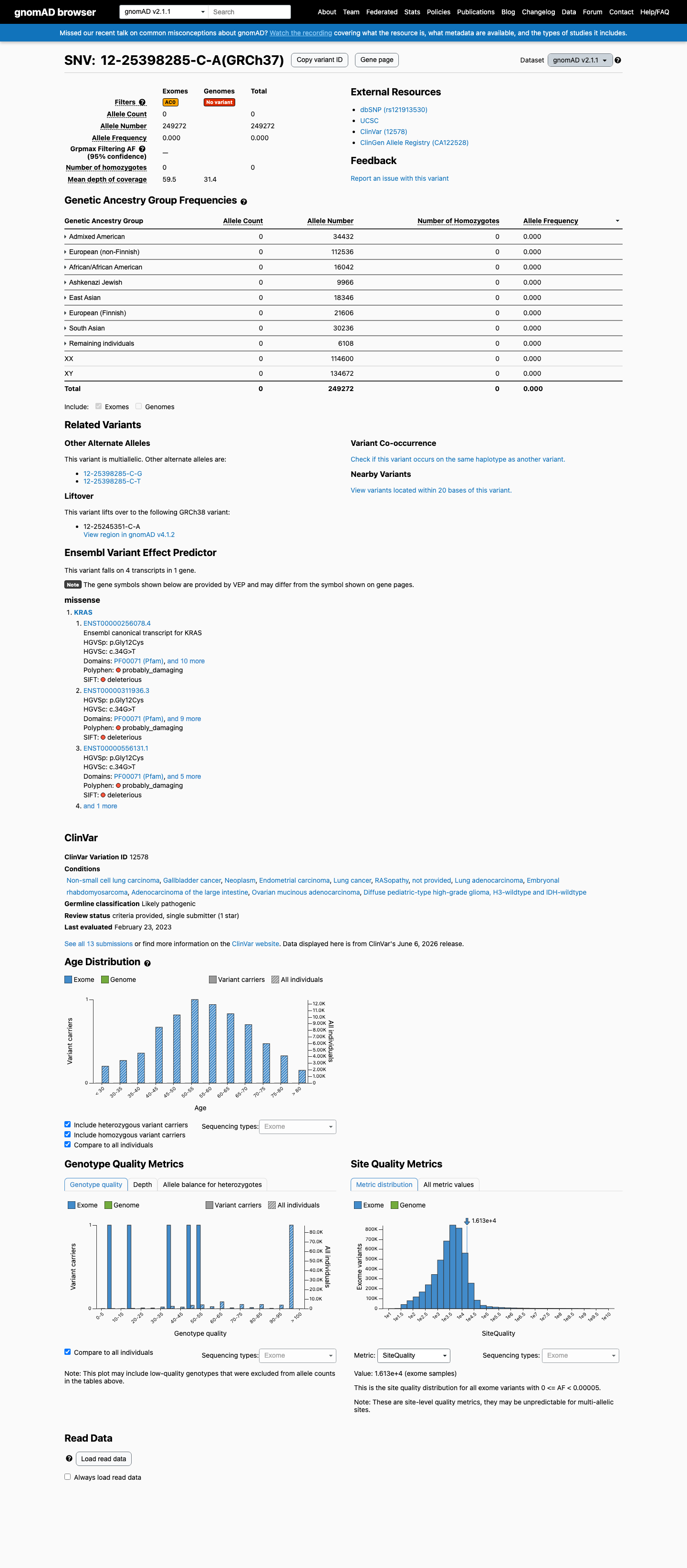
Met at Supporting: the variant is absent from gnomAD v4.1 and has frequency 0 in 249,272 gnomAD v2.1 exome alleles.
The governing KRAS VCEP specifies PM2 at Supporting strength for a variant absent from controls in gnomAD.gnomAD v2.1 all-comers exomes report 0 alternate alleles among 249,272 alleles, allele frequency 0, and 0 homozygotes.The available gnomAD v2.1 non-cancer exome subset reports 0 alternate alleles among 234,950 alleles, allele frequency 0, and 0 homozygotes; gnomAD v4.1 reports the variant as absent.
PP3 supporting Pathogenic
Met, supporting: REVEL 0.853 exceeds the KRAS VCEP PP3 supporting threshold of 0.7 for missense variants.
The KRAS RASopathy VCEP Version 2.3 specifies PP3 supporting for missense variants at REVEL >=0.7.The case REVEL lookup reports a score of 0.853 for NM_033360.3:c.34G>T (p.Gly12Cys), which exceeds the governing threshold.The generic ClinGen SVI REVEL calibration gives a PP3 supporting threshold of >=0.644 (Pejaver et al. 2022, PMID:36413997); the KRAS VCEP threshold is controlling.
Assessed · not applied · 5 not met · 8 not assessed
Pathogenic
PS1 Not assessed: available reports document p.Gly12Cys, but no qualifying alternate-nucleotide pathogenic comparator for the same amino-acid change is established.
PS2 Not assessed: no documented proband, confirmed parentage, parental testing, or de novo observation is available for this variant.
PS4 Not met: two exact p.G12C tumor observations lack the KRAS VCEP's required germline RASopathy case-control enrichment and documented PS4 point score.
PM5 Not assessed: no qualifying alternate pathogenic codon-12 residue change was established, and the comparator search reported zero same-residue candidates after a retrieval-rate failure.
PM6 Not assessed: no presumed de novo occurrence in an affected proband without parental testing is documented for this variant.
PP1 Not assessed: zero informative meioses or phenotype-concordant affected relatives are documented for this variant.
Benign
BA1 Not met: gnomAD allele frequency is 0 (0/249,272 alleles), below the KRAS VCEP BA1 threshold of 0.05%.
BS1 Not met: gnomAD allele frequency is 0 (0/249,272 alleles), below the KRAS VCEP BS1 threshold of 0.025%.
BS2 Not met: gnomAD reports 0 homozygotes, so there is no observation of this variant in healthy adults for the BS2 rule.
BS4 Not assessed: no informative unaffected relative or documented non-segregation observation is available for this variant.
BP2 Not assessed: no affected-proband observation documents a second pathogenic variant or its phase in cis or trans with KRAS p.Gly12Cys.
BP4 Not met: REVEL 0.853 is above the KRAS VCEP BP4 supporting threshold of <=0.3 for missense variants.
BP5 Not assessed: the KRAS BP5 point score is unavailable, so its Supporting rule point score >= (-1) cannot be evaluated.
N/A · 11 PVS1 · PM3 · PM4 · PP2 · PP4 · PP5 · BS3 · BP1 · BP3 · BP6 · BP7
Research & evidence
Population frequency
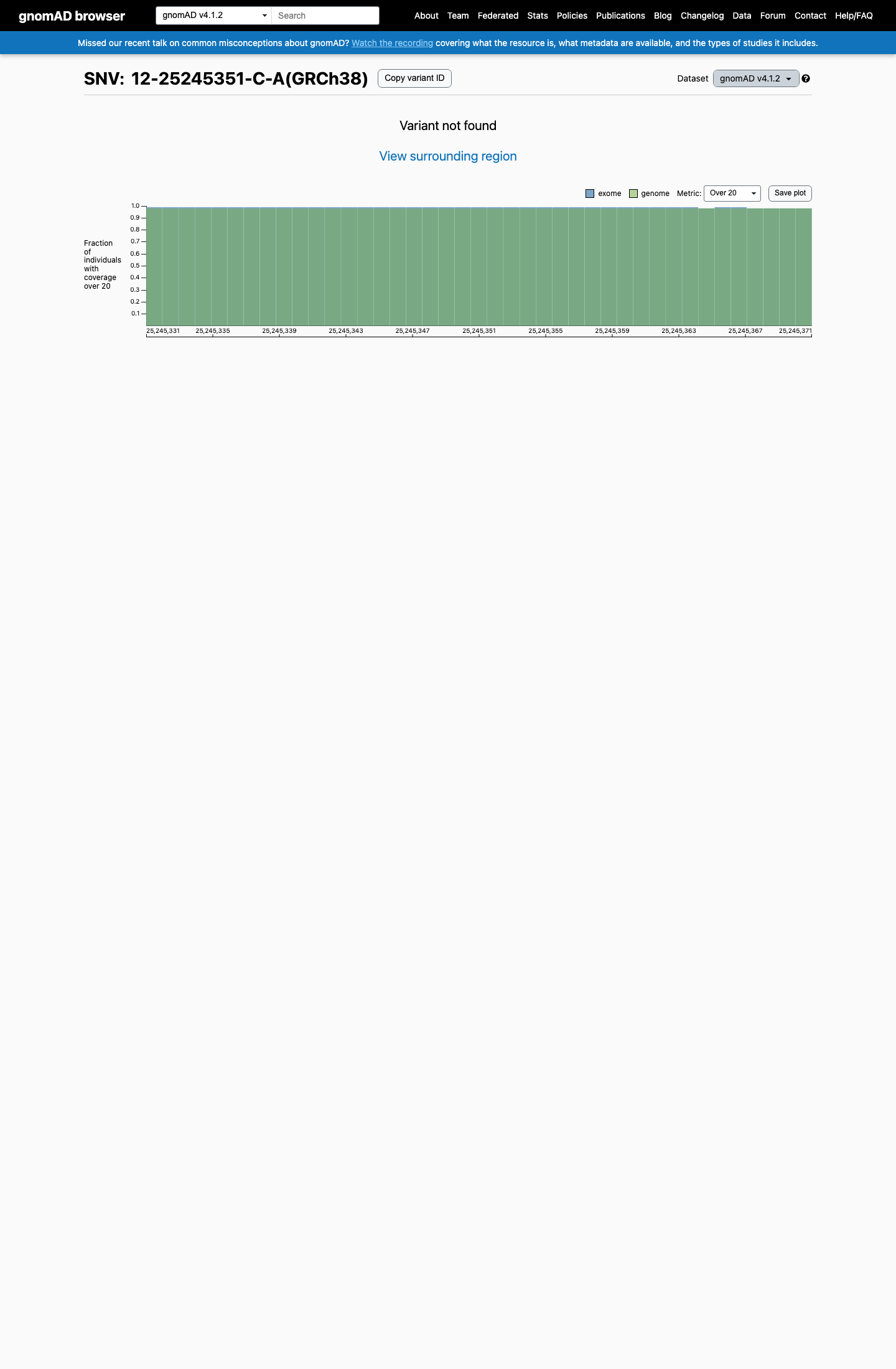
gnomAD v4.1 screenshot
gnomAD v4.1
gnomAD v2.1 screenshot
gnomAD v2.1
v4.1
Absent from gnomAD v4.1.
v2.1
This variant is present in gnomAD v2.1 (AF= 0; MAF= 0.00000%, 0/249272 alleles, homozygotes = 0) and has highest observed frequency in the African/African American population (AF= 0; MAF= 0.00000%, 0/16042 alleles, homozygotes = 0).
🇨🇦 CA
Absent from gnomAD-Canada v1.0.
Allele frequency by ancestry
three datasets · side by side
gnomAD v4.1
Absent · 0 / ?
0 hom
Not observed in any ancestry group.
gnomAD v2.1
Absent · 0 / 249,272
0 hom
Not observed in any ancestry group.
+ 8 not observed (African/African American, Admixed American, Ashkenazi Jewish, East Asian, European (Finnish), European (non-Finnish), Remaining individuals, South Asian)
gnomAD Canada 🇨🇦
Absent · 0 / ?
0 hom
Not observed in any ancestry group.
ClinVar screenshot
ClinVar
This variant has been reported in ClinVar as Pathogenic (3 clinical laboratories) and as Likely pathogenic (3 clinical laboratories). (ClinVarID = 12578)
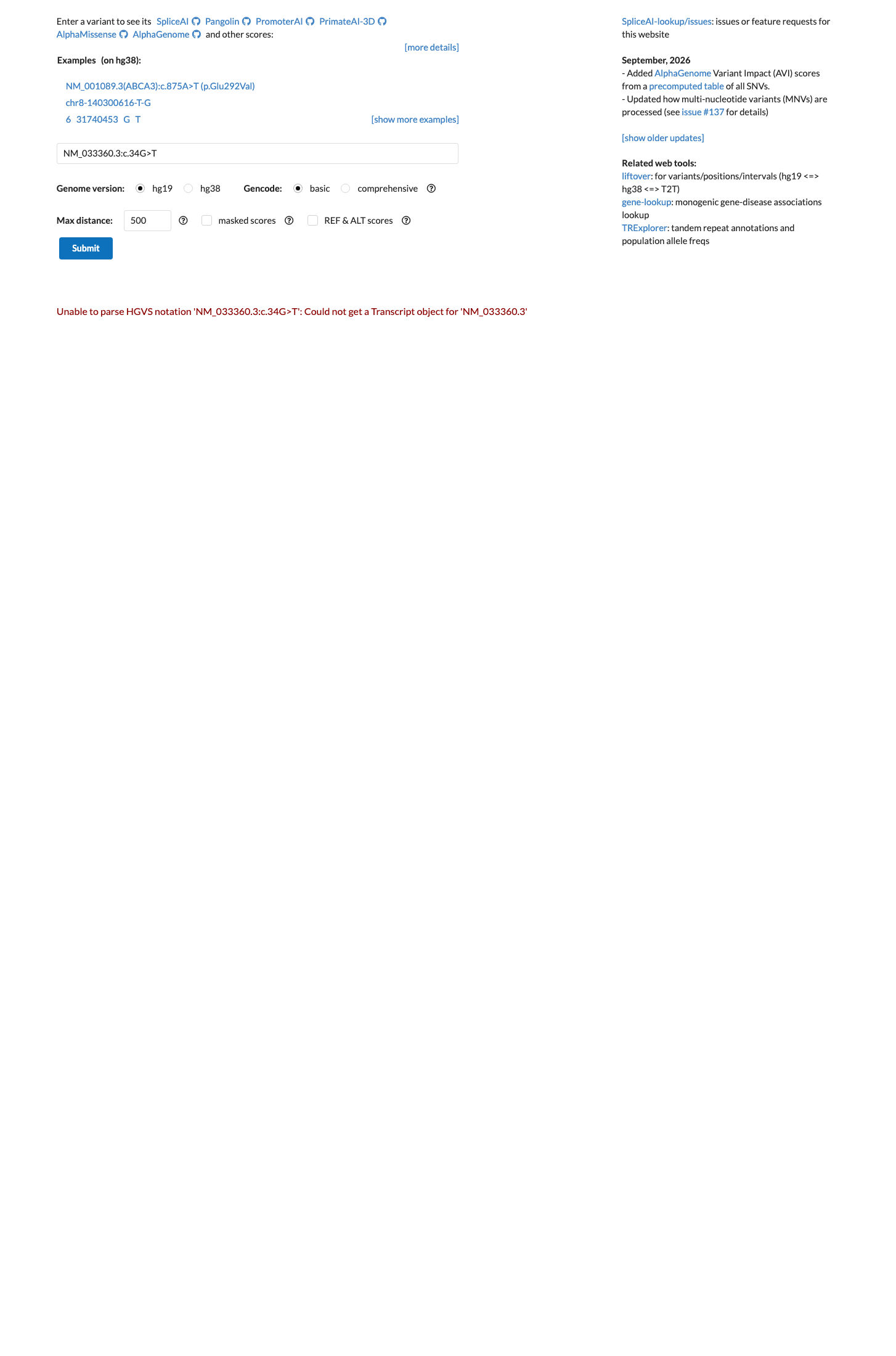
SpliceAI screenshot
In silico
SpliceAI predicts no significant splice impact for this variant (max delta score = 0.01). REVEL score = 0.853. BayesDel score = 0.328242.
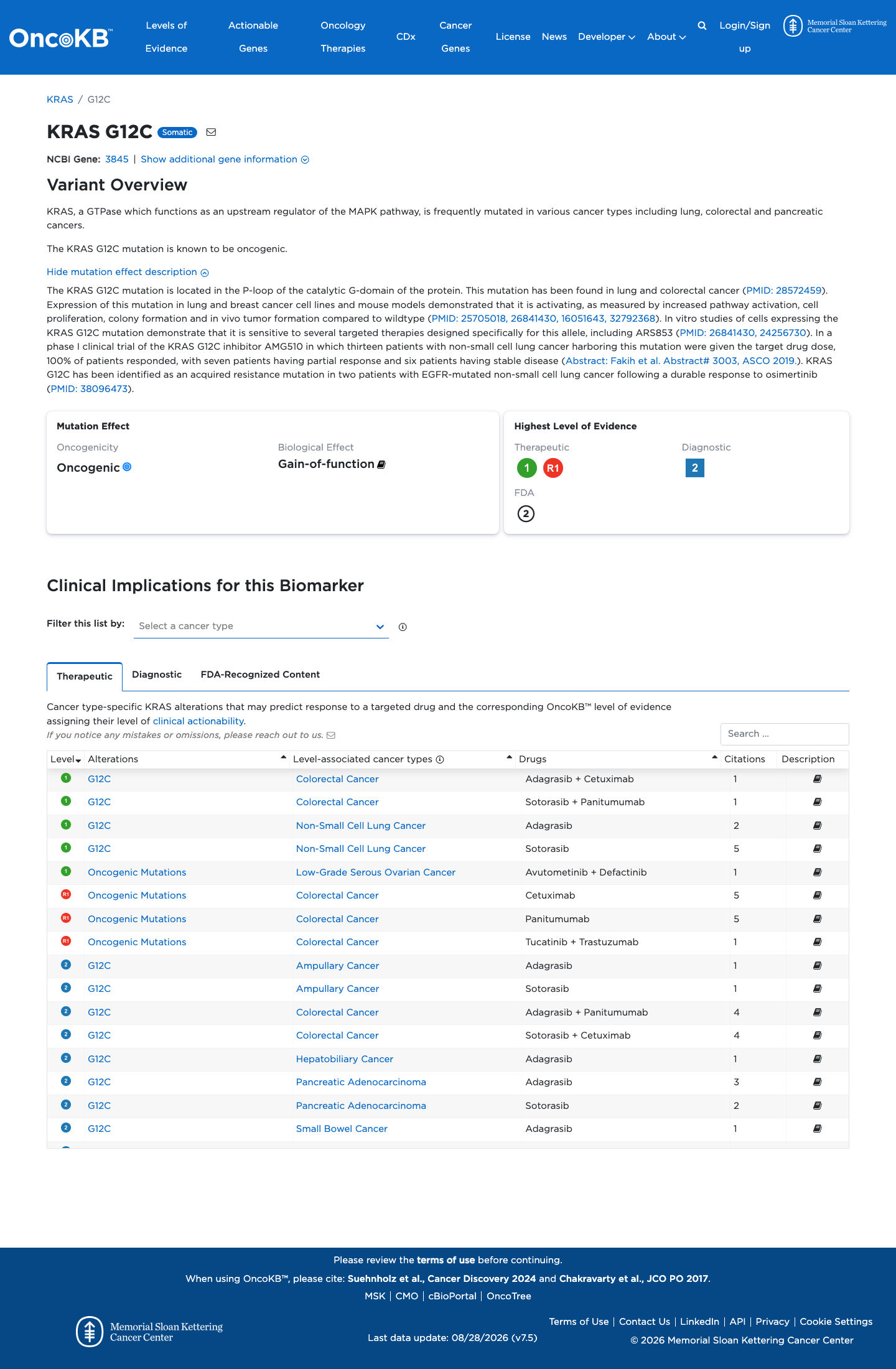
Functional / OncoKB screenshot
Functional Oncogenic
OncoKB identified variant-specific curated literature and context relevant to functional review; biological-effect context: Gain-of-function; curated oncogenicity label: Oncogenic.
OncoKB ↗
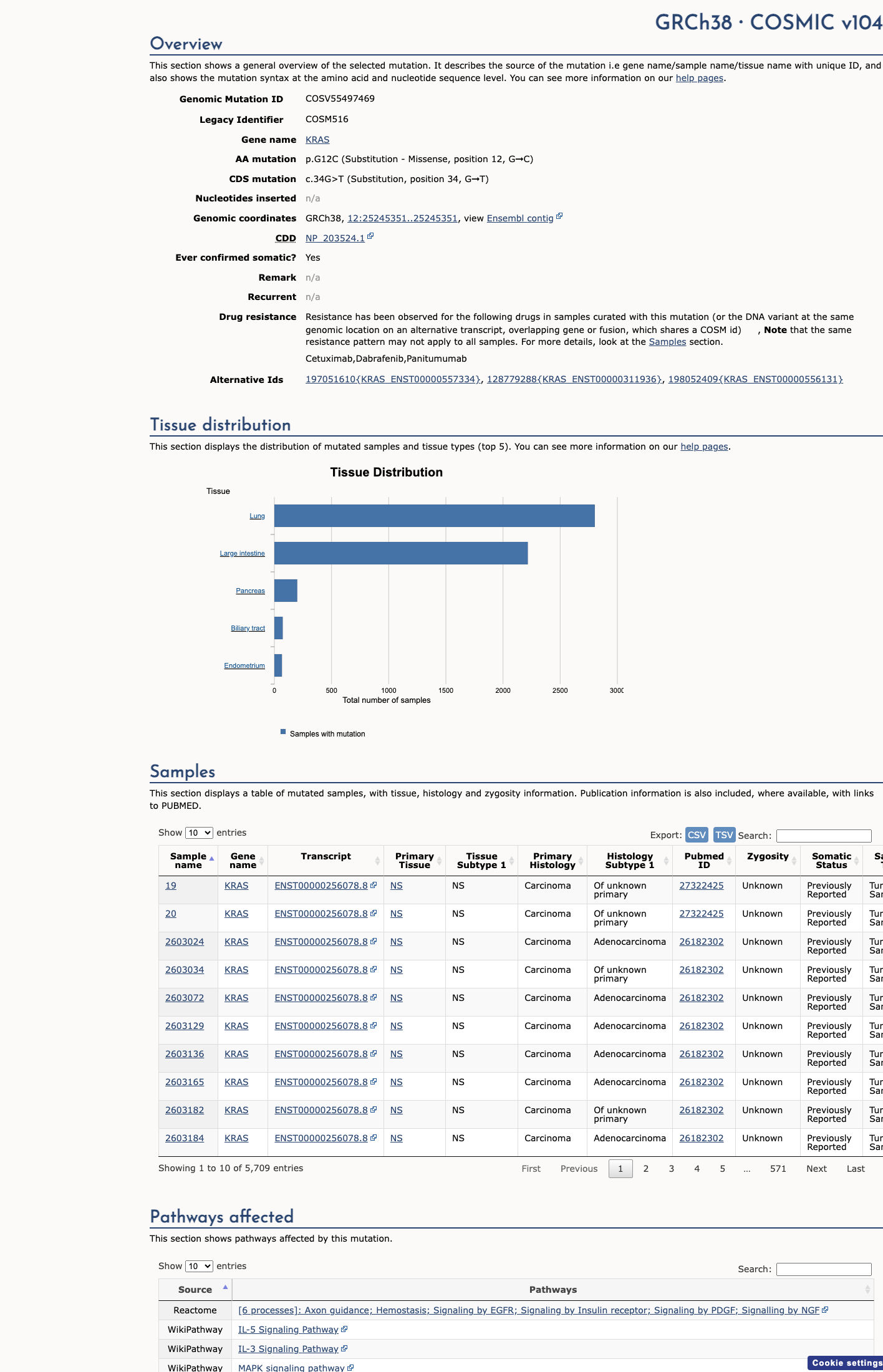
COSMIC screenshot
COSMIC
Cancer hotspots screenshot
Cancer hotspots
Somatic evidence Hotspot
COSMIC
This variant lies in a statistically significant hotspot. This variant has previously been reported in somatic cancers (COSMIC; COSV55497469, n = 5688 times).
Hotspots
This variant lies in a statistically significant hotspot.
Literature · how each cited paper was used
4papers cited
Each card is an audit: what was searched, what was found, whether it names the variant, which criteria it fed, and why. 3 further PMIDs triaged but not cited — see Sources & references.
Conditional expression of the mutant Ki-rasG12C allele results in formation of benign lung adenomas: development of a novel mouse lung tumor model.
Searched
c.34G>TNP_203524.1:p.(G12C)Ki-rasG12CKi-ras G12C
Found
The paper explicitly studied the human Ki-rasG12C allele in a tetracycline-inducible, lung-specific bitransgenic mouse model. Induced Ki-rasG12C expression caused pulmonary lesions and was associated with increased activation of Ras and Ral signaling and phosphorylation of downstream effectors including Erk, p90 ribosomal S6 kinase, ribosomal S6 protein, p38, and MAPKAPK-2; withdrawal of doxycycline led to near-complete disappearance of proliferative lesions.
Variant
✓ Names this variant — characterised directly
Applied to
→PS3 supporting
Variant-specific in vivo evidence showed increased Ras/Ral signaling and downstream effector activation, supporting biological relevance of the functional result.
Expression of Ki-rasG12C was associated with a 2-fold increase in the activation of the Ras and Ral signaling pathways and increased phosphorylation of Ras downstream effectors, including Erk, p90 ribosomal S6 kinase, ribosomal S6 protein, p38 and MAPKAPK-2.
Location Abstract; Results sections "Treatment with DOX induces morphological changes in the lung" and "Ki-ras is required for tumor maintenance"  ·  Context Tetracycline-inducible, lung-specific human Ki-rasG12C expression in CCSP/Ki-ras and SP-C/Ki-ras bitransgenic mice; pulmonary histopathology, Ras/Ral activation assays, downstream-effector immunohistochemistry, and doxycycline-withdrawal studies.  ·  full text
K-Ras(G12C) inhibitors allosterically control GTP affinity and effector interact
Searched
c.34G>TNP_203524.1:p.(G12C)p.(G12C)
Found
The paper directly studies KRAS G12C and reports recombinant-protein biochemical assays, structural analysis, nucleotide-affinity and SOS-catalysed exchange assays, Ras-Raf co-immunoprecipitation, and selective effects in G12C-mutant lung cancer cell lines. G12C enabled selective covalent modification and compounds altered nucleotide preference toward GDP, blocked exchange, reduced Ras association with B-Raf and C-Raf, and reduced viability while increasing apoptosis in G12C-mutant cells.
Variant
✓ Names this variant — characterised directly
Applied to
→PS3 supporting
Exact-variant biochemical and cell-based functional context was reviewed, but these assays were not used to increase PS3 beyond the VCEP-approved assay count.
To target K-Ras(G12C) we took advantage of the unique nucleophilicity of cysteine thiols by exploring cysteine-reactive small molecules. This strategy has the added advantage of allowing selectivity for the mutant over wild-type K-Ras.
Location Results, paragraphs 1 and 10; Fig. 1-4 and Extended Data Fig. 3-5  ·  Context Recombinant K-Ras(G12C) biochemical assays, intact-protein mass spectrometry, X-ray crystallography, nucleotide-affinity and SOS-exchange assays, Ras-Raf co-immunoprecipitation, and viability/apoptosis assays in genetically annotated lung cancer cell lines.  ·  full text
Comparative analysis of KRAS codon 12, 13, 18, 61, and 117 mutations using human
Searched
c.34G>Tp.(G12C)NP_203524.1:p.(G12C)G12CKRAS-G12C
Found
The study directly compares KRAS-G12C with other KRAS variants in isogenic MCF10A cells and reports increased GTP-bound KRAS activity for G12C, but it does not establish a qualifying alternate pathogenic codon-12 comparator for PM5 or an alternate-nucleotide p.Gly12Cys comparator for PS1.
Variant
✓ Names this variant — characterised directly
Applied to
→PS3 supporting
Variant-specific approved RAS-activation assay showed increased GTP-bound KRAS.
We introduced the four most frequent KRAS mutations (G12D, G12V, G13D, G12C), which account for 83% of all KRAS mutations, KRAS-G13C as the second most common alteration of codon 13, three rare mutations (Q61H, A18D, K117N), and WT KRAS into MCF10A cells by lentiviral transduction (Figure 1a).
Location Results, Establishment of KRAS mutant MCF10A isogenic cell lines; Results, GTPase activity of KRAS mutants  ·  Context Isogenic MCF10A human mammary epithelial cell lines expressing KRAS variants at near-physiological levels; lentiviral transduction and RAF1 RAS-binding-domain pulldown after EGF stimulation.  ·  full text
Allele-specific inhibitors inactivate mutant KRAS G12C by a trapping mechanism.
Searched
c.34G>TNP_203524.1:p.(G12C)
Found
The paper explicitly studies KRAS p.G12C and shows that ARS853 selectively binds the GDP-bound mutant, reduces KRAS-GTP and downstream CRAF, ERK, and AKT signaling, inhibits proliferation of KRASG12C-mutant lung cancer cells, and induces apoptosis. The mechanism depends on residual KRASG12C GTPase activity and trapping the protein in an inactive GDP-bound state.
Variant
✓ Names this variant — characterised directly
Applied to
→PS3 supporting
Exact-variant cell-based functional context was reviewed, but inhibitor-response assays were not used to increase PS3 beyond the VCEP-approved assay count.
We now describe a mechanism that enables such drugs to inhibit KRASG12C-signaling and cancer cell growth. Inhibition requires intact GTPase activity and occurs because drug-bound KRASG12C is insusceptible to nucleotide exchange factors and thus trapped in its inactive state.
Location Abstract; Results, paragraphs 1-3  ·  Context Cell-based assays in KRASG12C-mutant lung cancer cell lines measuring KRAS-GTP, CRAF/ERK/AKT signaling, proliferation, and apoptosis, together with recombinant-protein differential scanning fluorimetry, engineered HEK293 and H358 cells, mass spectrometry, and SOS-mediated nucleotide-exchange assays.  ·  full text
Sources & reference links
8Sources
ClinVar
gnomAD v2.1
gnomAD v4.1
gnomAD-Canada
SpliceAI
OncoKB
COSMIC
Cancer hotspots
Triaged references · 3 PMIDs not cited in assessment
28572459 ↗ AACR Project GENIE: Powering Precision Medicine through an International Consort ONCOKB
11745231 ↗ Cigarette smoking is strongly associated with mutation of the K-ras gene in patients with primary adenocarcinoma of the lung. CLINVAR
15696205 ↗ KRAS mutations and primary resistance of lung adenocarcinomas to gefitinib or erlotinib. CLINVAR