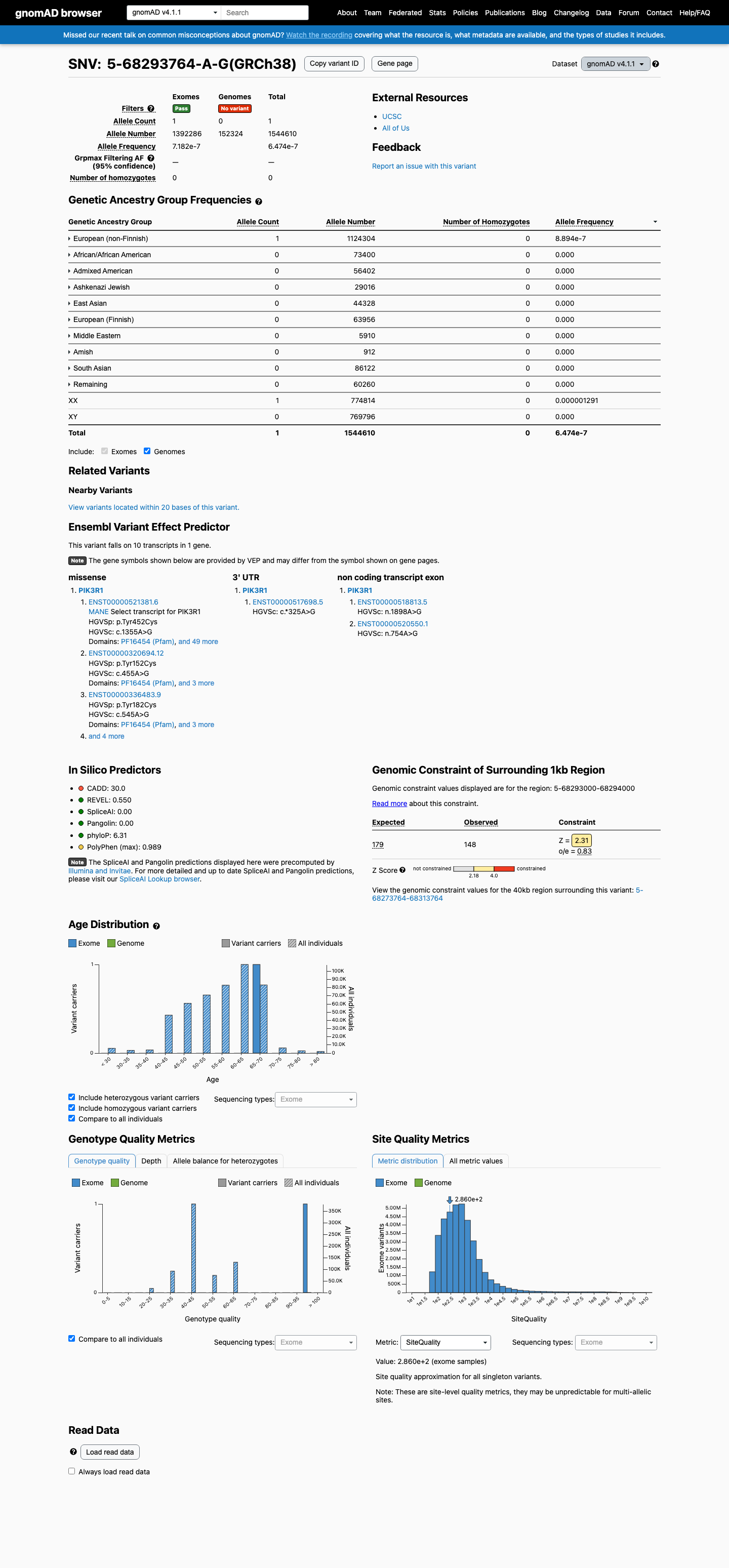
NM_181523.2:c.1355A>G (p.Tyr452Cys) in PIK3R1 is extremely rare in population databases (gnomAD v4.1 allele frequency 6.47e-7, 1 heterozygous allele among 1,544,610 alleles), meeting PM2_Supporting per Antibody Deficiencies VCEP specifications.1 The variant is absent from ClinVar and has not been reported in any germline patient cohort, precluding assessment of PS4, PP1, PP4, or de novo criteria (PS2).2 No functional data are available for this specific variant in any VCEP-approved assay (AKT kinase, lipid kinase, protein binding, conformational dynamics, knock-in mouse, or the PMID:40543502 screen); PS3 and BS3 cannot be assessed.3 Computational predictors are indeterminate: REVEL 0.55 is intermediate between VCEP PP3 (≥0.644) and BP4 (≤0.290) thresholds, and SpliceAI predicts no splicing impact (max delta 0.00).4 Under the Bayesian point-based framework adopted by the Antibody Deficiencies VCEP (≥10 = Pathogenic, 6-9 = Likely Pathogenic, 0-5 = VUS, -6 to -1 = Likely Benign, ≤-7 = Benign), the single PM2_Supporting assignment yields 1 point, classifying this variant as a Variant of Uncertain Significance.5
Final classification
VUS
PM2
PIK3R1
c.1355A>G
p.Tyr452Cys
missense
This variant
NM_181523.2:c.1355A>G (p.Tyr452Cys) in PIK3R1 is extremely rare in population databases (gnomAD v4.1 allele frequency 6.47e-7, 1 heterozygous allele among 1,544,610 alleles), meeting PM2_Supporting per Antibody Deficiencies VCEP specifications.
ClinGen Antibody Deficiencies Expert Panel Specifications to the ACMG/AMP Variant Interpretation Guidelines for PIK3R1 Version 1.0 v1.0 point-based framework: PM2 supporting (+1) = 1 points, which maps to VUS.
Classification rationale
PM2
VUS
PIK3R1 c.1355A>G
missense
PM2
→
VUS
LYFE Sciences is an AI system, and it can make mistakes. Criteria
may be applied incorrectly, sources may be misread, and a confident-looking
classification can still be wrong. Double-check every criterion and
its underlying evidence before relying on any call.
Gene diagram
· NM_181523.2 · variants mapped to exon structure
PIK3R1
NM_181523.2
Fetching transcript structure from UCSC…
Applied criteria · 1 applied · 14 assessed
MetEvidence satisfies this criterion.
Not metEvaluated against available evidence; threshold not reached.
Not assessedApplies in principle, but no evidence was found to evaluate it.
N/ADoesn't apply to this variant type.
Applied · 1
Strength
Supporting
Moderate
Strong
Very strong
PM2
supporting
Pathogenic
The variant is extremely rare in gnomAD v4.1 (total allele frequency 6.47e-7, 1/1,544,610 alleles, 0 homozygotes), which is below the VCEP PM2_Supporting threshold of <0.00000132.
gnomAD v4.1 total AF = 6.474e-7well below VCEP PM2_Supporting cutoff of 1.32e-6.Single heterozygous allele observed in 1
Assessed · not applied
· 14 not met · 0 not assessed
Pathogenic
PS1
No different missense variant at codon 452 (p.Tyr452) has been classified as Pathogenic or Likely Pathogenic by VCEP standards for PIK3R1.
PS2
No de novo observation reported for this variant.
PS3
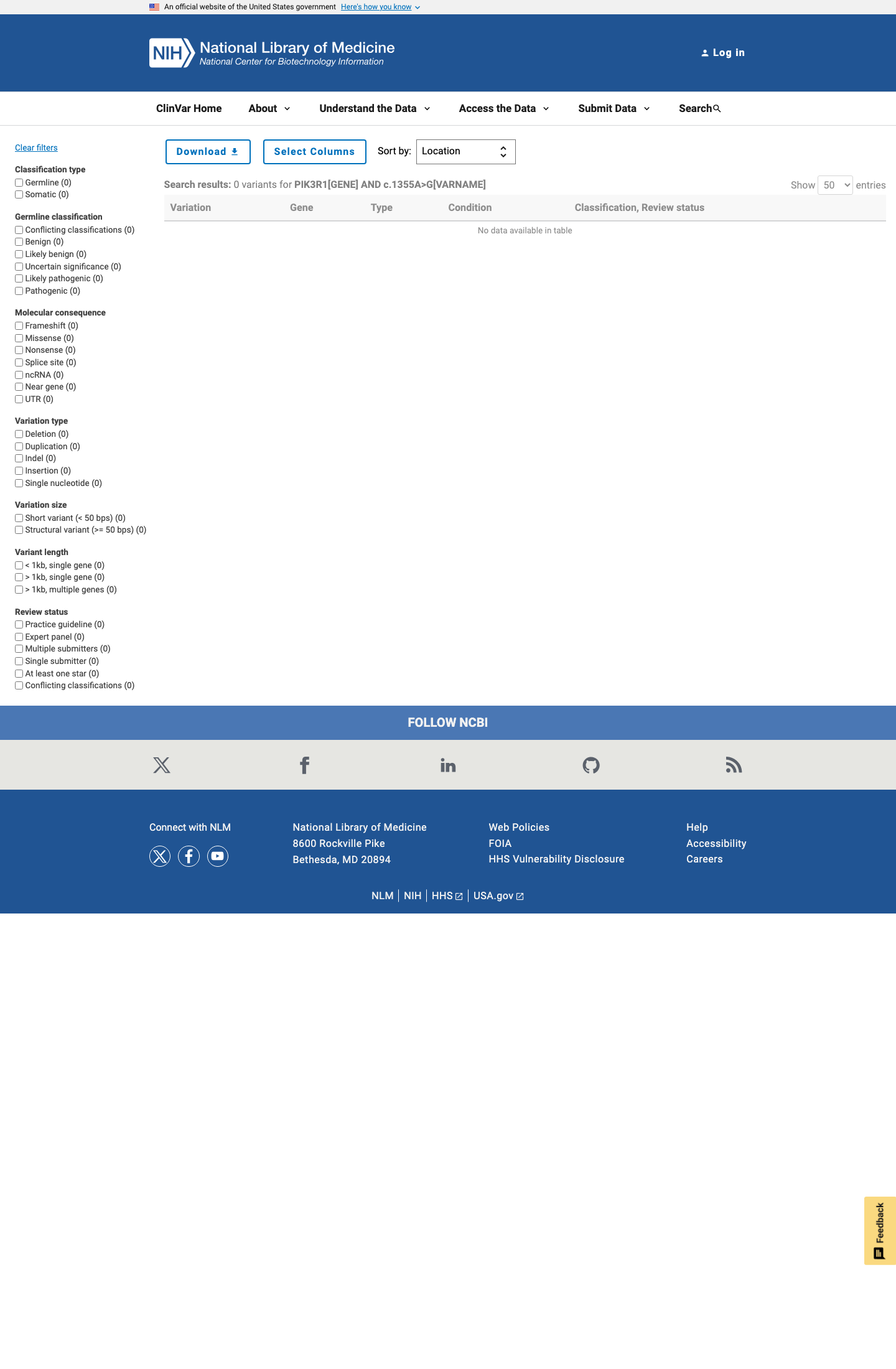
NM_181523.2:c.1355A>G (p.Tyr452Cys) was not tested in any VCEP-approved functional assay.
PS4
No probands meeting VCEP phenotype scoring criteria have been reported for this variant.
PM5
No different missense variant at codon 452 classified as Pathogenic or Likely Pathogenic by VCEP standards.
PP1
No co-segregation data available.
PP3
REVEL score 0.55 is below the VCEP PP3 threshold of ≥0.644.
PP4
No proband meeting VCEP phenotype scoring criteria has been reported.
Benign
BA1
Maximum population allele frequency in gnomAD v4.1 is 8.89e-7 (European non-Finnish), far below the VCEP BA1 threshold of ≥0.00316.
BS1
Maximum population allele frequency in gnomAD v4.1 is 8.89e-7, below the VCEP BS1 threshold of ≥0.000316.
BS3
No functional data demonstrating a non-damaging effect are available for this variant.
BS4
No segregation data available.
BP4
REVEL score 0.55 exceeds the VCEP BP4 benign threshold of ≤0.290.
BP5
No cases with an alternative molecular basis for disease have been reported.
N/A · 11
PVS1 · PM1 · PM6 · PP2 · PP5 · BS2 · BP1 · BP2 · BP3 · BP6 · BP7
Research & evidence
Population frequency
gnomAD v4.1
gnomAD v2.1
v4.1
This variant is present in gnomAD v4.1 (AF= 6.47413e-07; MAF= 0.00006%, 1/1544610 alleles, homozygotes = 0) and has highest observed frequency in the European (non-Finnish) population (AF= 8.89439e-07; MAF= 0.00009%, 1/1124304 alleles, homozygotes = 0).
v2.1
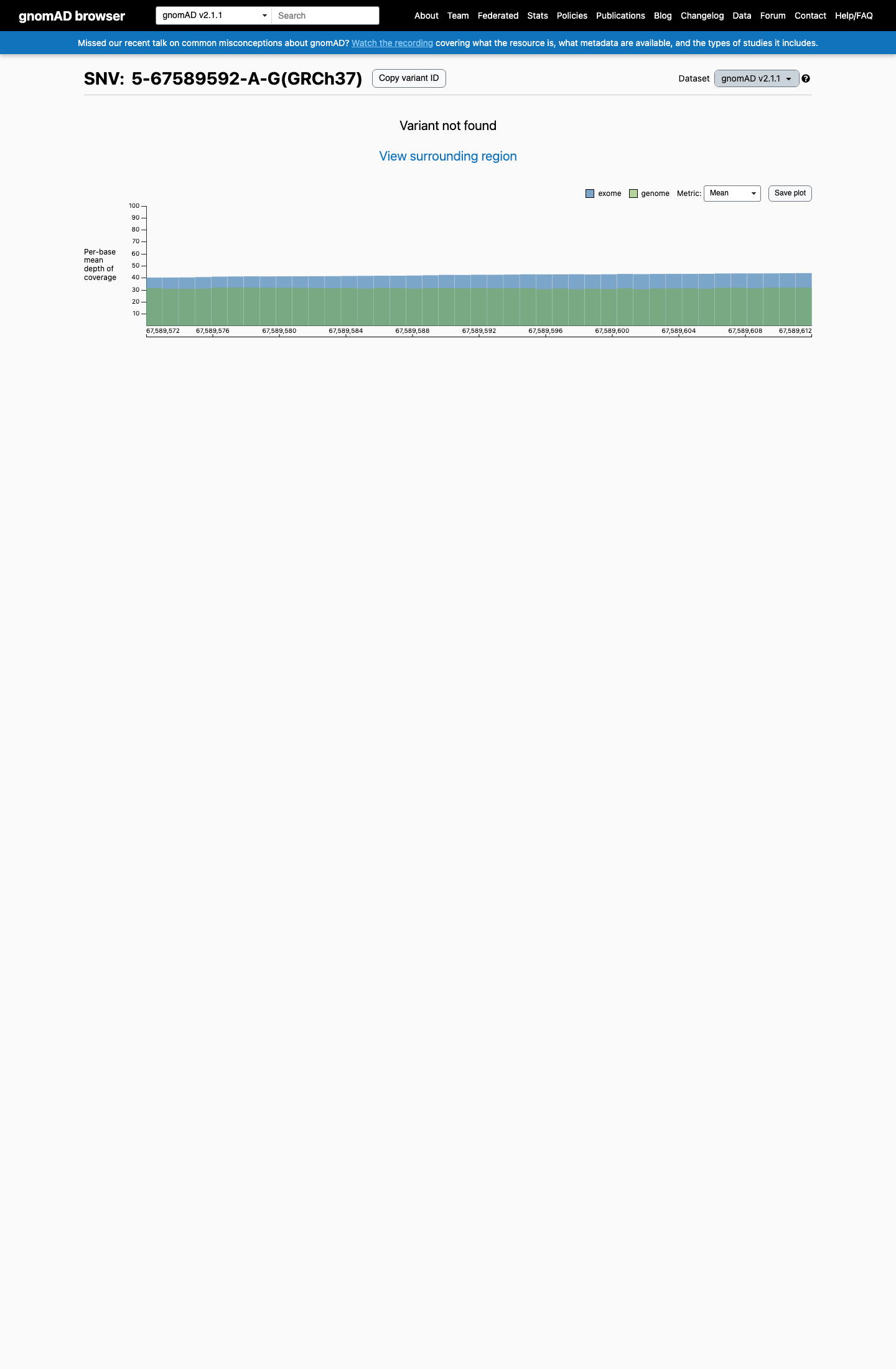
Absent from gnomAD v2.1.
🇨🇦 CA
Absent from gnomAD-Canada v1.0.
Allele frequency by ancestry
three datasets · side by side
gnomAD v4.1
6.5e-05%
· 1 / 1,544,610
0 hom
0 hom
European (non-Finnish) 1 / 1,124,304 |
8.9e-05% |
+ 9 not observed (Remaining individuals, Admixed American, European (Finnish), Amish, East Asian, Middle Eastern, South Asian, Ashkenazi Jewish, African/African American)
gnomAD v2.1
Absent
· 0 / ?
0 hom
0 hom
Not observed in any ancestry group.
gnomAD Canada 🇨🇦
Absent
· 0 / ?
0 hom
0 hom
Not observed in any ancestry group.

In silico
SpliceAI predicts no significant splice impact for this variant (max delta score = 0.00). REVEL score = 0.55. BayesDel score = 0.334045.
Functional
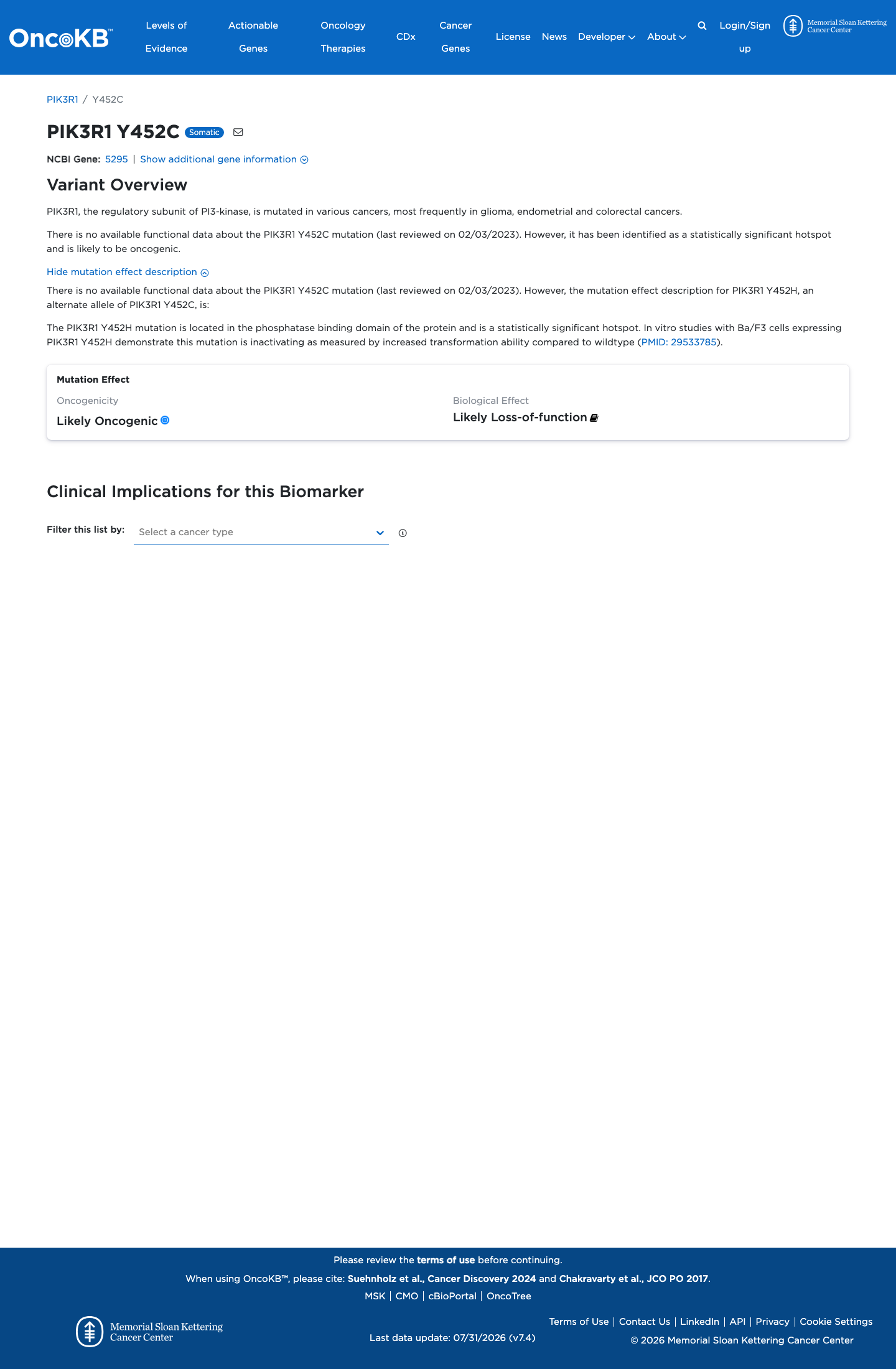
Likely Oncogenic
OncoKB identified variant-specific curated literature and context relevant to functional review; biological-effect context: Likely Loss-of-function; curated oncogenicity label: Likely Oncogenic.
COSMIC

Cancer hotspots
Somatic evidence
Hotspot
COSMIC
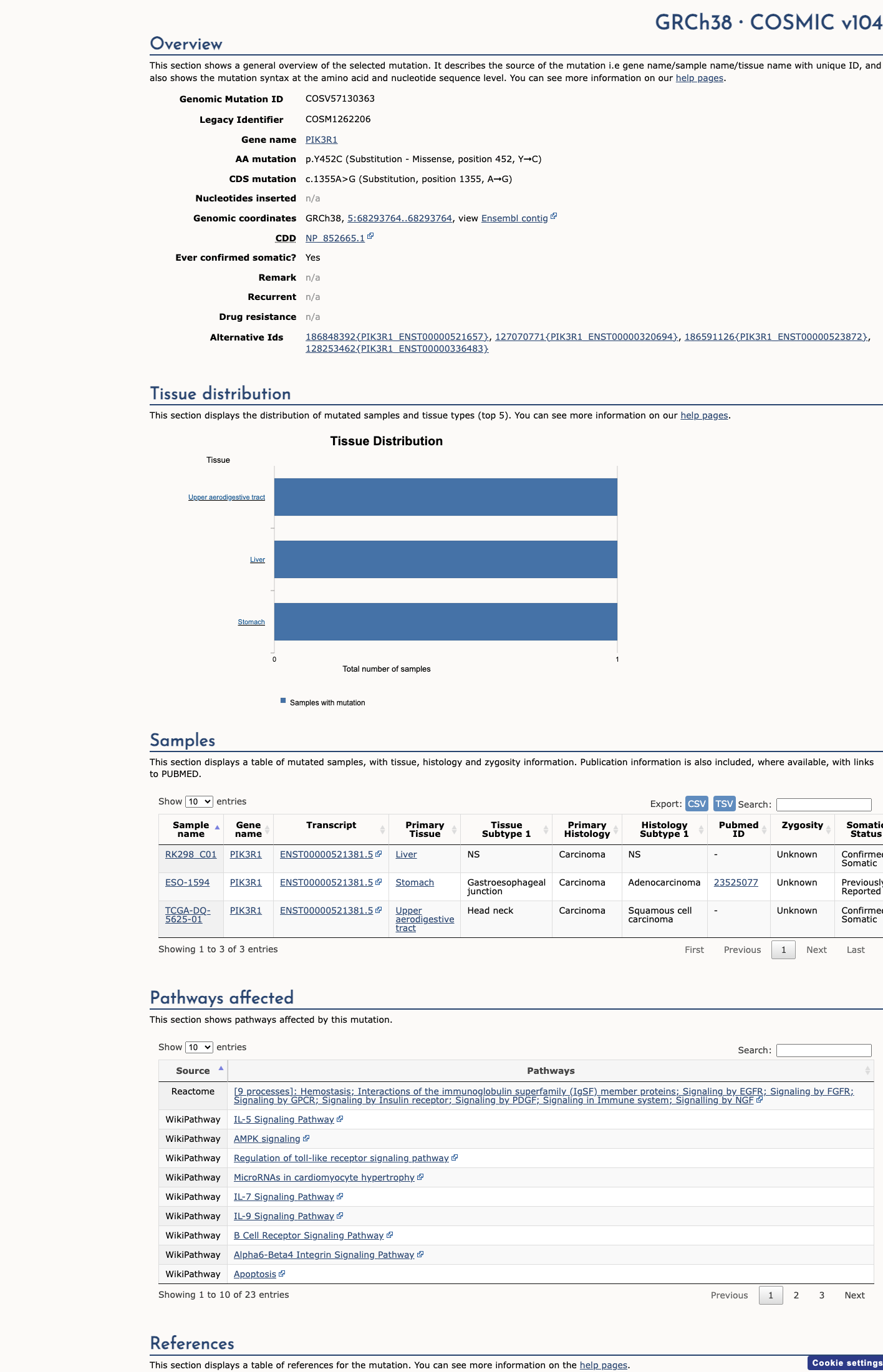
This variant lies in a statistically significant hotspot. This variant has previously been reported in somatic cancers (COSMIC; COSV57130363, n = 3 times).
Hotspots
This variant lies in a statistically significant hotspot.
Sources & reference links
9Sources
Triaged references · 1 PMID not cited in assessment