PS1
Not assessed: no evidence was available that this exact amino acid change has been previously established as pathogenic.
PS2
Not assessed: no de novo occurrence in an affected proband with confirmed maternity and paternity was documented.
PS3
Not assessed: no validated functional assay data demonstrating an abnormal effect for this exact variant (p.Ser460Cys) was available.
PS4
Not assessed: no case series or case-control comparison showing enrichment of this variant in affected individuals was available.
PM1
Not assessed: insufficient evidence was available to establish whether the variant falls in a mutational hotspot or critical functional domain.
PM2
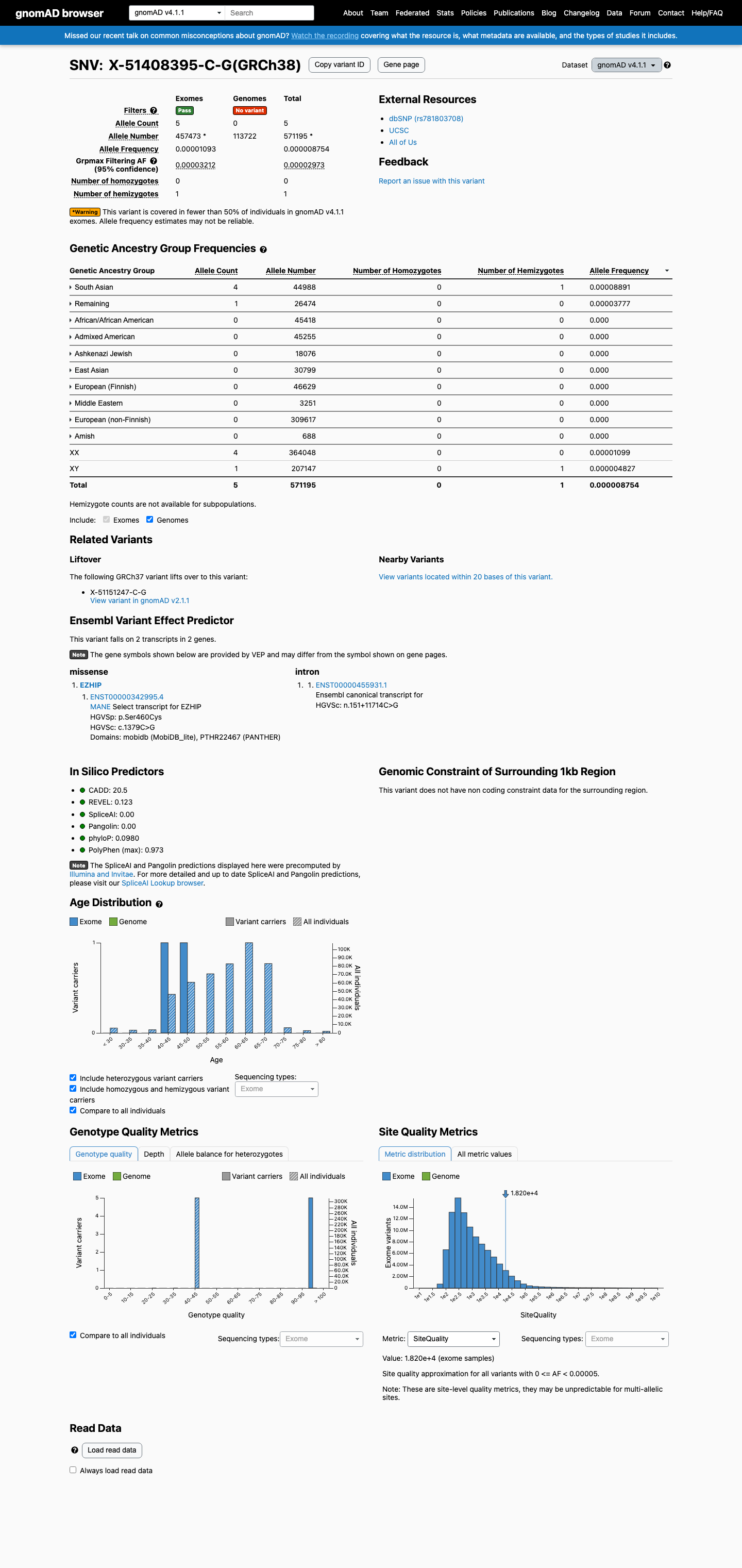
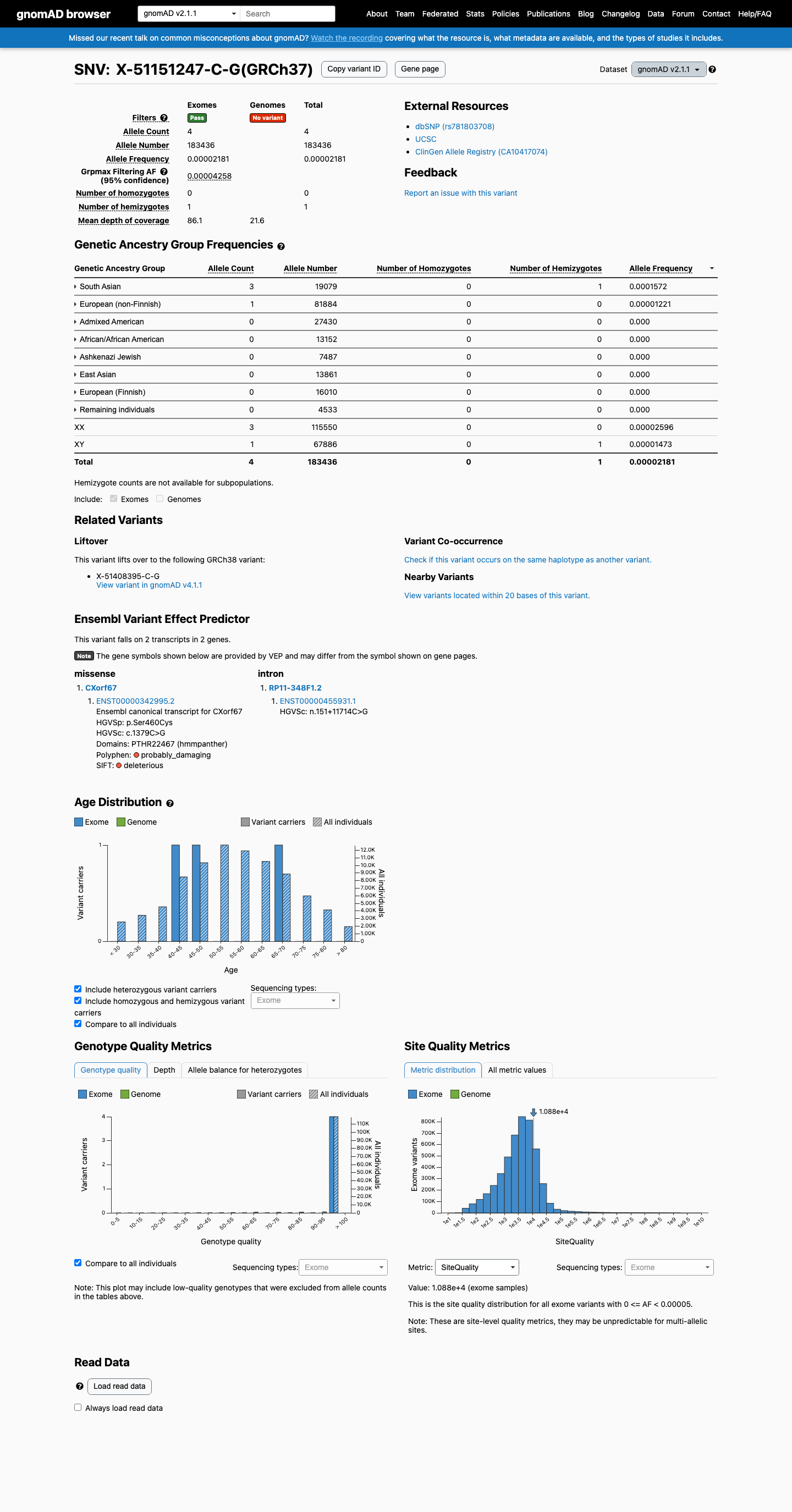
Not met: the highest population allele frequency is 0.2014% (gnomAD-Canada South Asian), exceeding the <0.1% rarity threshold.
PM3
Not assessed: no evidence was available that this variant is in trans with a pathogenic variant in a recessive disorder.
PM5
Not assessed: no evidence was available of a different pathogenic missense change at the same amino acid residue.
PM6
Not assessed: no presumed de novo occurrence in an affected individual was documented.
PP1
Not assessed: no segregation data from affected relatives were available.
PP2
Not assessed: insufficient evidence was available to establish EZHIP's rate of benign missense variation.
PP3
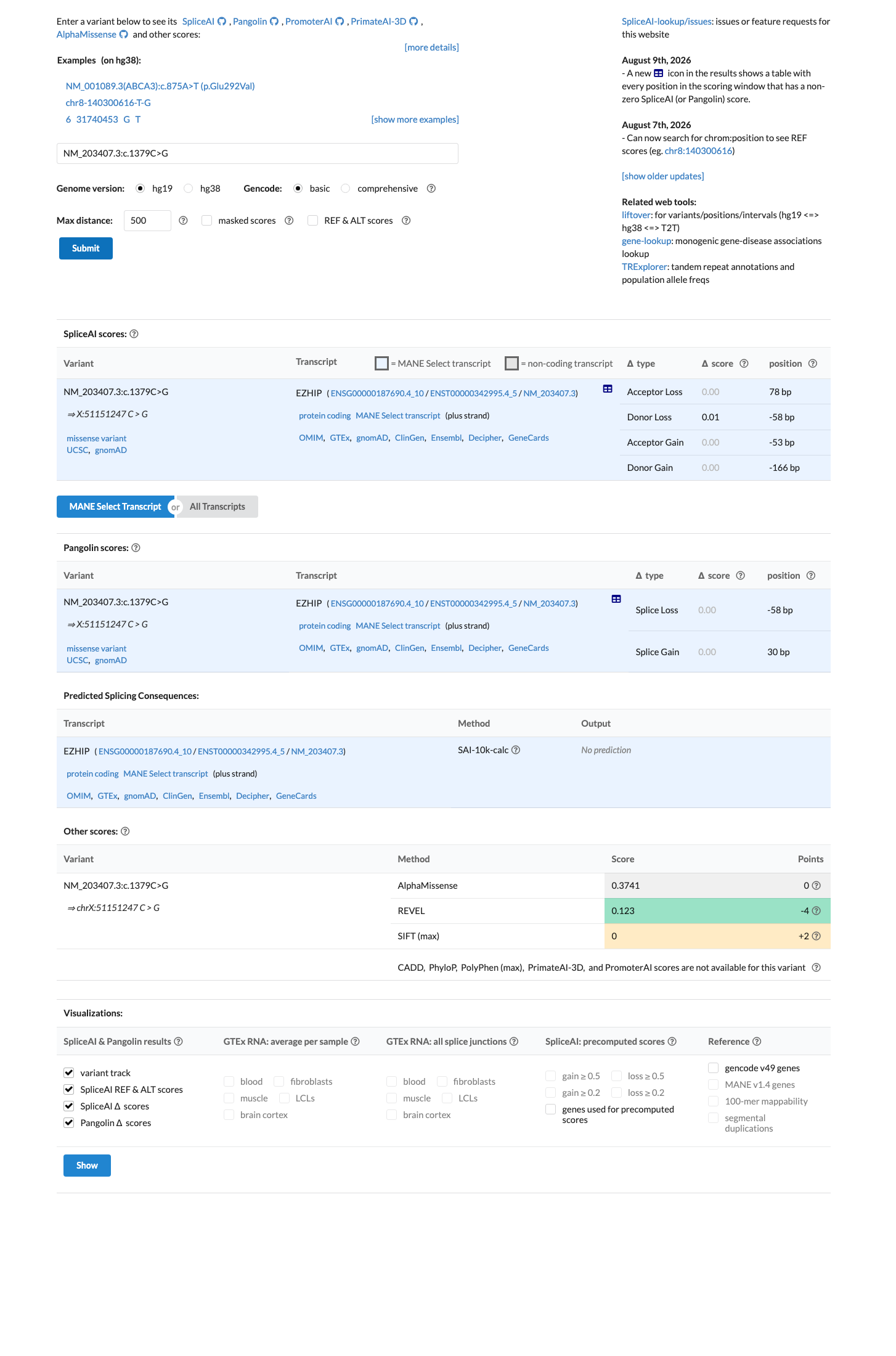
Not assessed: no calibrated in-silico predictor score was available for this missense variant; REVEL is unavailable at this position and BayesDel has no verified threshold.
PP4
Not assessed: no patient phenotype or highly specific clinical findings were provided to match against EZHIP-associated disease.
PP5
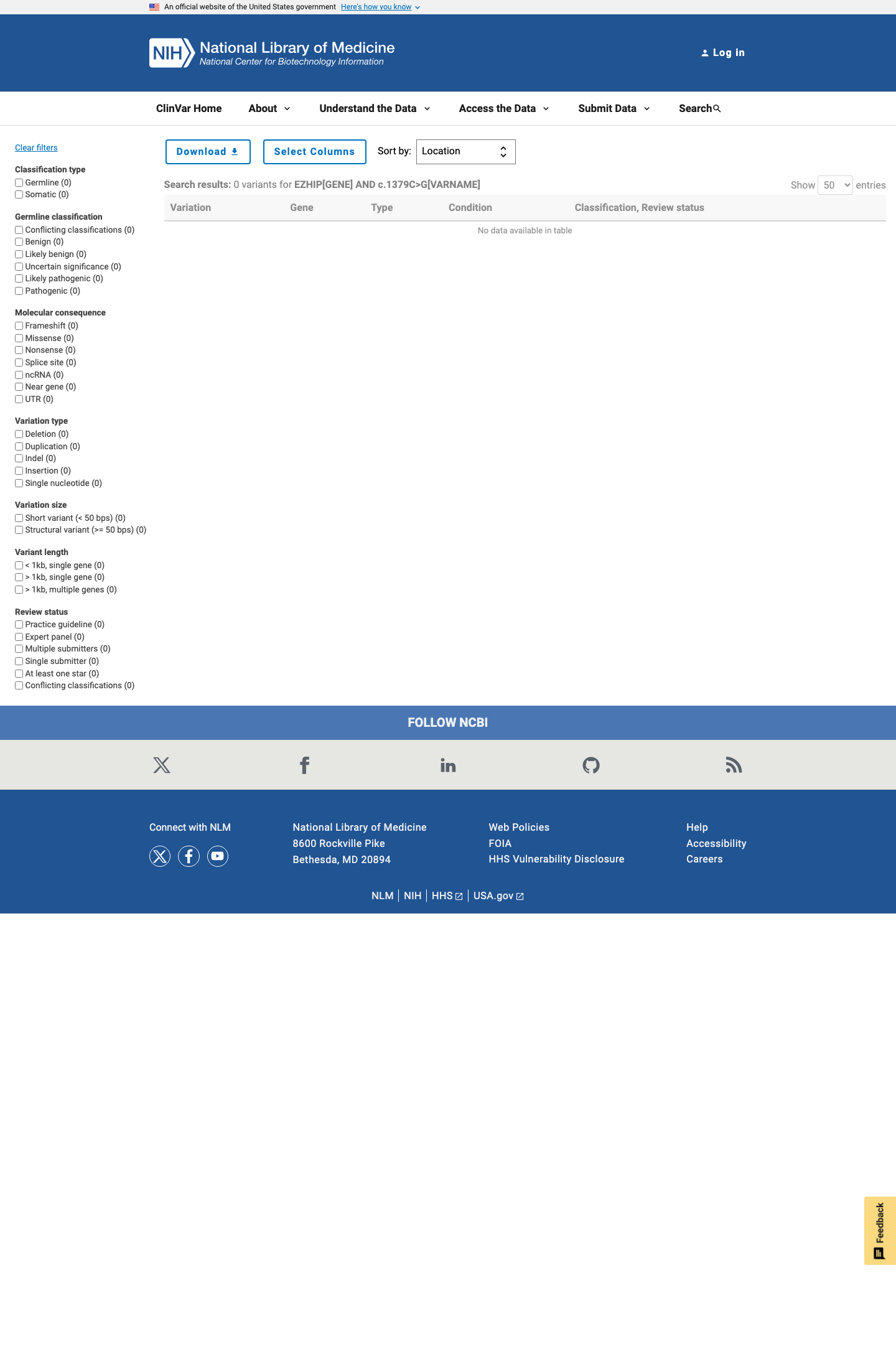
Not met: the variant is absent from ClinVar, with no expert-panel pathogenic classification on record.