Analysis in progress
Initialising…
0%
complete
This report is still being assembled — sections appear as each stage finishes. It isn't final yet.
EZH2
Final classification
VUS
EZH2 c.1966G>A · p.Ala656Thr
EZH2

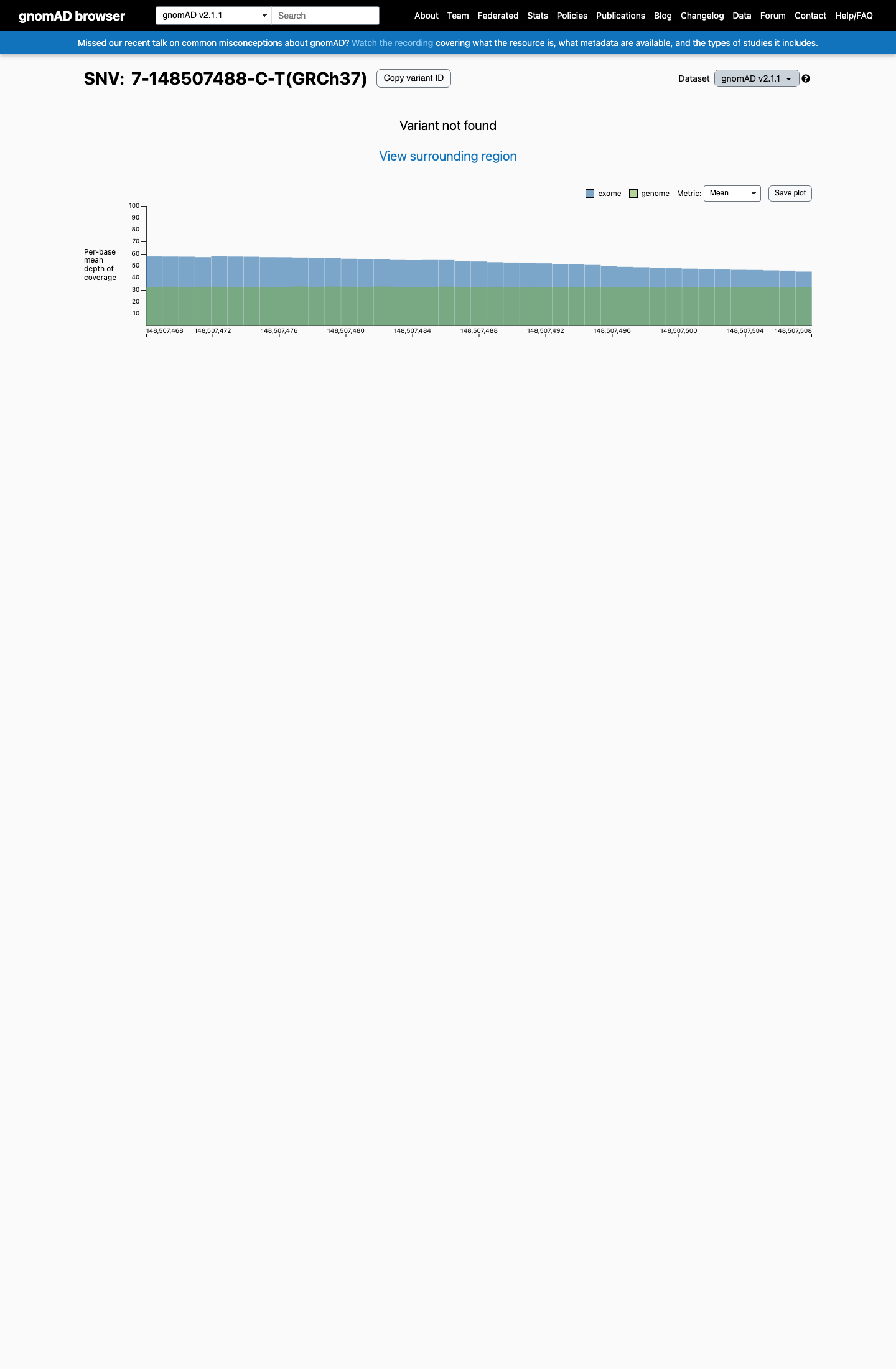
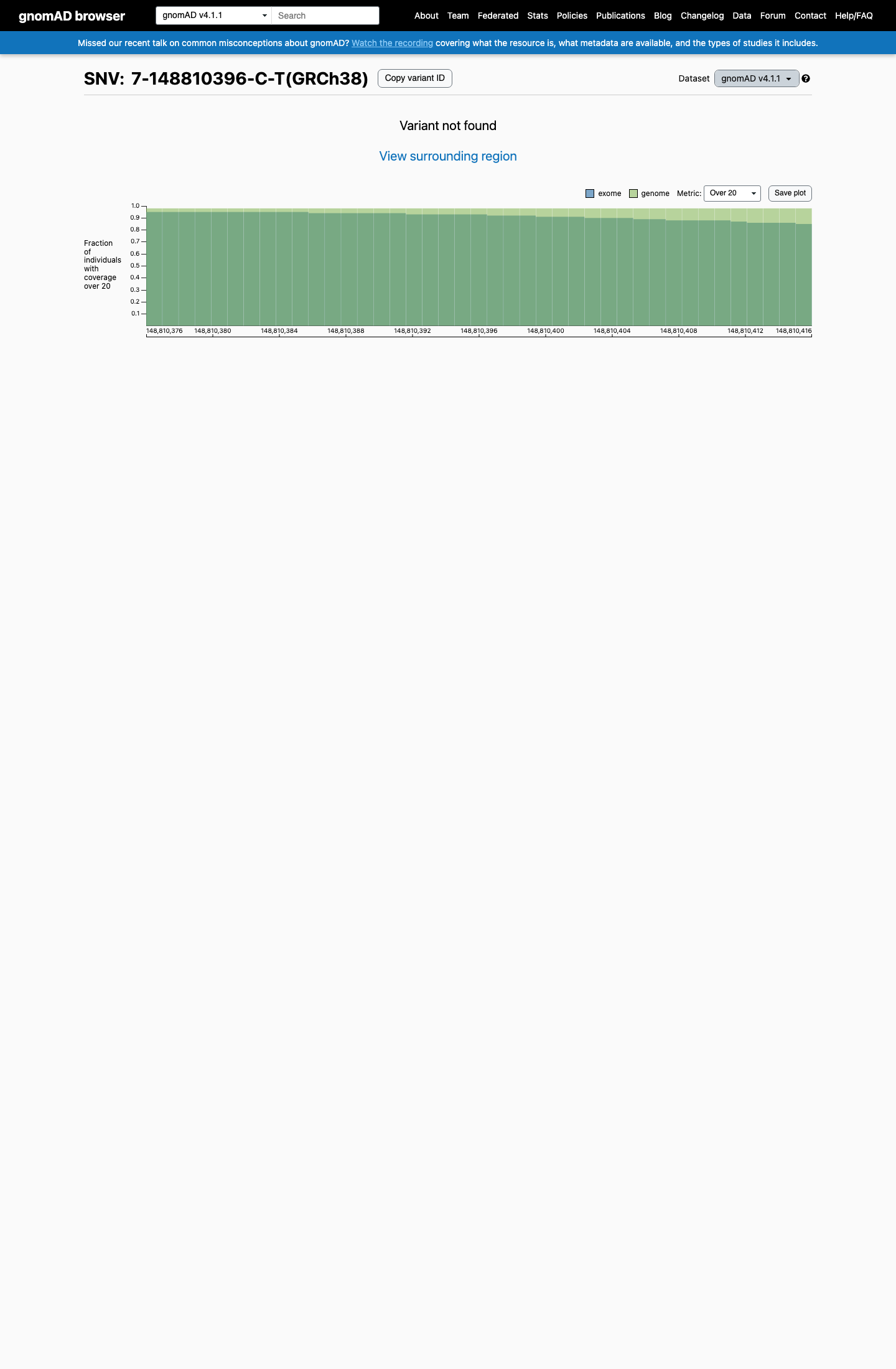
NM_004456.4:c.1966G>A (p.Ala656Thr) is a missense variant in EZH2 that is absent from all population databases including gnomAD v2.1, v4.1, and gnomAD-Canada (PM2_Supporting).

Gene
EZH2
Transcript
NM_004456.4
HGVS · transcript:coding
NM_004456.4:c.1966G>A
Consequence
N/A
GRCh38
chr7:148810396 C>T
GRCh37
chr7:148507488 C>T
Basis gene-specific framework lacked a usable explicit final combination framework, so generic ACMG/AMP 2015 final-combination rules were applied as fallback; applied criteria: PM2 supporting; combination = 1 supporting, which maps to VUS.
gene-specific framework lacked a usable explicit final combination framework, so generic ACMG/AMP 2015 final-combination rules were applied as fallback; applied criteria: PM2 supporting; combination = 1 supporting, which maps to VUS.
Classification rationale
PM2 VUS
EZH2 c.1966G>A

NM_004456.4:c.1966G>A (p.Ala656Thr) is a missense variant in EZH2 that is absent from all population databases including gnomAD v2.1, v4.1, and gnomAD-Canada (PM2_Supporting).1 No additional pathogenic or benign criteria are met. The variant has not been reported in ClinVar, has no functional studies, no segregation data, no de novo observations, and in silico predictors are discordant (REVEL 0.753 damaging; BayesDel 0.311 benign).2 With a single supporting criterion (PM2) and no conflicting benign evidence, the variant is classified as a Variant of Uncertain Significance (VUS) per ACMG/AMP 2015 guidelines (PMID:25741868).3

PM2 VUS
2 clinvar ↗revelbayesdelspliceai ↗
3 generic_acmg_combination_rules
Gene diagram · NM_004456.4 · variants mapped to exon structure
EZH2 NM_004456.4
Fetching transcript structure from UCSC…
Applied criteria · 1 applied · 21 assessed
Applied · 1
Strength Supporting Moderate Strong Very strong
PM2 supporting Pathogenic
The variant is absent from gnomAD v2.1, gnomAD v4.1, and gnomAD-Canada v1.0, with an allele frequency of 0. This meets the PM2 threshold for absence from population databases (allele frequency <0.1% for non-VCEP).
Absent from gnomAD v2.1 (AF=0)Absent from gnomAD v4.1 (AF=0)Absent from gnomAD-Canada v1.0 (AF=0)
Assessed · not applied
Pathogenic
PS1 No prior report of a different nucleotide change at codon 656 resulting in the same p.Ala656Thr missense alteration with a pathogenic classification.
PS2 No de novo observation has been reported for this variant.
PS3 No well-established functional studies demonstrating a damaging effect have been reported for this variant.
PS4 No case-control studies or statistical evidence of enrichment in affected individuals versus controls.
PM1 The variant does not lie in a statistically significant mutational hotspot as assessed by Cancer Hotspots.
PM6 No de novo observation has been reported for this variant.
PP1 No co-segregation data are available for this variant.
PP2 HCI prior score is unavailable for EZH2 (gene not supported by the HCI prior database).
PP3 Insufficient consensus among multiple in silico predictors.
PP4 No clinical phenotype or family history data are available to assess whether the patient's presentation is highly specific for EZH2-associated Weaver syndrome.
PP5 No reputable source has classified this variant as pathogenic.
Benign
BA1 The variant is absent from gnomAD (allele frequency = 0).
BS1 The variant is absent from gnomAD (allele frequency = 0).
BS2 The variant has not been observed in any healthy adult individuals in population databases.
BS3 No well-established functional studies demonstrating no deleterious effect have been reported for this variant.
BS4 No segregation data are available to assess lack of segregation with disease in affected families.
BP1 EZH2 Weaver syndrome is primarily caused by missense variants through a dominant-negative mechanism, not by truncating mutations.
BP2 No observation of this variant in trans with a known pathogenic dominant variant in EZH2.
BP4 Insufficient consensus among multiple in silico predictors for a benign effect.
BP5 No case has been reported in which this variant is found in an individual with an alternate molecular basis for disease.
BP6 No reputable source has classified this variant as benign.
N/A · 3 PVS1 · PM5 · BP7
Research & evidence
Population frequency
gnomAD v4.1 screenshot
gnomAD v4.1
gnomAD v2.1 screenshot
gnomAD v2.1
v4.1
Absent from gnomAD v4.1.
v2.1
Absent from gnomAD v2.1.
🇨🇦 CA
Absent from gnomAD-Canada v1.0.
Allele frequency by ancestry
three datasets · side by side
gnomAD v4.1
Absent · 0 / ?
0 hom
Not observed in any ancestry group.
gnomAD v2.1
Absent · 0 / ?
0 hom
Not observed in any ancestry group.
gnomAD Canada 🇨🇦
Absent · 0 / ?
0 hom
Not observed in any ancestry group.
ClinVar screenshot
ClinVar
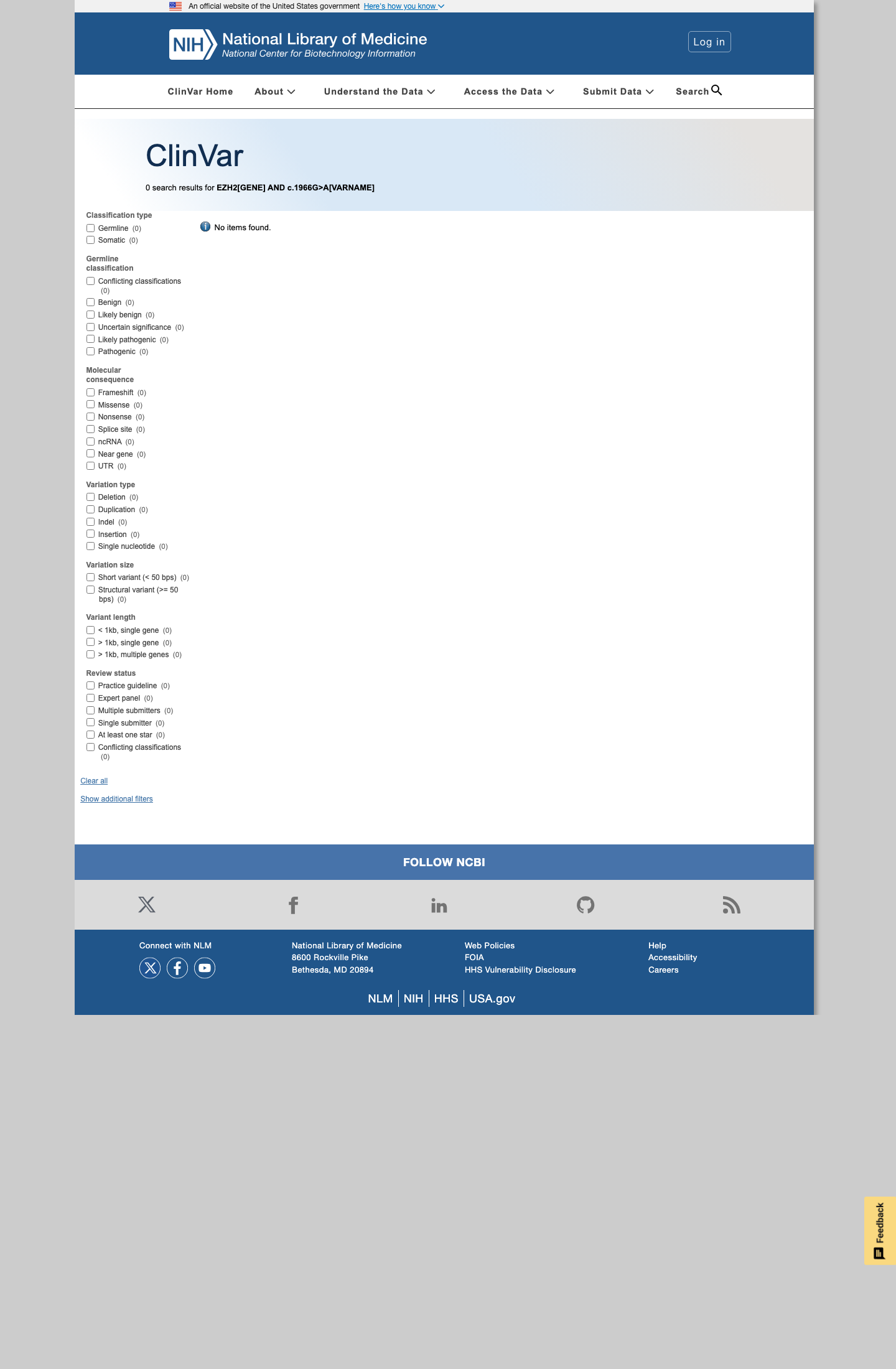
This variant is absent from ClinVar.
SpliceAI screenshot
In silico
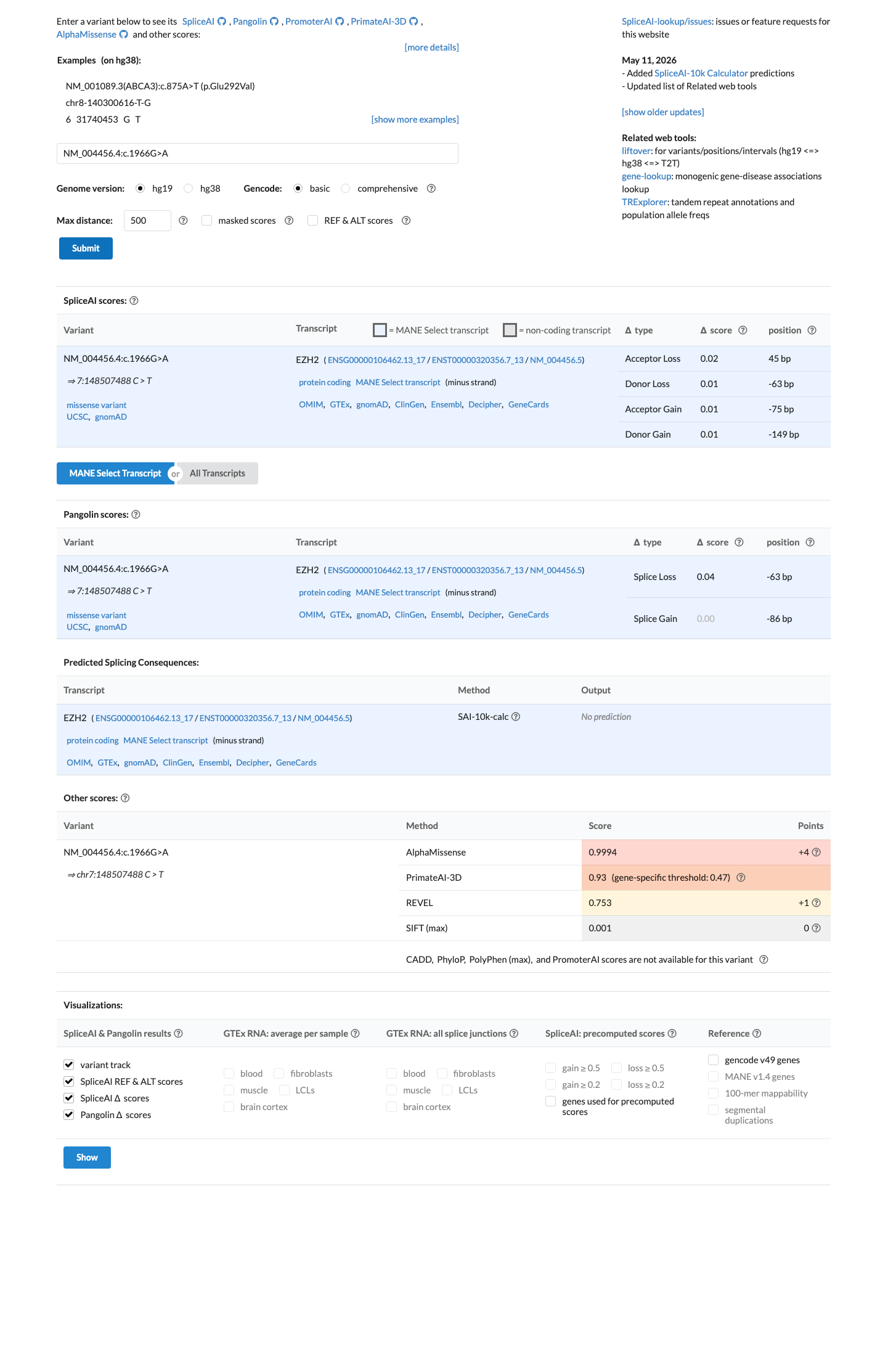
SpliceAI predicts no significant splice impact for this variant (max delta score = 0.02). REVEL score = 0.753. BayesDel score = 0.311152.
Functional / OncoKB screenshot
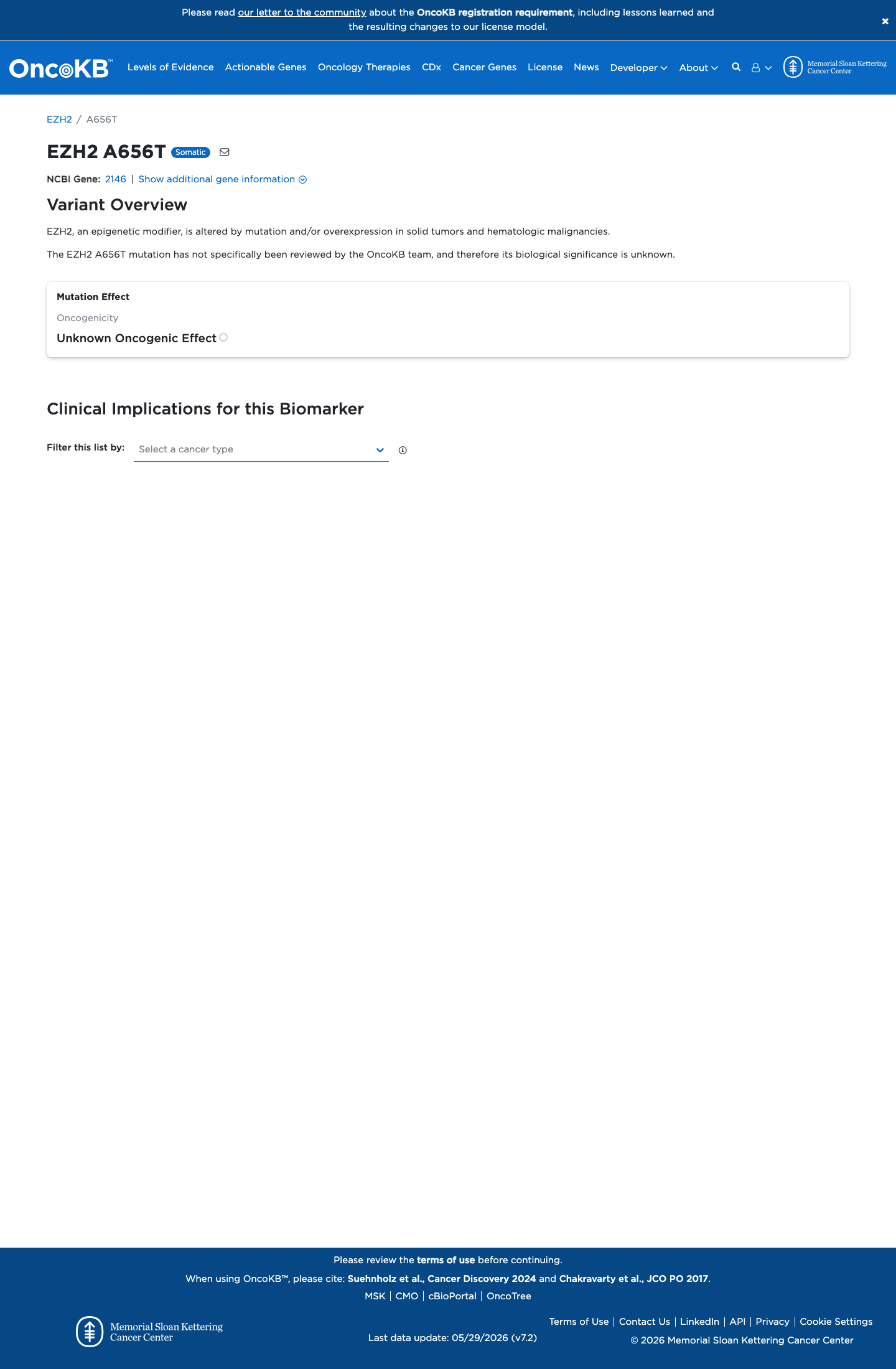
Functional Unknown Oncogenic Effect
OncoKB did not identify variant-specific reviewed functional evidence for this variant; gene-level curated context is available for reviewer follow-up. EZH2, an epigenetic modifier, is altered by mutation and/or overexpression in solid tumors and hematologic malignancies.
OncoKB ↗
COSMIC screenshot
COSMIC
Cancer hotspots screenshot
Cancer hotspots
Somatic evidence Not in COSMIC / hotspots
COSMIC
This variant does not lie in a statistically significant hotspot. This variant has not previously been reported in somatic cancers (COSMIC).
Hotspots
This variant does not lie in a statistically significant hotspot.
Sources & reference links
8Sources
ClinVar
gnomAD v2.1
gnomAD v4.1
gnomAD-Canada
SpliceAI
OncoKB
COSMIC
Cancer hotspots