PIK3R1 encodes p85α, the regulatory subunit of phosphoinositide 3-kinase (PI3K), an enzyme complex that produces signaling molecules controlling cell growth, proliferation, and survival. The protein normally stabilizes and inhibits the PI3K catalytic subunit and helps the complex respond to signals from cell-surface receptors, including insulin, so alterations in this gene are associated with insulin resistance. PIK3R1 acts as a tumor suppressor: mutations that disrupt its inhibitory function can lead to abnormally active PI3K/AKT signaling and are found in several cancers, most often glioblastoma, as well as endometrial, breast, and colorectal cancers.
This variant
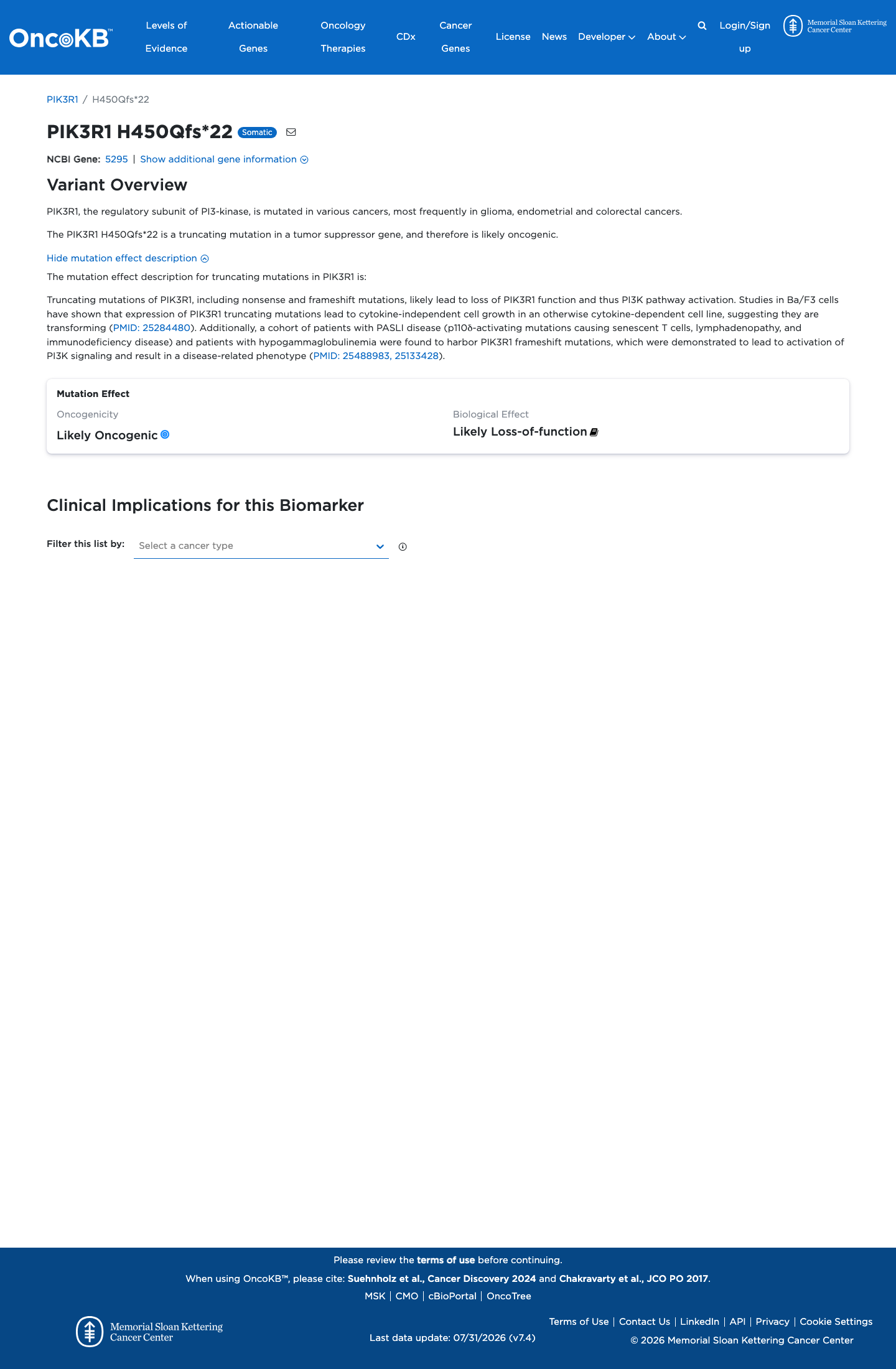
This Likely Pathogenic classification reflects a frameshift expected to eliminate the p85alpha regulatory subunit through nonsense-mediated decay, the loss-of-function mechanism that causes PIK3R1-related immunodeficiency and SHORT syndrome. Because p85alpha normally restrains PI3K/AKT signaling, this variant's predicted loss of function is also consistent with the gene's tumor-suppressor role in cancers such as glioblastoma, endometrial, breast, and colorectal cancer.
Transcript
NM_181523.2
HGVS · transcript:coding
NM_181523.2:c.1350_1374del
GRCh38
chr5:68293757 CATGAATATAACACTCAGTTTCAAGA>C
GRCh37
chr5:67589585 CATGAATATAACACTCAGTTTCAAGA>C
BasisPVS1 Very Strong (+8) plus PM2 Supporting (+1) totals 9 points, meeting the PIK3R1 VCEP Rule 2 threshold (6-9 points) for Likely Pathogenic.▾
PVS1 Very Strong (+8) plus PM2 Supporting (+1) totals 9 points, meeting the PIK3R1 VCEP Rule 2 threshold (6-9 points) for Likely Pathogenic.
Classification rationale
PVS1PM2Likely Pathogenic
PIK3R1 c.1350_1374delframeshift · exon 11
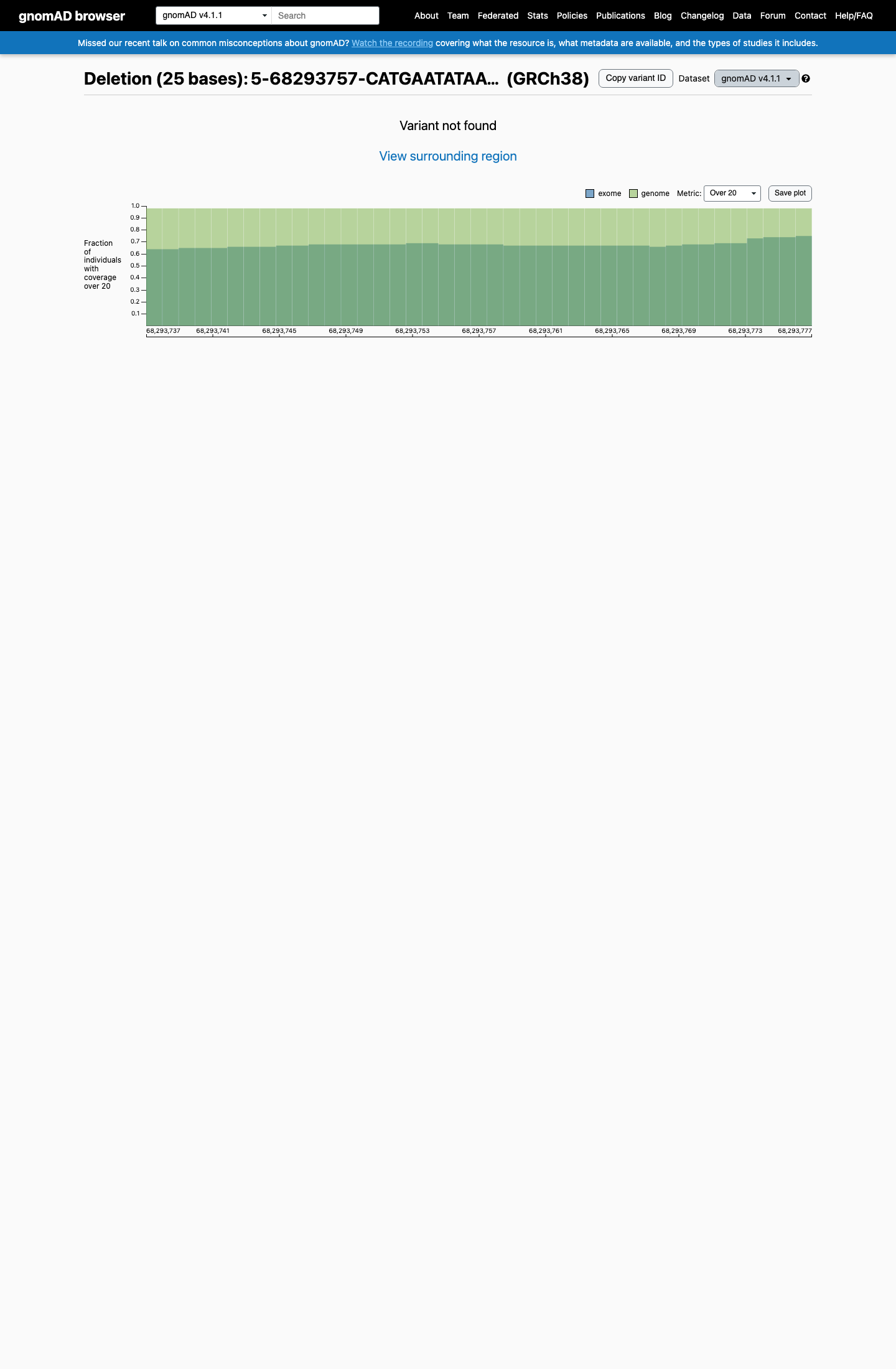
PVS1 (Very Strong): out-of-frame 25-nt deletion creates a premature stop (p.His450GlnfsTer22) predicted to trigger nonsense-mediated decay. PM2 (Supporting): variant is absent from gnomAD v4.1, below the VCEP <0.00000132 allele-frequency threshold. Combined: PVS1 (+8) + PM2 (+1) = 9 points, yielding Likely Pathogenic under PIK3R1 VCEP Rule 2 (6-9 points).
PVS1 + PM2→Likely Pathogenic
Gene diagram
· NM_181523.2 · variants mapped to exon structure
PIK3R1NM_181523.2
Fetching transcript structure from UCSC…
Exons
—
Transcript span
—
Strand
—
Variants mapped
—
Source
UCSC ncbiRefSeqCurated
All variants in PIK3R1—click a row to locate it on the plot · use the link column to open its page
Variant ↕
Protein
Location
Classification
Link
Applied criteria · 2 applied · 10 assessed
MetEvidence satisfies this criterion.
Not metEvaluated against available evidence; threshold not reached.
Not assessedApplies in principle, but no evidence was found to evaluate it.
N/ADoesn't apply to this variant type.
Applied · 2
Strength Supporting Moderate Strong Very strong
✓
PVS1very strongPathogenic
Met (Very Strong): out-of-frame 25-nt deletion creates a premature stop (p.His450GlnfsTer22) within the VCEP c.917-c.1890 window, predicted to trigger nonsense-mediated decay.
CSPEC PVS1 Very Strong rule: premature stop codon between c.917 and c.1890 predicted to trigger NMD, with the exon present in all 3 biologically-relevant PIK3R1 transcripts, warrants PVS1 at default (Very Strong) strength.VariantValidator exonic position mapping places the deletion in exon 11 for GRCh37, GRCh38, and RefSeqGene (NG_012849.2) coordinate systems.pvs1_gene_context.json confirms PVS1 gene-level gate is 'eligible' because the CSPEC provides official PVS1 guidance for PIK3R1, establishing germline loss-of-function as a disease mechanism for PIK3R1-related immunodeficiency and SHORT syndrome (MONDO:1060136).
Met (Supporting): absent from gnomAD v4.1, below the VCEP <0.00000132 allele-frequency threshold.
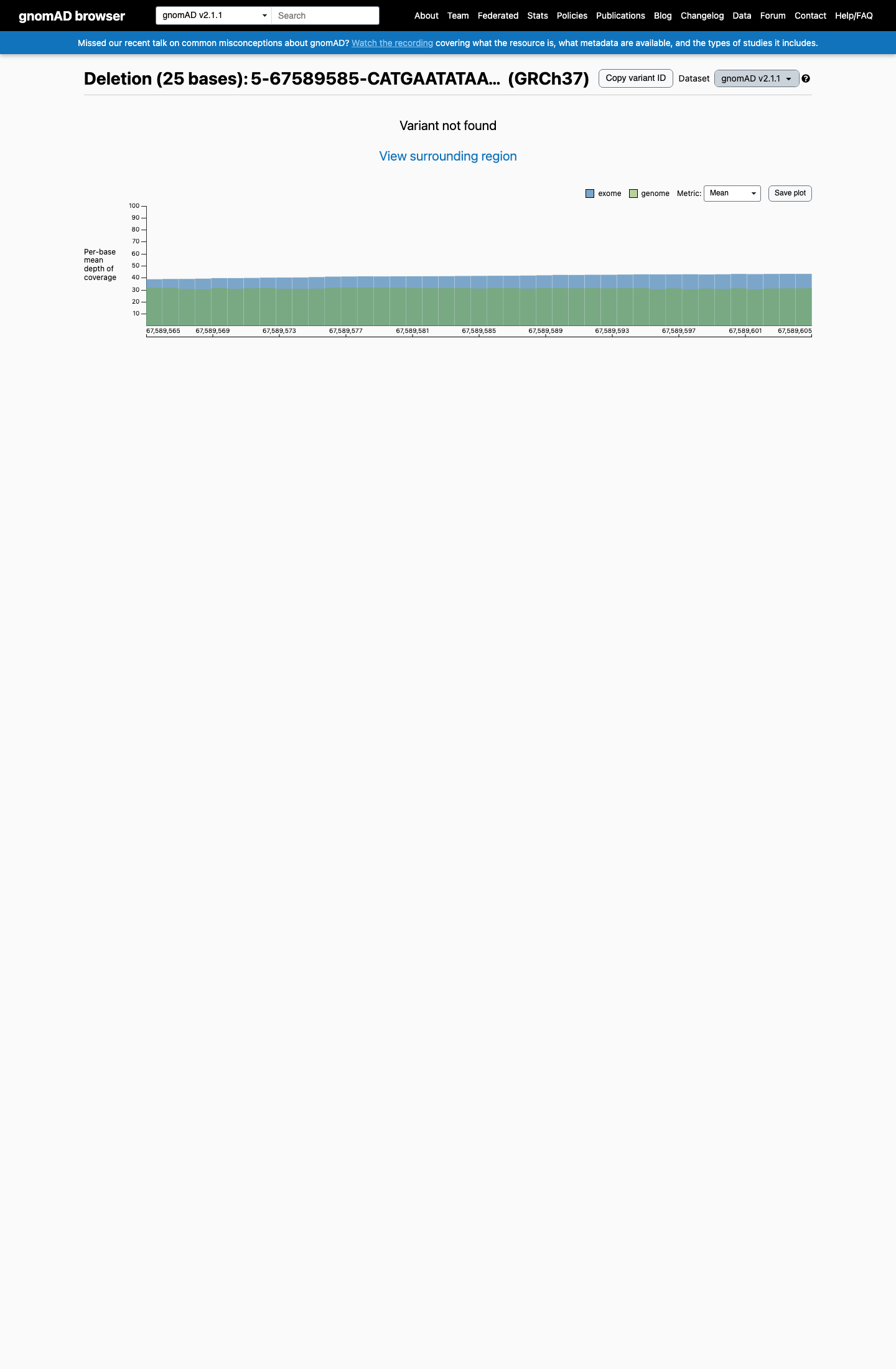
The PIK3R1 VCEP PM2 rule requires total allele frequency <0.00000132 across all populations in gnomAD v4.1 and limits PM2 to supporting strength.The queried NM_181523.2:c.1350_1374del / GRCh38 deletion is absent from gnomAD v4.1, so its recorded total allele frequency is below the specified threshold.The same variant is also absent from gnomAD v2.1 and gnomAD-Canada v1.0.